
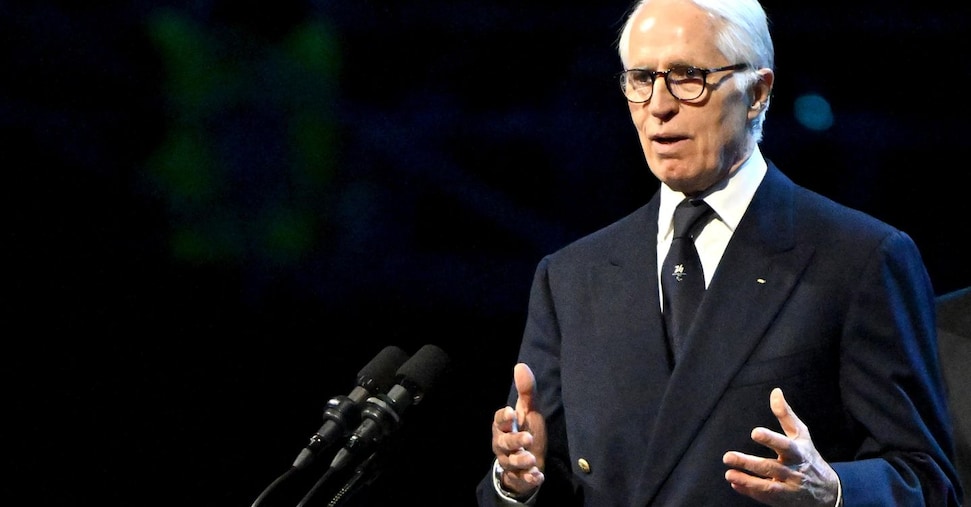
Italian football is facing a seismic shift in leadership as the nation’s top-flight clubs move to stabilize a federation reeling from unprecedented sporting failure. In a decisive assembly held in Milan, Lega Serie A has signaled its intent to move past the current crisis by backing a heavyweight of Italian sports administration to lead the national game.
The assembly decreed that Serie A chooses Giovanni Malagò for FIGC presidency, positioning the former head of the Italian National Olympic Committee (CONI) as the primary candidate to succeed Gabriele Gravina. The move comes in the wake of Gravina’s resignation, which followed the devastating blow of Italy failing to qualify for the World Cup for the third consecutive tournament [1].
For the 20 clubs of the top division, the priority is clear: urgent recovery. With the national team in turmoil and the federation in transition, the clubs have sought a figure with a proven track record of managing complex sporting ecosystems on a global scale. Malagò, a veteran administrator and former athlete, represents a bridge between the commercial interests of the professional leagues and the institutional requirements of the Italian Football Federation (FIGC).
The support for Malagò was nearly unanimous, though not absolute. According to Lega Serie A President Ezio Simonelli, 18 of the 20 member clubs have formally chosen to support Malagò’s candidacy [2]. The only holdouts are Lazio and Verona, though Simonelli noted that the opposition from these two clubs is based on methodological reasons rather than a lack of trust in the candidate [2].
The Profile of Giovanni Malagò: From Futsal to CONI
To understand why the clubs have converged on Malagò, one must glance at a career that blends entrepreneurial success with deep sporting roots. Born in Rome on March 13, 1959, Malagò was raised in an environment where sport and business were intertwined; his father, Vincenzo, was a founder of the Samocar automotive group and served for years as the vice president of AS Roma [1].
Unlike many administrators who enter the boardroom from the business world, Malagò possesses a competitive athletic pedigree. He excelled in futsal, winning three Scudetti and four Coppe Italia with Roma RCB. His talent took him to the highest level of the game, representing the Italian national futsal team at the 1986 World Cup in Brazil [1].
Academically, Malagò holds a degree in Economics and Commerce from the University of Siena [1]. This combination of athletic experience and economic expertise paved the way for his decade-long tenure as the President of CONI, where he became one of the most influential figures in European sports. More recently, he has served as the President of Milano Cortina 2026, overseeing the preparations for the Winter Olympic and Paralympic Games [2].
Political Friction and the ‘Lotito Factor’
Despite the overwhelming support from the clubs, Malagò’s path to the presidency is not without political hurdles. The opposition from Lazio—specifically from owner and Senator Claudio Lotito—is seen as a reflection of broader tensions between the candidate and the current center-right government led by Giorgia Meloni [3].
Lotito has been vocal in his opposition, interpreting the government’s historical lack of enthusiasm for Malagò during his CONI presidency as a signal that the candidate may not be the ideal fit for the current political climate [3]. This tension is particularly sensitive given the role of the Ministry of Sport, currently led by Andrea Abodi, in supporting the football sector across various fronts [3].
The internal divide highlights a recurring theme in Italian football: the struggle to balance the needs of the professional clubs with the political requirements of the state. Although the clubs want a “person of great success” to resolve the sporting crisis, the government’s preference remains an open question [3].
A Challenged Field: The Abete Alternative
Malagò is not the only figure eyeing the vacancy. Giancarlo Abete has already signaled his intention to enter the fray. Abete has indicated that he will request the board of the Lega Nazionale Dilettanti (LND) to invest him with similar authority to that given to Malagò by the Serie A clubs [3].
Abete’s strategy appears to be one of collaboration and content-driven candidacy. He has suggested a logic of discussing the necessary programmatic changes for the federation first, before finalizing the names of the candidates [3]. This positions the race as a contest between two different philosophies: the “strongman” approach of Malagò, backed by the financial powerhouses of Serie A, and the more consultative, grassroots-aligned approach of Abete.
Timeline to the FIGC Presidency
| Date | Event | Significance |
|---|---|---|
| April 13, 2026 | Serie A Assembly | 18 of 20 clubs back Giovanni Malagò as candidate [2]. |
| April 20, 2026 | Program Presentation | Scheduled meeting between Malagò and Serie A to integrate his ideas with the league’s outline [2]. |
| June 22, 2026 | Presidential Election | Official vote to determine the successor to Gabriele Gravina [3]. |
What Happens Next?
The “ball is now in Malagò’s court,” according to President Ezio Simonelli [2]. Before formalizing his candidacy, Malagò must complete his own assessment of the various federal components to ensure he has sufficient support beyond just the top-flight clubs.

The immediate next step is the meeting on April 20, where Malagò will be invited to present his vision for the future of Italian football and integrate it with the program already outlined by Lega Serie A [2]. This meeting will be crucial in determining whether he can bridge the gap with the dissenting clubs and the government executive.
For a nation that views football not just as a sport but as a cultural pillar, the result of the June 22 election will be more than a change in personnel; it will be a referendum on how Italy intends to rebuild its pride and return to the global stage after years of decline.
We will continue to monitor the developments leading up to the April 20 program presentation. Do you believe a figure from the Olympic world is the right choice to fix the crisis in Italian football? Share your thoughts in the comments below.