
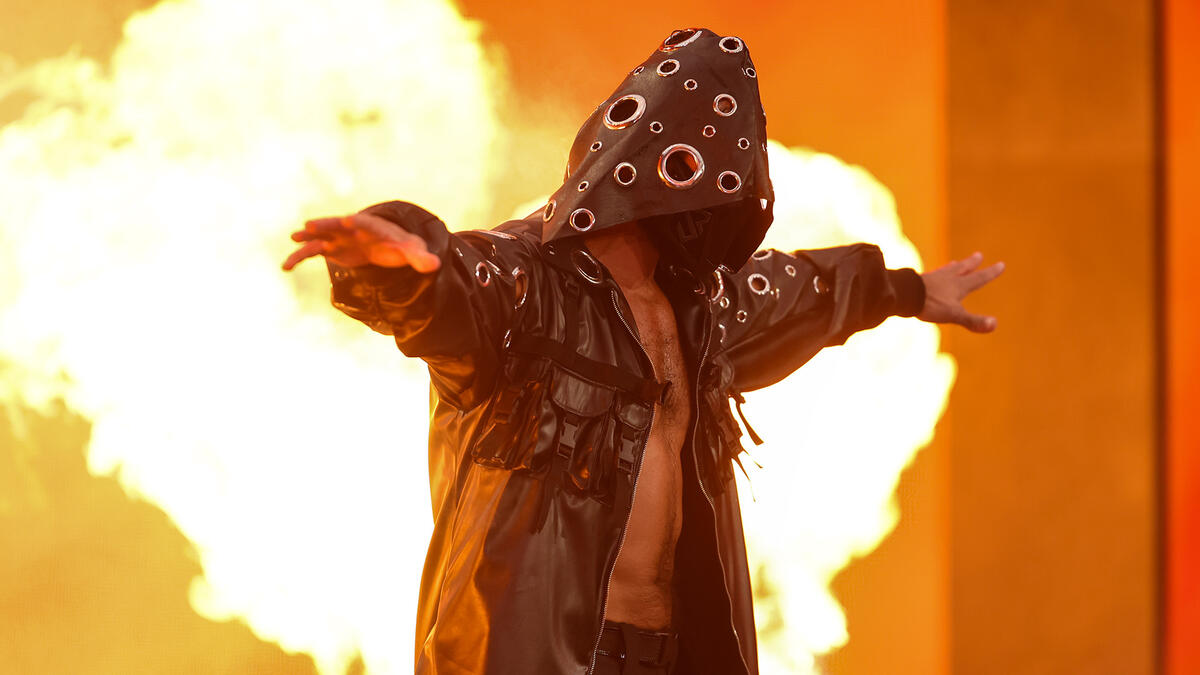
The intersection of professional wrestling and mainstream celebrity has always been a volatile chemistry experiment. For decades, the WWE has pivoted between utilizing outside stars as massive draws and risking the alienation of a hardcore fanbase that values the “sanctity” of the squared circle. In a recent appearance on ESPN’s UnSportsmanlike, one of the industry’s most prominent figures, Seth Rollins, provided a nuanced perspective on this balancing act, suggesting that while celebrity crossovers are vital for growth, they are most effective when utilized in “small doses.”
Rollins, a veteran of the industry known for his versatility and strategic mind, acknowledged that the influx of non-wrestling stars brings a critical new audience to the product. However, he warned that overexposure—or inserting celebrities into deeply entrenched, long-term storylines—can trigger a negative reaction from the core demographic. This tension was most evident during the lead-up to WrestleMania, where the integration of high-profile personalities into a legacy-driven main event sparked significant debate among fans and critics alike.
The conversation comes at a pivotal time for the organization. Under the umbrella of TKO Group Holdings, the WWE has aggressively pursued a strategy of global expansion and mainstream integration. By bridging the gap between sports entertainment and pop culture, the company aims to capture demographics that may not traditionally follow wrestling. Yet, as Rollins pointed out, the difference between a successful crossover and a perceived “miscasting” often comes down to the role the celebrity plays and the respect they show for the craft.
The Philosophy of ‘Small Doses’ and Professional Balance
During his interview, Rollins framed the issue of celebrity involvement through the lens of his own professional diversification. In recent years, Rollins has expanded his footprint into sports media, frequently appearing on talk shows and offering analysis. He used this experience as an analogy for why outside stars should not dominate the wrestling narrative.
Rollins noted that while he enjoys contributing to sports discourse, there is a clear boundary between being a guest contributor and being a professional in that field. “I don’t mind it. I think there’s a balance in our industry. Like, you don’t want me doing too much,” Rollins stated. He specifically referenced the expertise of professional broadcasters, noting, “You don’t want me in the booth doing too much. Like, I can’t be [sports broadcaster] Kevin Harlan. I’m not like that. I’m not Tom Brady. I don’t have that expertise, but a little bit here and there.”
This admission highlights a core tenet of Rollins’ argument: the importance of staying within one’s lane of expertise to maintain authenticity. When a celebrity enters a WWE ring, they are entering a world governed by specific rules of storytelling and physical performance. When they attempt to overshadow the primary athletes—particularly in storylines with decades of built-up emotional equity—the audience often perceives it as an intrusion rather than an addition.
The Bad Bunny Standard: Work Ethic and Global Appeal
While Rollins cautioned against overexposure, he was quick to praise those who approach the business with humility and a rigorous work ethic. Chief among these is the global superstar Bad Bunny, whom Rollins described in superlative terms, comparing his cultural impact to that of music legend Michael Jackson.
“You don’t understand how big It’s that Bad Bunny is wrestling in WWE. Bad Bunny is this generation’s Michael Jackson,” Rollins remarked. He emphasized that Bad Bunny’s success in the ring is not a result of his fame alone, but of his willingness to undergo the grueling process of training. Rollins highlighted that the artist does not simply “show up game day,” but instead requests a ring and professional trainers to ensure his performance meets the company’s standards.
This distinction is crucial for the WWE’s internal culture. The “locker room” traditionally respects outsiders who “put in the work.” By praising Bad Bunny and IShowSpeed for their preparation, Rollins is signaling to the fans that these celebrities are not merely puppets for the marketing department, but participants who respect the physicality and discipline of professional wrestling. This approach transforms a celebrity appearance from a gimmick into a legitimate athletic contribution, making the “small doses” more palatable to the audience.
Analyzing the WrestleMania Main Event Friction
The debate over celebrity involvement reached a boiling point during the WrestleMania 42 main event storyline involving Cody Rhodes and Randy Orton. The narrative, which leaned heavily on 20 years of shared history and rivalry between Rhodes and Orton, saw the insertion of Pat McAfee as a “mystery caller.”
Rollins admitted that this specific creative choice faced significant pushback. “There was a big pushback against Pat McAfee when he came in. And it’s like, yeah, he’s inserted in this WrestleMania main event storyline that already had 20 years of history with Cody Rhodes and Randy Orton. Our audience is like, ‘Ehh, maybe not,’” Rollins explained.
The friction arose because the celebrity element threatened to distract from the emotional climax of a long-term story. For many fans, the Rhodes-Orton dynamic was a purely wrestling-centric narrative that did not require an outside catalyst. However, Rollins defended McAfee’s overall value to the company, noting his success in other capacities. He pointed to McAfee’s tenure on commentary and a specific match in NXT against Gunther as examples of where the “small doses” approach worked perfectly.
The fallout from the WrestleMania angle was significant enough that reports indicate McAfee opted out of continuing the specific storyline after the event, reflecting a rare instance where the “outside force” was scaled back in response to fan sentiment.
From Mentorship to Grudge Match: Rollins vs. Breakker
Beyond the strategic analysis of the industry, Rollins is currently focused on his own upcoming physical challenge. This Saturday, he is scheduled to face Bron Breakker in a grudge match at Backlash. The match is being framed not just as a contest of strength, but as a psychological battle between a mentor and a former pupil.
Rollins described the upcoming clash as a “teacher vs. Trainee” matchup, referencing Breakker’s time as an understudy within “The Vision.” This narrative adds a layer of personal stakes to the event, as Rollins aims to prove that his experience and tactical brilliance can overcome the raw power and aggression of the younger Breakker. For Rollins, the Backlash match serves as a litmus test to determine if Breakker is truly ready to ascend to the next tier of the WWE hierarchy.
Key Takeaways: The Rollins Perspective on Crossovers
- The “Small Doses” Rule: Celebrity involvement is a net positive for audience growth, provided it does not overshadow the core wrestling narratives.
- Authenticity Over Fame: Respect for the craft—exemplified by Bad Bunny’s rigorous training—is the primary factor in whether a celebrity is accepted by the fanbase.
- Narrative Integrity: Inserting celebrities into long-term, legacy storylines (such as the Rhodes vs. Orton feud) can be perceived as disruptive and counterproductive.
- Diversification Analogy: Rollins compares celebrity roles to his own sports media pursuits, arguing that knowing when to step back is as important as knowing when to perform.
As the WWE continues to navigate its role as a global entertainment powerhouse, the tension between “sports” and “entertainment” will remain a constant. Seth Rollins’ insights suggest that the company’s most successful path forward is one of integration rather than replacement—using the star power of the outside world to shine a light on the athletes who live and breathe the business.
The next major checkpoint for the WWE community will be the Backlash event this Saturday, where the world will see if Bron Breakker can overcome the “teacher” in Seth Rollins. We will continue to monitor the results and the subsequent fallout of this grudge match.
Do you believe celebrity involvement helps or hurts the prestige of professional wrestling? Share your thoughts in the comments below and join the conversation on our social media channels.