
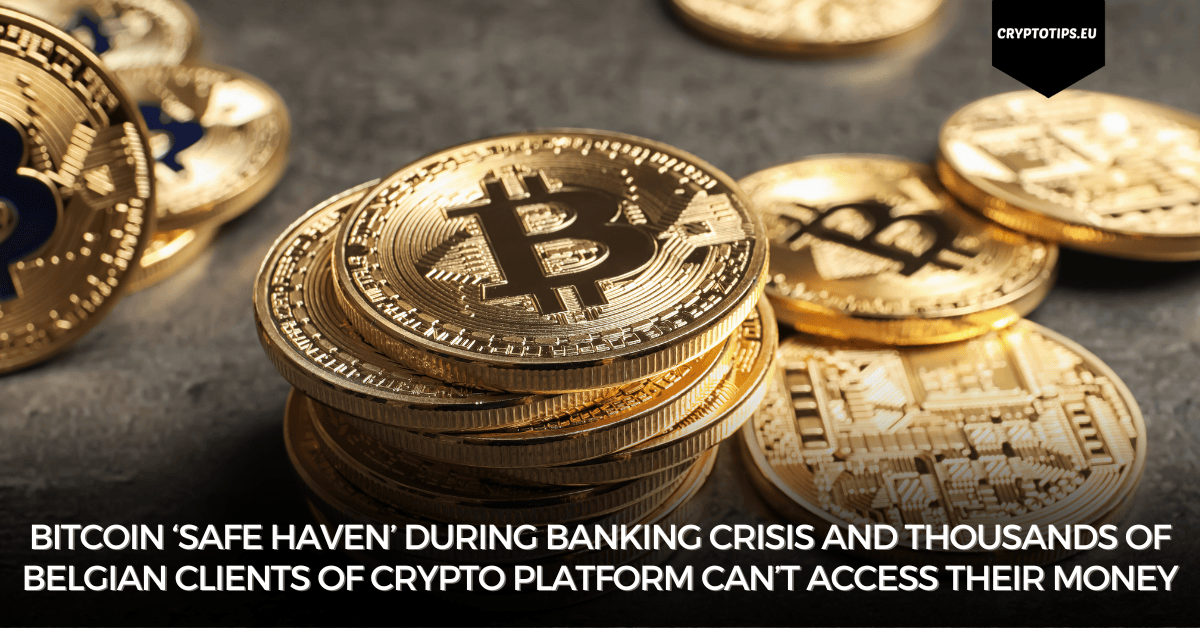
For centuries, gold has served as the ultimate sanctuary for wealth. Its physical scarcity, durability, and universal recognition made it the bedrock of financial stability during times of geopolitical upheaval or currency devaluation. However, as the global economy transitions into a digital-first era, a new contender is challenging the traditional definition of a “safe haven” asset: Bitcoin.
The narrative surrounding Bitcoin has shifted dramatically since its inception. Once dismissed as a niche experiment for cryptographers and technologists, it is increasingly viewed by institutional investors and economists as “digital gold.” This transition is not merely a matter of price appreciation, but a fundamental shift in how the market perceives the utility of a decentralized, capped-supply asset in an age of unprecedented fiat currency expansion.
As the Chief Editor of Business at World Today Journal, I have spent nearly two decades analyzing the intersection of economic policy and market innovation. The emergence of Bitcoin as a gold substitute is perhaps the most significant monetary evolution of our time. It represents a move away from trust in centralized institutions toward trust in mathematical proof and decentralized consensus.
To understand why Bitcoin is being positioned as a gold substitute, one must look beyond the volatility of the ticker symbol and examine the underlying architecture of the network. The “digital gold” thesis rests on the concept of absolute scarcity—a feature that mimics gold but improves upon it through digital efficiency.
The Architecture of Scarcity: Why Bitcoin Mimics Gold
The primary reason Bitcoin is compared to gold is its limited supply. Gold is valuable because it is hard to extract from the earth and exists in finite quantities. Bitcoin replicates this scarcity through code. According to the original white paper published by Satoshi Nakamoto in 2008, titled Bitcoin: A Peer-to-Peer Electronic Cash System, the system was designed to operate without a central authority, using a distributed ledger to track transactions.
Unlike central bank-issued currencies, which can be printed in unlimited quantities—leading to inflation and the erosion of purchasing power—Bitcoin has a hard cap of 21 million coins. This programmatic scarcity is enforced by a global network of computers (nodes) that verify every transaction. This makes Bitcoin “deflationary” by design, contrasting sharply with the inflationary nature of modern fiat systems.
Bitcoin employs a mechanism known as “halving,” which occurs approximately every four years. This process reduces the reward given to miners for securing the network, effectively slowing the rate at which new bitcoins are created. This mirrors the increasing difficulty and cost of mining gold as easily accessible deposits are depleted.
A Hedge Against Systemic Banking Failures
The appeal of Bitcoin as a gold substitute often intensifies during periods of instability within the traditional banking sector. The core vulnerability of the modern banking system is its reliance on fractional reserve banking, where banks hold only a fraction of their deposits as actual reserves and lend out the rest. When confidence in a bank’s solvency wavers, “bank runs” can occur, potentially leading to systemic collapse.
Bitcoin operates on a completely different paradigm. It is non-custodial, meaning users can hold their own private keys and maintain full control over their assets without relying on a third-party intermediary. In the event of a banking crisis, an asset that exists independently of the banking ledger becomes an attractive insurance policy.
This “censorship-resistant” nature is a critical component of its value proposition. While a government can freeze a bank account or a central bank can implement capital controls, a Bitcoin wallet held by the owner cannot be unilaterally shut down by a financial institution. This autonomy is why many investors view Bitcoin not just as a speculative trade, but as a tool for financial sovereignty.
The Institutional Shift: From Speculation to Asset Class
For years, the “digital gold” argument was largely confined to retail investors and “Bitcoin maximalists.” However, the landscape changed fundamentally in early 2024. The U.S. Securities and Exchange Commission (SEC) approved the first spot Bitcoin Exchange-Traded Funds (ETFs), allowing institutional capital to flow into the asset without the technical hurdles of managing private keys.
The approval of these ETFs signaled a transition in legitimacy. When the world’s largest asset managers begin offering Bitcoin products, the asset is no longer viewed as “magic internet money” but as a legitimate component of a diversified portfolio. This institutionalization mirrors the path gold took as it moved from physical bars in vaults to gold ETFs and certificates.
We are now seeing a trend where corporate treasuries are treating Bitcoin as a primary reserve asset. By converting cash—which loses value over time due to inflation—into Bitcoin, companies are essentially adopting a “digital gold standard” for their balance sheets. This strategy is a direct bet that the long-term trajectory of decentralized assets will outperform the stability of government-backed currencies.
Comparing Digital Gold to Physical Gold
While the “gold substitute” label is popular, Bitcoin offers several practical advantages over its physical predecessor. To provide a clearer picture of this evolution, the following table compares the two assets across key utility metrics.
| Feature | Physical Gold | Bitcoin (BTC) |
|---|---|---|
| Scarcity | Naturally finite, but unknown total | Hard-capped at 21 million |
| Portability | Heavy, difficult to transport | Instant global transfer via internet |
| Divisibility | Requires physical cutting/melting | Divisible to 8 decimal places (Satoshi) |
| Verifiability | Requires chemical/physical testing | Instantly verifiable via blockchain |
| Custody | Physical vaults or safes | Private keys (Self-custody or Exchange) |
The Volatility Paradox and Remaining Risks
Despite its potential as a store of value, Bitcoin faces a significant hurdle: volatility. Gold is prized for its stability; Bitcoin, by contrast, can experience massive price swings within hours. This volatility is often cited by critics as evidence that Bitcoin is a “risk-on” asset (like a tech stock) rather than a “safe haven” asset (like gold).
However, proponents argue that this volatility is a natural part of the “price discovery” phase. Because Bitcoin is a relatively new asset with a growing market capitalization, it lacks the centuries of established pricing that gold enjoys. As adoption increases and the market matures, the expectation is that volatility will decrease, and its correlation with traditional risk assets will weaken.
Beyond volatility, regulatory risk remains a primary concern. While the U.S. Has moved toward integration via ETFs, other nations have taken a more hostile approach. The potential for restrictive legislation or aggressive taxation could impact the liquidity and adoption of Bitcoin, potentially hindering its path toward becoming a universal gold substitute.
What So for the Global Financial Landscape
The rise of Bitcoin as a gold substitute is more than a financial trend; it is a commentary on the state of global trust. When investors move toward decentralized assets, they are often expressing a lack of confidence in the ability of central banks to manage inflation and maintain the stability of the fiat system.

For the average investor, the “digital gold” thesis suggests a shift in portfolio construction. Rather than choosing between gold and Bitcoin, many are adopting a hybrid approach—holding physical gold for extreme “black swan” events and Bitcoin for long-term growth and digital agility. This creates a dual-layer hedge against systemic failure.
The impact extends to developing nations as well. In countries experiencing hyperinflation or extreme currency devaluation, Bitcoin is already serving as a practical gold substitute. In these regions, the ability to store wealth in a digital asset that cannot be seized or inflated away is not a theoretical investment strategy, but a necessity for survival.
Key Takeaways for Investors
- Programmatic Scarcity: Bitcoin’s 21 million coin limit mimics the scarcity of gold but is enforced by mathematics rather than geology.
- Institutional Validation: The introduction of spot ETFs has moved Bitcoin from the fringes of finance to the center of institutional portfolios.
- Systemic Hedge: Bitcoin’s decentralized nature makes it an attractive alternative during banking crises or periods of high inflation.
- Utility Advantage: Bitcoin outperforms gold in portability, divisibility, and ease of verification.
- Volatility Risk: Significant price swings remain the primary barrier to Bitcoin being viewed as a stable “safe haven” in the short term.
Looking Ahead: The Next Milestone
As we move further into 2026, the focus for the Bitcoin community and institutional observers will be on the continued integration of digital assets into global regulatory frameworks. The next major checkpoint for the market will be the ongoing evaluation of the “halving” cycles and their historical impact on price action, alongside any further guidance from the International Monetary Fund (IMF) regarding the adoption of crypto-assets by sovereign nations.
Whether Bitcoin fully replaces gold or exists alongside it as a complementary asset, the shift toward decentralized stores of value is an irreversible trend. The definition of “wealth” is being rewritten in real-time, moving from the physical to the digital.
Do you believe Bitcoin will eventually replace gold as the primary global store of value, or is the volatility too great for it to ever be a true “safe haven”? Share your thoughts in the comments below and join the conversation on the future of money.