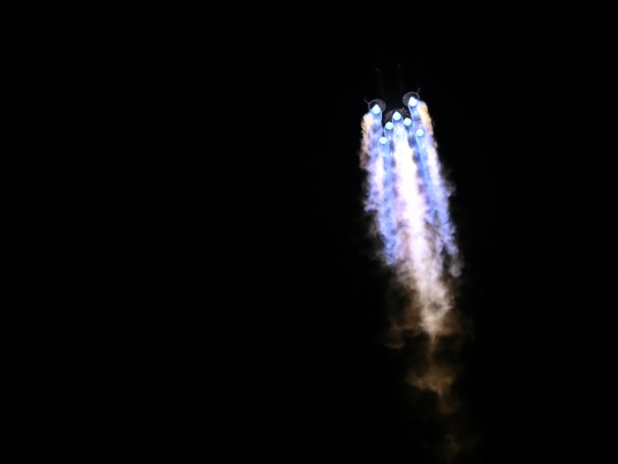
The China Manned Space Agency (CMSA) has confirmed the successful docking of the Shenzhou-23 spacecraft with the Tiangong space station, marking another significant milestone in China’s ongoing orbital operations. The spacecraft, carrying a three-member crew, completed its automated rendezvous and docking procedure with the radial port of the station’s Tianhe core module, as reported by official state media channels monitoring the mission’s progress.
This mission represents the latest step in the sustained occupation of the Tiangong space station, a multi-module facility that has become a centerpiece of China’s celestial research efforts. The docking process, which ensures the integration of the crewed vessel with the station’s primary living and working quarters, allows for the planned transition of personnel and the continuation of scientific experiments currently underway in low Earth orbit. According to the China Manned Space Agency, the station remains fully operational and prepared for the arrival of the new crew members.
Mission Objectives and Orbital Integration
The Shenzhou-23 mission is part of a rigorous schedule of launches designed to maintain a permanent human presence aboard the Tiangong facility. By utilizing the radial port of the Tianhe core module, the mission demonstrates the station’s flexibility in accommodating various spacecraft configurations. The Tianhe module, launched in 2021, serves as the management and control hub for the entire station, providing life support and power generation necessary for long-duration stays. Detailed specifications regarding the station’s current configuration and international cooperation protocols can be reviewed via the United Nations Office for Outer Space Affairs, which tracks global space station activities.
The docking maneuver is a highly choreographed event requiring precision navigation and propulsion control. The Shenzhou spacecraft, a proven vehicle in the Chinese fleet, utilizes an autonomous docking system derived from years of iterative development. Once the mechanical connection is secured, the crew must perform a series of leak checks and pressure equalizations before opening the hatches to meet the existing inhabitants of the station. This “space handover” is a critical phase, ensuring that scientific data and operational responsibilities are transferred without interruption.
The Role of the Shenzhou Spacecraft
The Shenzhou series of spacecraft, often likened to international counterparts in terms of its modular design, is composed of three primary segments: the descent module, the orbital module, and the service module. This design allows for the safe return of crew members while providing sufficient habitable volume for the duration of their journey to and from the station. The China National Space Administration maintains that the reliability of this architecture is fundamental to the safety of its astronauts, who undergo extensive training to handle both manual and automated flight phases.
The ongoing utility of these missions extends beyond simple transportation. The crew members involved in the Shenzhou-23 mission are tasked with conducting a range of scientific research projects, including studies on microgravity, materials science, and human physiology. These experiments are designed to yield data that could assist in future deep-space exploration efforts, including potential lunar missions. The commitment to these research goals remains a key indicator of China’s long-term aerospace strategy.
What Happens Next: Sustaining the Tiangong Mission
With the docking successfully completed, the focus now shifts to the operational transition on board the station. The incoming crew will spend the coming months integrating their research tasks with the ongoing work of the current station occupants. This period of “space handover” is essential for maintaining the station’s status as a fully functioning laboratory. The China Manned Space Agency typically provides regular updates on the progress of these missions through its official portal, which remains the primary source for verified mission timelines and status reports.
For observers of the global space industry, the Shenzhou-23 mission serves as a reminder of the increasing frequency and efficiency of orbital logistics. As more nations and private entities engage with low Earth orbit, the ability to perform complex maneuvers like radial docking with minimal disruption to ongoing research becomes increasingly valuable. Future updates regarding the mission’s conclusion and the eventual return of the crew will be released by official state channels as the mission progresses toward its next milestone.
The international community continues to monitor these developments as part of the broader evolution of space exploration. While the specific research outcomes of the Shenzhou-23 mission will be published in scientific journals following the conclusion of the mission, the immediate success of the docking operation underscores the maturity of the current Chinese crewed spaceflight program.
We invite our readers to share their thoughts on the evolution of space station operations in the comments section below. For the latest official bulletins regarding the Shenzhou-23 mission, please refer to the updates posted by the China Manned Space Agency as they become available.
Related reading