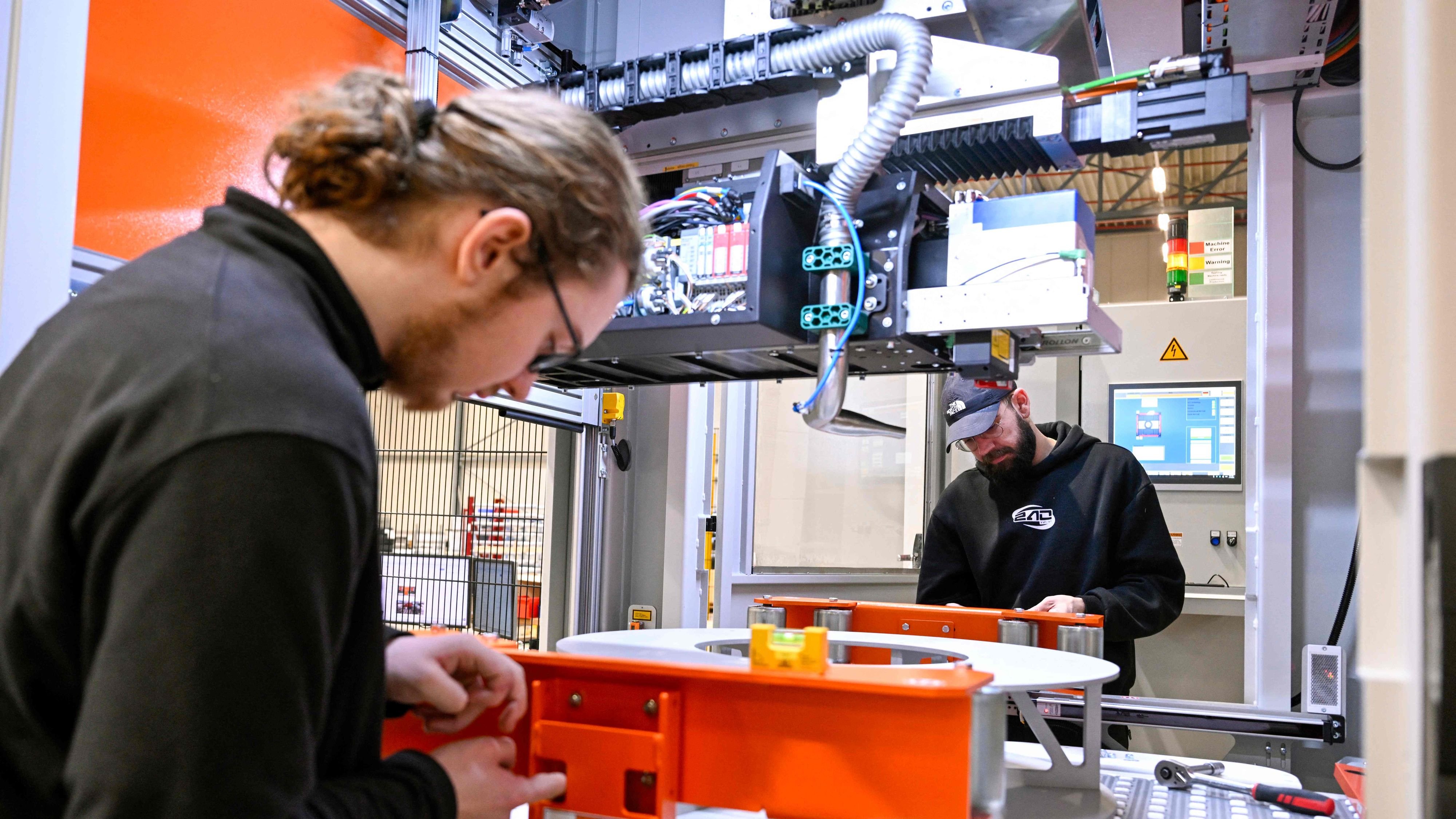
The industrial sector is witnessing increasing competition as established giants like Siemens and Microsoft face challenges from emerging startups. While the competitive landscape primarily features integrated industrial conglomerates and cloud providers, new players are entering the fray, aiming to disrupt traditional models and offer innovative solutions. This shift underscores a broader trend of digitalization and the growing importance of cloud-based services in modern manufacturing and industrial automation.
The convergence of Information Technology (IT) and Operational Technology (OT) is a key driver of this transformation. For decades, these two worlds operated in silos, hindering data sharing and collaboration. However, advancements in edge computing, cloud infrastructure, and artificial intelligence are breaking down these barriers, enabling manufacturers to optimize processes, improve efficiency, and unlock new revenue streams. The ability to seamlessly integrate data from industrial assets with cloud platforms is becoming a critical competitive advantage.
Siemens and Microsoft: A Long-Standing Partnership
Siemens and Microsoft have maintained a collaborative relationship for over 35 years, focused on accelerating digital transformation for enterprises. Their partnership centers on combining Siemens’ industrial solutions with Microsoft Azure cloud and AI services. This integration aims to provide seamless data sharing, enhanced collaboration, and AI-driven capabilities, ultimately streamlining product lifecycles and simplifying cloud journeys for customers. Tony Hemmelgarn, CEO and president of Siemens Digital Industries Software, emphasized the importance of bringing Siemens’ industrial software to Azure to enable customers to digitally transform through joint solutions.
A core component of this collaboration is the integration of Siemens Xcelerator with Microsoft Azure. Siemens Xcelerator is an open digital business platform designed to accelerate digital transformation. By leveraging Azure’s capabilities, Siemens aims to provide a more comprehensive and scalable solution for its customers. This includes utilizing Azure OpenAI and other Microsoft technologies to enhance product lifecycle management and design processes. The partnership is also focused on redefining Product Lifecycle Management (PLM), making it more scalable, secure, and collaborative.
The Role of Edge Computing and Data Integration
Edge computing plays a pivotal role in bridging the gap between IT and OT environments. Siemens Industrial Edge facilitates the capture and processing of data directly at the source, while seamlessly interfacing with Microsoft Azure IoT Operations. This allows manufacturers to integrate data flows from industrial assets using protocols like MQTT and OPC UA, fostering an interoperable data plane. This continuous data flow is crucial for creating adaptive production systems that enhance efficiency, flexibility, and innovation.
The ability to process data at the edge reduces latency and bandwidth requirements, making it ideal for mission-critical applications such as virtualized control, low-latency closed-loop AI, executable digital twins, and production line-level analytics. These applications require real-time data processing and analysis to optimize performance and prevent disruptions. The combination of Siemens’ OT expertise and Microsoft’s cloud capabilities enables manufacturers to deploy and manage these workloads effectively.
AWS and Siemens: Another Key Partnership
While the focus is often on Microsoft, Siemens also maintains a significant partnership with Amazon Web Services (AWS). Siemens leverages AWS to drive innovation across industries, including railways, factories, and infrastructure. Recent initiatives include using Amazon Nova to refine global search functionality, allowing customers to quickly find relevant information using natural language queries. This has reportedly improved search speed threefold and reduced costs by 70 percent.
Siemens has also implemented SiemensGPT, a global collaborative platform powered by Amazon Verified Permissions, Amazon API Gateway, and AWS Lambda. This platform democratizes AI access for over 80,000 monthly active users while maintaining enterprise-grade security standards. These examples demonstrate Siemens’ commitment to leveraging multiple cloud providers to deliver best-in-class solutions to its customers.
The Competitive Landscape and Emerging Startups
The competition in the industrial digitalization space is intensifying, with integrated industrial conglomerates like Siemens, cloud providers like Microsoft and Amazon, and increasingly, innovative startups vying for market share. The original source material highlights a German startup entering this competitive arena, though specific details about the startup remain unconfirmed. This suggests a growing trend of specialized companies offering niche solutions to address specific challenges in industrial automation and digitalization.
The success of these startups will likely depend on their ability to differentiate themselves through innovative technologies, specialized expertise, and a deep understanding of customer needs. Areas of focus may include AI-powered predictive maintenance, advanced robotics, digital twin technology, and cybersecurity solutions tailored for industrial environments. The ability to integrate seamlessly with existing infrastructure and cloud platforms will also be crucial for gaining traction in the market.
Challenges and Opportunities
Despite the potential benefits of digitalization, several challenges remain. These include the complexity of integrating legacy systems, the necessitate for skilled personnel, and concerns about data security and privacy. Manufacturers must carefully assess their existing infrastructure and develop a comprehensive strategy for digital transformation. Investing in training and upskilling programs is essential to ensure that employees have the skills needed to operate and maintain these new technologies.
Data security is paramount, as industrial systems are increasingly vulnerable to cyberattacks. Manufacturers must implement robust security measures to protect their data and prevent disruptions to operations. This includes adopting secure cloud platforms, implementing strong access controls, and regularly monitoring systems for threats. Collaboration between industry stakeholders and government agencies is also crucial for addressing cybersecurity challenges.
Looking Ahead
The industrial sector is on the cusp of a major transformation, driven by the convergence of IT and OT, the rise of edge computing, and the increasing adoption of cloud-based services. Companies like Siemens and Microsoft are leading the charge, but emerging startups are also playing a vital role in driving innovation. The ability to adapt to these changes and embrace new technologies will be critical for manufacturers to remain competitive in the years to come.
The next key development to watch will be the continued evolution of AI-powered solutions for industrial applications. As AI algorithms grow more sophisticated, they will enable manufacturers to automate more tasks, optimize processes, and make better decisions. The integration of AI with digital twin technology will also create new opportunities for virtual prototyping, simulation, and predictive maintenance. Further announcements regarding Siemens’ and Microsoft’s collaborative efforts, particularly concerning Azure OpenAI integration, are expected in the coming months.
What are your thoughts on the future of industrial digitalization? Share your comments below and let us know how these trends are impacting your industry.
Worth a look