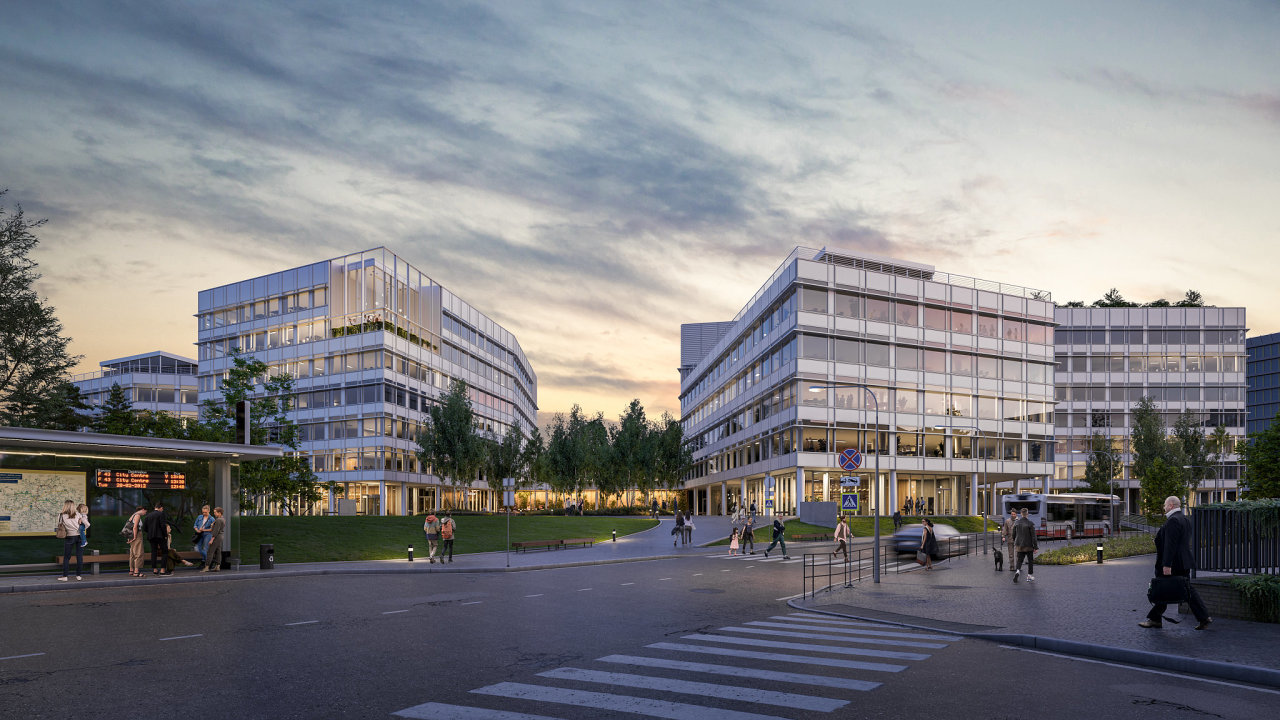
Prague is poised for a significant addition to its skyline as Skanska, a leading construction and development company, prepares to initiate construction on its largest-ever office complex in the Czech Republic. The project, tentatively named “Key,” will be located on vacant land between Sdružení and 5. Května streets, near the Pankrác metro station. This development signals growing confidence in Prague’s commercial real estate market, despite a broader slowdown in office construction.
The decision to proceed with the project without pre-leasing agreements is a notable one, reflecting Skanska’s bullish outlook. “Our main priority for this year is to start the project in Pankrác,” stated Tomáš Fabian, Skanska Commercial Development Europe’s Executive Vice President for Operations and Legal Affairs, in an interview with Hospodářské noviny on February 27, 2026. Fabian added that the company believes it makes sense to build another project in the location, which will be historically the largest for Skanska in Prague, exceeding the scale of the Port7 complex in Holešovice.
Addressing Prague’s Office Space Crunch
The demand for office space in prime Prague locations has been steadily increasing, while the supply of available space has dwindled. This scarcity has emboldened developers like Skanska to initiate new construction projects. Last year, Generali Real Estate and Passerinvest Group also broke ground on new office buildings in Prague 4 and 11, respectively. The Key complex aims to capitalize on this demand by offering over 36,000 square meters of primarily office space, alongside a smaller allocation for retail businesses.
Skanska intends the ground-floor spaces to cater not only to the employees of the office complex but also to local residents, providing convenient access to shops and services. The company also plans to construct a pedestrian underpass connecting the complex to the Pankrác metro station, improving accessibility for commuters and the surrounding community. This focus on connectivity and community integration is a key aspect of the project’s design.
Investment and Timeline
While Skanska has not disclosed the exact investment amount, Fabian indicated it will be in the lower billions of Czech crowns, surpassing the investment made in the Port7 complex. Skanska’s website details Port7 as a modern hub in Holešovice, offering offices, shops, and services connected to seven forms of transportation. The Key complex is expected to follow a similar model, prioritizing accessibility and convenience for its occupants.
Construction is slated to begin this year, with no preconditions tied to securing tenants. This demonstrates Skanska’s confidence in the long-term viability of the project and the continued demand for high-quality office space in Prague. The company’s decision to move forward without pre-leasing is a calculated risk, but one they believe is justified given the current market conditions.
Skanska’s Broader Presence in the Czech Republic
Skanska’s involvement in the Czech Republic extends beyond commercial development. The company is also actively engaged in residential projects, such as the Albatros Kbely development, offering apartments ranging from one to three bedrooms, complete with parks, playgrounds, and a new kindergarten. According to Skanska’s corporate website, they are focused on building energy-efficient homes for the future.
Skanska is involved in infrastructure projects, including the construction of the Rychlostní silnice I/12 highway between Běchovice and Úvaly, aimed at improving traffic flow and public transportation in the surrounding areas. They are also building a new railway station in Jihlava, serving as a central hub for public transportation in the region. The company’s diverse portfolio highlights its commitment to contributing to the development of the Czech Republic’s infrastructure and housing sectors.
Sustainability and ESG Focus
Skanska emphasizes sustainability and Environmental, Social, and Governance (ESG) principles in its projects. The company’s website highlights its commitment to developing and offering office and multi-functional buildings with a focus on quality, sustainability, and the health and well-being of users. This commitment is likely to be reflected in the design and construction of the Key complex, potentially incorporating green building technologies and sustainable materials.
Skanska also manufactures and supplies concrete, including Rebetong, a product made with a significant proportion of recycled construction materials. This demonstrates the company’s dedication to reducing its environmental impact and promoting circular economy principles within the construction industry. Their Whitetopping technology further showcases their innovation in concrete solutions.
Looking Ahead
The commencement of the Key complex represents a significant investment in Prague’s commercial real estate market and underscores Skanska’s long-term commitment to the Czech Republic. The project is expected to create numerous jobs during construction and provide a modern, sustainable workspace for businesses in the region. The improved accessibility to the Pankrác metro station, facilitated by the planned underpass, will further enhance the area’s appeal to both businesses and residents.
The next key milestone for the project will be the official start of construction, anticipated later this year. Further updates on the project’s progress, including details on the design and sustainability features, are expected to be released by Skanska in the coming months. The completion of the Key complex will undoubtedly contribute to Prague’s continued growth as a major business and economic hub in Central Europe.
What are your thoughts on the new Skanska development? Share your comments below, and be sure to share this article with your network!
Keep reading