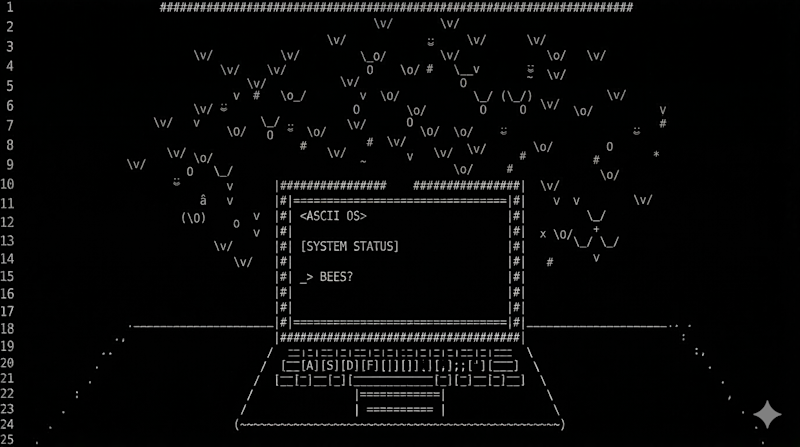
Random Labs Launches Slate V1, Pioneering ‘Swarm Native’ Coding Agents
San Francisco, CA – The software engineering landscape is facing a critical challenge: while artificial intelligence models are becoming increasingly powerful, effectively managing their complexity and scaling their application to real-world projects remains a significant hurdle. Developers often find that the potential of these advanced models diminishes when tackling tasks requiring sustained context and long-term planning. Now, a San Francisco-based startup, Random Labs, backed by Y Combinator, is aiming to address this “systems problem” with the launch of Slate V1, a novel coding agent described as the industry’s first “swarm native” autonomous coding environment. This fresh tool promises to unlock new levels of efficiency and scalability in software development, potentially reshaping how engineers approach complex projects.
Slate V1 isn’t simply another chatbot with coding capabilities. it’s built on a fundamentally different architecture designed to mimic the collaborative structure of a human organization. The company, co-founded by Kiran and Mihir Chintawar in 2024, envisions Slate as a collaborative tool to augment, not replace, human developers, aiming to help bridge the growing global engineering shortage. Random Labs believes Slate can empower the “next 20 million engineers” by providing a powerful platform for tackling increasingly complex software challenges. The launch of Slate V1 marks a significant step towards realizing this vision, offering a glimpse into a future where AI agents work in concert to solve the most demanding software engineering problems.
The core innovation behind Slate V1 lies in its “Thread Weaving” architecture, a departure from traditional task trees and lossy compression methods that often limit the effectiveness of AI coding assistants. This approach allows Slate to maintain context in large codebases and scale its output to meet the demands of enterprise-level projects. By leveraging Recursive Language Models (RLMs) and a unique orchestration system, Slate aims to overcome the limitations of current AI coding tools and unlock the full potential of large language models for software development. The company’s approach is rooted in the idea of maximizing the “Knowledge Overhang”—the untapped intelligence within a model—by strategically separating strategic planning from tactical execution.
Understanding the ‘Swarm Native’ Approach
Traditional AI coding assistants often struggle with tasks that require a long horizon or deep context. What we have is because these models are often forced to juggle high-level strategy and low-level execution simultaneously, hindering their ability to effectively access their full potential. Random Labs addresses this challenge with Slate’s “swarm native” architecture, which utilizes a central orchestration thread to “program in action space.” This orchestrator doesn’t directly write code but instead uses a TypeScript-based Domain Specific Language (DSL) to dispatch parallel worker threads to handle specific, bounded tasks. This separation of concerns—kernel managing strategy and worker processes executing tactics—allows Slate to treat the limited context window of a language model as a valuable resource, actively managing what information is retained and discarded.
This architecture draws inspiration from Andrej Karpathy’s “LLM OS” concept, treating the language model’s context window as analogous to a computer’s RAM. By carefully managing this limited resource, Slate can maintain performance and accuracy even when dealing with complex projects. The system’s ability to handle memory is further enhanced by its apply of “episodes.” Unlike traditional agents that rely on lossy compression, Slate generates concise summaries of successful tool calls and conclusions, sharing this contextual information directly with the orchestrator. This “swarm” intelligence allows for massive parallelism, enabling developers to leverage multiple models—such as Claude Sonnet for orchestration, GPT-5.4 for code execution, and GLM 5 for research—simultaneously.
Thread Weaving and Episodic Memory: The Technical Core
The true innovation of Slate V1 lies in its “Thread Weaving” approach to memory management. Most AI agents rely on “compaction,” a process that often involves lossy compression, potentially discarding critical project state. Slate, however, generates “episodes” – compressed summaries of successful tool calls and conclusions – that share context directly with the orchestrator, avoiding the pitfalls of brittle message passing. This allows the system to maintain a cohesive “swarm” intelligence, enabling massive parallelism. According to Random Labs, this approach allows developers to leverage the strengths of different models for specific tasks, optimizing both performance and cost. For example, a developer could use Claude Sonnet to orchestrate a complex refactor while simultaneously utilizing GPT-5.4 for code execution and GLM 5 for researching library documentation. This is a similar approach to that taken by Perplexity with its new Computer multi-model agent, highlighting a growing trend towards multi-model AI systems.
The architectural design prioritizes caching through subthread reuse, a “novel context engineering” trick that the team claims minimizes the financial burden on users. This efficient use of resources is crucial for scaling Slate to enterprise-level projects. In internal testing, an early version of the threading system reportedly passed two-thirds of the tests on the make-mips-interpreter task within the Terminal Bench 2.0 suite, a benchmark where even the newest frontier models, like Opus 4.6, often achieve a success rate of less than 20% when used in standard configurations. This success in a “mutated” or changing environment suggests that Slate offers a level of stability and reliability that surpasses traditional AI coding assistants, as one fintech founder in New York City described Slate as their “best debugging tool.”
Business Model and Integration
Random Labs is currently navigating the early stages of Slate V1’s release with a focus on transparency and strategic ambiguity regarding pricing. While a fixed-price subscription model hasn’t been announced, the Slate CLI documentation indicates a shift towards a usage-based credit system. Users can monitor their credit burn in real-time using commands like /usage and /billing, and organization-level billing toggles suggest a focus on professional engineering teams rather than individual hobbyists. This approach allows for flexible pricing based on actual usage, potentially making Slate accessible to a wider range of users.
Integration is also a key focus for Random Labs. The company recently announced plans to add direct support for OpenAI’s Codex and Anthropic’s Claude Code, suggesting that Slate isn’t intended to compete with these models’ native interfaces but rather to serve as a superior orchestration layer. This allows engineers to leverage the strengths of multiple models within a single, unified environment, maximizing efficiency and flexibility. The Y Combinator-backed startup is positioning Slate as a tool that enhances, rather than replaces, existing AI coding tools, offering a more powerful and versatile platform for software development.
The Broader Context: AI and the Future of Software Engineering
The launch of Slate V1 comes at a pivotal moment in the evolution of artificial intelligence and software engineering. The robotics industry, also experiencing significant growth fueled by Y Combinator funding, is increasingly reliant on sophisticated AI algorithms for automation and control. According to a report by BestStartup.us, there are currently 47 Y Combinator-backed robotics companies operating in the San Francisco Bay Area, combining hardware engineering, machine learning, and intelligent automation. This concentration of innovation underscores the growing importance of AI in the physical world.
The broader tech ecosystem in the San Francisco Bay Area continues to be a hotbed for AI innovation, with Y Combinator playing a key role in funding and supporting promising startups. As of March 2026, Y Combinator has funded over 2,105 companies in the region, including established players like Deel and Newfront. Slate V1 represents the latest example of Y Combinator’s commitment to fostering cutting-edge AI technologies that address real-world challenges. The company’s focus on scalability and collaboration positions it to play a significant role in shaping the future of software engineering.
As the industry moves beyond simple “chat with your code” interfaces, the “Thread Weaving” of Slate V1 offers a glimpse into a future where the primary role of the human engineer is to direct a hive mind of specialized models, each working in concert to solve the long-horizon problems of modern software. The success of Slate V1 will likely depend on its ability to deliver on its promise of increased efficiency, scalability, and stability, ultimately empowering developers to build more complex and innovative software solutions.
Random Labs has not yet announced a specific timeline for broader commercial availability or further feature releases. However, the company is actively gathering feedback from early users and plans to iterate on Slate V1 based on their input. The next major update is expected to focus on expanding model integration and refining the orchestration system. Keep an eye on the Random Labs website for official announcements and updates on Slate V1’s development.
What are your thoughts on the potential of ‘swarm native’ AI coding agents? Share your comments below and let us know how you see AI transforming the future of software development.
Related reading