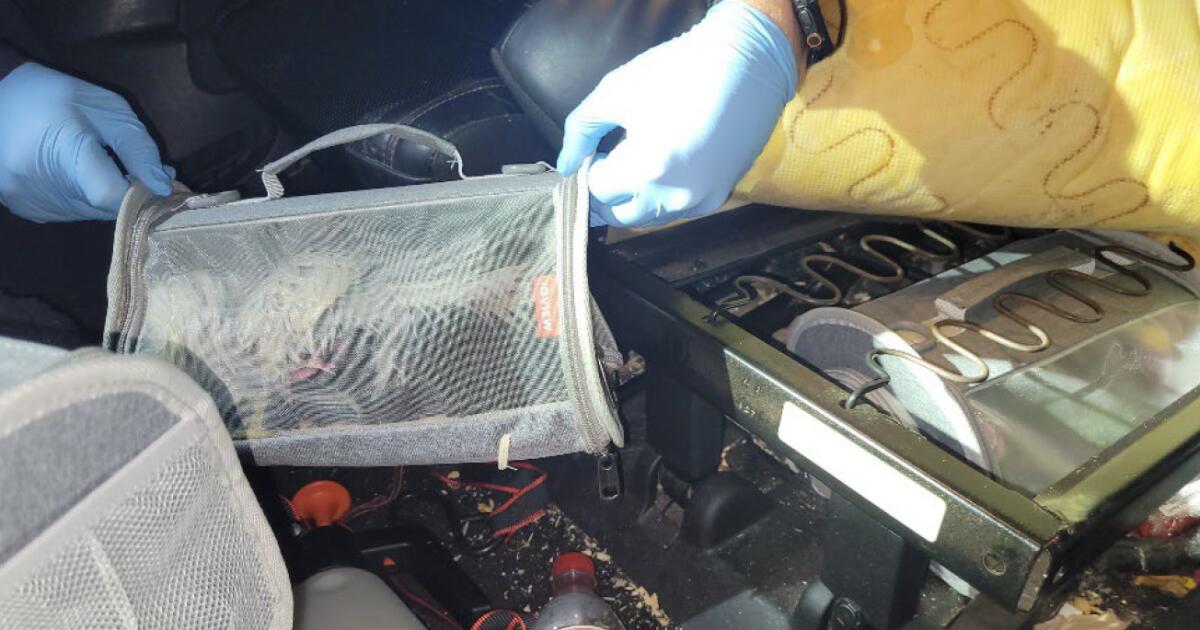
Recent cases of exotic bird smuggling at the U.S.-Mexico border have drawn renewed attention to the illegal wildlife trade, with authorities reporting incidents involving sedated, injured, and even deceased toucans and other protected species. These smuggling attempts, often concealed in vehicles, highlight ongoing challenges in enforcing wildlife protection laws at points of entry.
In one verified case, a man was arrested after U.S. Customs and Border Protection officers discovered 14 keel-billed toucans hidden in the dashboard of his Volkswagen Passat at the San Ysidro port of entry. The birds were reportedly sedated to prevent noise and movement during the attempted crossing. A second individual was intercepted trying to smuggle 17 exotic birds concealed beneath a car seat, using live chickens as decoys to divert inspection.
These incidents are part of a broader pattern identified by federal agencies, where smugglers attempt to transport protected avian species across borders for the exotic pet trade. Keel-billed toucans, native to Central and South America, are listed under Appendix II of the Convention on International Trade in Endangered Species of Wild Fauna and Flora (CITES), which regulates international trade to ensure it does not threaten their survival. In the United States, the importation of such birds without proper permits violates the Lacey Act and the Wild Bird Conservation Act.
According to U.S. Fish and Wildlife Service data, thousands of birds are illegally trafficked into the country each year, with many suffering from stress, dehydration, or injury due to poor transport conditions. Mortality rates among smuggled birds can be high, as evidenced by cases where animals were found dead upon discovery. Wildlife trafficking is not only a conservation concern but also linked to organized crime networks that exploit gaps in border enforcement.
Authorities have increased scrutiny at southern border crossings, employing X-ray technology and behavioral analysis to detect concealed animals. However, smugglers continue to adapt their methods, using vehicles, luggage, and even clothing to bypass inspections. Penalties for wildlife smuggling can include fines up to $250,000 and imprisonment for up to five years per offense under federal law.
Conservation organizations emphasize that demand for exotic pets drives much of this illegal trade. They urge the public to avoid purchasing wild-caught birds and to verify the legality and origin of any pet through reputable breeders or adoption centers. Public awareness campaigns aim to reduce demand by highlighting the ecological impact and animal welfare risks associated with the exotic pet trade.
Legal proceedings in the San Ysidro case are ongoing, with the defendant facing federal charges related to wildlife trafficking and making false statements to officials. Court records indicate the next scheduled hearing is set for May 15, 2026, at the U.S. District Court for the Southern District of California.
As border authorities continue to intercept smuggling attempts, officials stress the importance of interagency cooperation between Customs and Border Protection, the Fish and Wildlife Service, and international partners to dismantle trafficking networks. For updates on wildlife trafficking cases and enforcement actions, the public can refer to the U.S. Fish and Wildlife Service’s Office of Law Enforcement website.
What are your thoughts on how to better combat wildlife smuggling at borders? Share your perspective in the comments below and help spread awareness by sharing this article.