
The curtain is closing on a landmark chapter in late-night television history. As Saturday Night Live (SNL) concludes its 51st season, the atmosphere surrounding the season finale has been nothing short of electric, marked by a blend of nostalgia and the sharp, often polarizing edge that has come to define the modern era of the long-running sketch comedy institution.
While the season finale featured a high-profile host in Will Ferrell and a musical performance by the legendary Paul McCartney, much of the post-show discourse has centered on a specific, high-octane tradition: the Weekend Update joke swap. For years, anchors Colin Jost and Michael Che have utilized this segment to close out the season, but reports suggest that this year’s installment was among the most “brutal” in the segment’s history, pushing the boundaries of the show’s satirical limits.
The joke swap—a ritual where the two anchors read jokes written by one another—has evolved from a lighthearted end-of-season bit into a high-stakes test of comedic endurance and professional friendship. This season, the stakes felt higher as the duo navigated a landscape of intense cultural and political discourse, delivering punchlines that left audiences both laughing and questioning the limits of the format.
The Mechanics of the Weekend Update Joke Swap
To understand why the Season 51 finale swap has generated such significant conversation, one must first understand the mechanics of the tradition. Unlike the standard Weekend Update format, where anchors deliver curated news items and topical observations, the joke swap is a deliberate exercise in comedic vulnerability. The anchors trade scripts, meaning they are tasked with delivering material that may be intentionally uncomfortable, highly personal, or intentionally provocative, written through the lens of their co-anchor’s perspective.
This dynamic creates a unique tension. The performer is not merely delivering a joke; they are performing their partner’s interpretation of them. This proves a meta-commentary on their professional relationship and a showcase for the “mean-spirited” humor that has become a hallmark of the Jost and Che era. While earlier iterations of Weekend Update often relied on character-driven sketches or observational wit, the current era has leaned heavily into a direct, often biting form of satire that targets both public figures and the anchors themselves.
In the Season 51 finale, this tension reached a boiling point. The segment reportedly moved beyond mere topical humor, delving into much more contentious territory. According to reports on the broadcast, the jokes exchanged between Jost and Che touched upon highly sensitive subjects, including discussions involving “Sinners,” as well as sharp commentary regarding Michael Jackson and Kanye West. By targeting figures who remain central to complex cultural conversations, the anchors ensured the segment would be more than just a comedy bit; it became a lightning rod for discussion.
A Season of Extremes: The Context of Season 51
The intensity of the joke swap cannot be viewed in isolation from the broader context of the season. Season 51 has been characterized by a push toward more direct engagement with the current cultural zeitgeist. The choice of Will Ferrell as the season finale host provided a sense of historical continuity, bringing back one of the most iconic figures in the show’s history to anchor a monumental conclusion.
The inclusion of Paul McCartney as the musical guest further elevated the prestige of the finale, signaling that despite the biting humor of the Weekend Update segment, the production remains a premier global stage for entertainment. However, the juxtaposition of McCartney’s legendary musicality with the “brutal” humor of the joke swap highlights the dual nature of Saturday Night Live: a program that functions simultaneously as a celebration of entertainment history and a platform for relentless, often uncomfortable social critique.
The reported “brutality” of the joke swap is indicative of a broader trend in late-night programming. As the traditional boundaries of broadcast television continue to shift under the influence of digital media and social commentary, programs like SNL are increasingly forced to decide whether to play it safe or to lean into the friction. For Jost and Che, the decision appears to have been the latter, utilizing the season finale to cement their reputation as anchors who are unafraid to navigate the most volatile topics in the public consciousness.
The Evolution of Satire: From Observational to Provocative
The shift in tone observed during this season’s finale is part of a larger evolutionary arc for Weekend Update. Historically, the segment served as a way to digest the week’s news through a lens of irony, and caricature. In the decades following the era of Chevy Chase and Norm Macdonald, the segment has undergone several identity shifts, moving from purely topical news parody to a more personality-driven format.
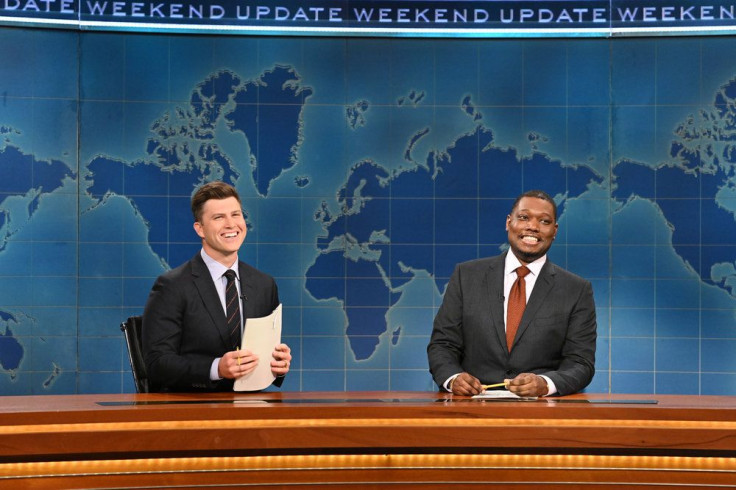
Under the stewardship of Colin Jost and Michael Che, the segment has embraced a more confrontational style. This approach often involves “breaking the fourth wall” of traditional news delivery, where the anchors acknowledge their own roles in the media landscape or mock the very format they are participating in. The joke swap is the ultimate expression of this evolution. It is a moment where the persona of the “news anchor” is completely dismantled in favor of a raw, often uncomfortable comedic exchange.
This transition has not been without its critics. Some viewers argue that the increasing reliance on “brutal” or “edgy” humor can detract from the more nuanced political satire that the show was once known for. However, proponents argue that in a fractured media environment, a more direct and provocative approach is necessary to capture the attention of a global audience and to reflect the heightened tensions of modern life. The Season 51 finale suggests that SNL is doubling down on this provocative identity.
Key Takeaways from the Season 51 Finale
- The Joke Swap Tradition: The segment remains a cornerstone of the SNL season finale, serving as a high-stakes test of the anchors’ comedic chemistry and professional rapport.
- Heightened Intensity: This year’s installment was noted for its particularly sharp and controversial content, reportedly involving discussions of Michael Jackson and Kanye West.
- Cultural Significance: The finale blended high-prestige entertainment (Will Ferrell, Paul McCartney) with the biting, subversive humor characteristic of the current Weekend Update era.
- A Defining Era: The season’s conclusion reinforces the Jost and Che era’s commitment to a more confrontational and direct style of satire.
Looking Toward Season 52
As the cast and crew of Saturday Night Live take their well-earned hiatus, the industry and the audience alike are looking toward the future. The conclusion of Season 51 leaves the show in a position of strength, having successfully navigated another year of intense cultural relevance and high-profile performances.
The question for Season 52 will be how the show manages to maintain this momentum. Will the “brutal” edge of Weekend Update become the new standard for the series, or will there be a return to more traditional forms of topical satire? As the landscape of late-night television continues to evolve, the ability to balance provocation with prestige will remain the ultimate challenge for the institution.
Official updates regarding the Season 52 premiere date and casting announcements are expected to be released by NBC in the coming months. For now, the discourse surrounding the Season 51 finale serves as a testament to the enduring, if sometimes uncomfortable, power of Saturday Night Live to capture the global imagination.
What are your thoughts on this year’s Weekend Update joke swap? Did the “brutal” tone enhance the finale, or did it go too far? We invite you to share your perspectives in the comments below.
Keep reading