For years, the prevailing medical narrative surrounding cognitive decline has focused heavily on the individual. We are told that a Mediterranean diet, consistent physical exercise, and a lifetime of mental stimulation are the primary shields against a fading mind. While these lifestyle choices undoubtedly matter, a landmark international study suggests that the environment we inhabit—the air we breathe, the stability of our governments, and the socioeconomic structures of our neighborhoods—may play a far more decisive role in how our brains age.
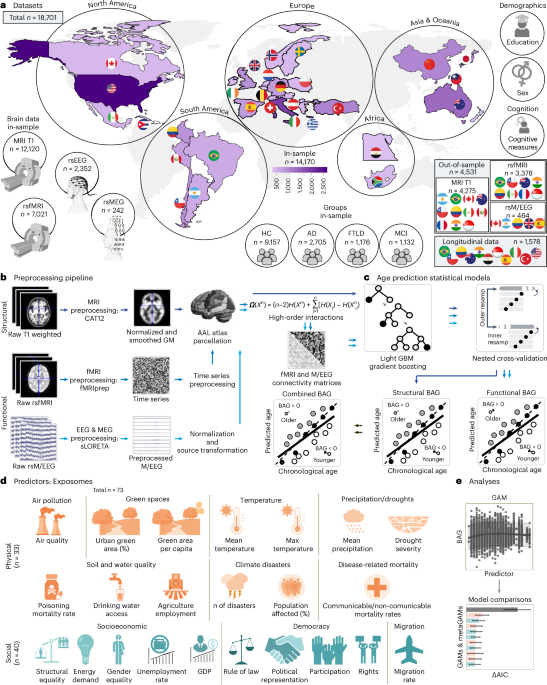
This concept is known as the “exposome,” the cumulative measure of every environmental exposure an individual encounters from conception to death. In a massive research effort involving 18,701 participants across 34 countries, researchers have uncovered a sobering reality: the combined weight of physical and social inequities can accelerate the exposome of brain aging more aggressively than clinical diagnoses alone.
As a physician and journalist, I have seen how systemic health disparities manifest in the clinic. However, this data provides a quantitative framework for what many public health experts have long suspected. The study, published in April 2026, reveals that brain health is not merely a matter of personal choice or genetic luck, but a global policy issue. By utilizing “brain clocks” to track neurological decay, the researchers demonstrated that the physical and social environments we navigate daily leave a tangible, measurable mark on our brain’s structure and function.
The Divide: Structural vs. Functional Brain Aging
One of the most striking revelations of the study is that different types of environmental stressors attack the brain in distinct ways. The researchers categorized the exposome into two primary domains: physical and social. Each is associated with a different manifestation of accelerated aging.

The physical exposome—which includes factors such as air pollution and extreme heat—was primarily linked to accelerated structural brain aging. This structural decay was most prominent in the limbic, subcortical, and cerebellar regions. These areas are critical for memory and emotional regulation, and the study suggests that this structural damage is likely driven by neuroinflammation and vascular dysfunction.
In contrast, the social exposome—encompassing factors such as economic inequality, poverty, and lack of access to healthcare—was more strongly associated with functional brain aging. This affects the frontotemporal and limbic networks, which are the regions responsible for complex thinking and social behavior. The researchers attribute this functional decline to the biological toll of chronic, long-term stress, which disrupts how different parts of the brain communicate with one another.
The Syndemic Effect: When Risks Multiply
Perhaps the most critical finding for policymakers is the “syndemic” nature of these exposures. In medical terms, a syndemic occurs when multiple health problems interact in a way that exacerbates the overall burden of disease. The study found that environmental and social pressures do not simply add up; they multiply.
When researchers analyzed the data, they found that aggregated exposome models—looking at the combined effect of various factors—explained up to 15.5-fold more variance in brain aging than any single exposure alone. Specifically, the delta Akaike information criterion (ΔAIC) was measured between 2,034 and 3,127, indicating a massive increase in the predictive power of combined models over individual factors.
This means that while air pollution is a risk, its impact is nonlinearly accelerated when paired with poverty or a lack of green space. For an individual living in a “syndemic” environment of political instability and high pollution, the damage to the brain occurs at a rate that far exceeds the sum of those individual risks. This evidence suggests that standard “lifestyle” advice—such as increasing exercise or improving diet—is fundamentally insufficient if the person continues to live in an environment that actively drives neurological decay.
Exposome Burden vs. Clinical Diagnosis
For clinicians, the study provides a provocative insight into the weight of environmental burden compared to medical pathology. The research included a diverse cohort of participants, including healthy individuals as well as those diagnosed with Alzheimer’s disease, mild cognitive impairment, and frontotemporal lobar degeneration.
The findings revealed that the overall exposome burden accounted for a 3.3 to 9.1-fold higher risk of accelerated aging. In some instances, the combined social and environmental challenges of a person’s life had a larger impact on their brain’s aging process than a formal clinical diagnosis of dementia.
This shift in perspective is vital. It suggests that we may be over-pathologizing brain aging while under-addressing the structural inequalities that cause it. If the environment is a primary driver of neurological decay, then the most effective “treatment” for brain aging may not be found in a pharmacy, but in urban planning, environmental regulation, and social policy.
Key Takeaways from the Global Exposome Study
- Scale: The study analyzed 18,701 participants across 34 diverse countries to map the cumulative effects of environmental and social factors.
- Physical Impact: Pollution and heat drive structural aging in the limbic and subcortical regions, linked to vascular dysfunction.
- Social Impact: Inequality and lack of healthcare drive functional aging in the frontotemporal networks, linked to chronic stress.
- The Multiplier: Combined exposures explain up to 15.5 times more variance in brain aging than single factors.
- Policy Shift: Exposome burden can exceed the effects of clinical diagnoses, framing brain health as a global policy issue rather than just a medical one.
What This Means for the Future of Public Health
The implications of this research extend far beyond the laboratory. By providing a quantitative framework for how the exposome affects the brain, the study underscores an urgent need to address physical, social, and political inequities to preserve cognitive health on a global scale.
When we talk about “brain health,” we often focus on the individual’s brain. But this research forces us to look at the “brain” of the city, the “brain” of the neighborhood, and the “brain” of the nation. If political instability and air pollution are directly accelerating the aging of the human brain, then fighting climate change and reducing socioeconomic inequality are, in a very literal sense, neurological interventions.
For those of us in the medical community, Here’s a call to move toward a more holistic model of care. We must begin asking our patients not only about their diet and exercise but about their housing, their air quality, and their social support systems. We cannot treat the patient in isolation from the environment that is shaping their biology.
The next step for the scientific community will be to determine which specific interventions—such as increased urban green space or targeted social safety nets—can most effectively decelerate this process. While the study highlights the damage, it also provides the map for where we must intervene to protect the cognitive longevity of populations worldwide.
This research marks a critical checkpoint in our understanding of neurodegeneration, shifting the focus from the internal to the external. As we move forward, the goal must be to create environments where a sharp mind in old age is a right accessible to all, regardless of the country they are born in or the neighborhood they call home.
Do you believe environmental factors are overlooked in current healthcare? Share your thoughts in the comments below or share this article to start a conversation about global brain health.
Worth a look