
Across the global healthcare landscape, a persistent and dangerous gap exists between the patients who need the most help and the resources available to provide it. For years, population health programs have attempted to bridge this gap using risk stratification—the process of identifying high-risk patients to prioritize their care. However, many of these programs have relied on “blunt tools” that seem backward rather than forward.
Traditionally, these systems have focused on historical utilization. They identify patients who were expensive or who had frequent hospital visits in the past. While this provides a snapshot of previous costs, it often fails to detect emerging clinical risks. By the time a patient appears as “high-cost” in a historical report, the window for early, preventative intervention has often already closed, leading to preventable hospitalizations and escalating costs.
The shift toward machine learning in care management is changing this dynamic. By integrating clinical informatics with advanced analytics, healthcare organizations are moving away from managing volume and toward managing risk through anticipation. The goal is no longer just to see who was sick, but to predict who is becoming sick.
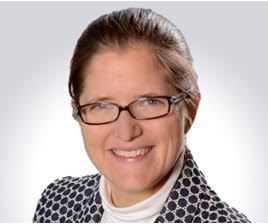
Leading this transition is Mary Bacaj, Ph.D., President of Value-Based Care at Conifer Health Solutions. In her role, Bacaj oversees a business unit that provides population health management and financial risk management services to more than 250 organizations via Conifer Health Solutions. Her work focuses on ensuring that individuals receive the right care at the right time, aligning healthcare providers to improve overall population health.
The Precision Problem in Population Health
The central challenge in population health is a lack of precision. Care management teams operate under persistent resource constraints; It’s clinically and financially impossible to provide intensive, “high-touch” support to every single member of a patient population. Clinical capacity must be allocated with extreme deliberation.
When organizations rely on basic risk scores or vendor-generated models based on historical data, they struggle to detect clinical deterioration early enough to influence the outcome. This creates a reactive system. The success of a population health program depends on the ability to identify members who need intervention before a crisis occurs. This necessity is highlighted in guidance from the CMS Medicaid Innovation Accelerator Program, which emphasizes using risk stratification to prioritize resources for beneficiaries with complex needs.
To solve this, some organizations are integrating clinical informatics directly into the development of their analytic models. When clinical reasoning—the “why” and “how” of medicine—informs how a model is built, the resulting analytics become more actionable. Instead of treating a predictive model as a static tool layered on top of a workflow, the care management strategy and the analytic design evolve together, allowing the system to adapt as clinical standards change.
Moving From Claims to Disease-Centered Risk
A fundamental shift is occurring in how risk is viewed: moving from a claims-based approach to a disease-centered approach. Traditional analytics often treat medical claims as isolated events. They count a specific visit, a particular procedure, or a single prescription as a separate indicator of utilization. This method views the patient as a series of transactions.

In contrast, disease-based approaches aggregate medical and pharmacy claims into unified profiles. These profiles reflect how a specific condition progresses over time. For example, instead of seeing a laboratory test, a specialist visit, and a neuropathy treatment as three unrelated events, a disease-centered model evaluates them as components of a single disease burden.
This creates a consistent unit of analysis at both the member and disease level. By viewing the “burden” of a disease, care teams can see exactly where risk is accumulating. This allows for much earlier and more precise interventions, as the system recognizes the pattern of a progressing illness rather than just the cost of a completed visit.
Why Machine Learning Outperforms Linear Models
For decades, healthcare analytics relied primarily on linear regression models. While these are effective when dealing with a limited number of variables, they struggle in populations where patients have multiple interacting conditions—a common occurrence in chronic disease management.
Machine learning enhances the framework of population health by improving pattern detection in complex, nonlinear clinical data. In conditions such as heart failure, traditional linear models often explain only a modest share of future cost variation. Machine learning models, however, can incorporate much broader variable sets and identify subtle relationships that linear approaches miss.
When designed carefully, these models improve predictive performance without sacrificing operational stability or interpretability. This makes them particularly valuable for complex, high-cost conditions where early intervention yields the most significant clinical and financial impact. By identifying the non-linear trajectory of a patient’s health, machine learning allows providers to anticipate a decline before it manifests as an emergency room visit.
Finding the ‘Right 5%’: Cost as a Proxy for Severity
In a world of limited resources, the most critical operational question is: if only 5% of members can receive intensive, high-touch intervention, how do organizations ensure it is the right 5%?
Improved predictive accuracy allows projected cost to serve as a practical proxy for clinical severity. While morbidity scoring and documentation can vary widely across different populations, an elevated expected cost is strongly correlated with clinical complexity, instability, and the need for intensive care coordination. What we have is a key focus in managing high-need, high-cost patients, as detailed by the Agency for Healthcare Research and Quality (AHRQ).
By identifying members whose annual costs are likely to reach six figures before they deteriorate, care teams can engage them with targeted, support-intensive care. This precision ensures that the limited capacity of care managers is directed toward the individuals who will benefit most, thereby improving the credibility and effectiveness of the entire population health program.
Key Takeaways for Care Management Precision
- Shift from Reactive to Predictive: Moving from historical utilization (who was expensive) to predictive analytics (who will be high-risk).
- Disease-Centered Analysis: Aggregating isolated claims into unified disease profiles to track condition progression.
- ML vs. Linear Regression: Using machine learning to detect nonlinear patterns in complex patients, particularly those with multiple comorbidities.
- Resource Optimization: Using projected cost as a proxy for severity to ensure the “right 5%” of the population receives high-touch care.
- Clinical Integration: Ensuring clinical informatics inform analytic design so that data translates directly into bedside action.
Translating Analytics into Frontline Action
The theoretical value of predictive analytics is only realized when those insights reach the point of care. The true goal is to empower care management nurses and coordinators by moving analytics from simple reporting to real-time decision support.
When a nurse is provided with data showing a member’s disease severity, their likely clinical trajectory, and their likelihood of benefiting from immediate outreach, the data becomes a tool for action. This alignment allows care teams to focus their time and attention where it matters most. The result is a reduction in avoidable admissions, lower inpatient utilization, and a vastly improved experience for the member.
This creates a sustainable operating model where clinical judgment and data-driven insights reinforce one another. The nurse’s expertise is not replaced by the algorithm; rather, it is guided by it, ensuring that the human element of healthcare is applied with maximum precision.
The Next Era of Population Health
The future of population health will not be defined by the volume of data collected, but by the precision of its application. While analytics and predictive trends will continue to evolve, the driving force of behavior change remains the interaction between the clinician and the member.
By making these interactions more impactful and precise, healthcare systems can move beyond the “precision problem” that has plagued population health for years. The integration of machine learning, clinical informatics, and dedicated care management is paving the way for a system that doesn’t just treat illness, but anticipates and mitigates it.
As these models continue to be refined and integrated into global health systems, the industry will likely see a continued shift toward value-based care models that prioritize outcomes over the number of services provided.
World Today Journal will continue to monitor the development of these predictive frameworks and their impact on patient outcomes. We invite our readers to share their experiences with predictive care management in the comments below.