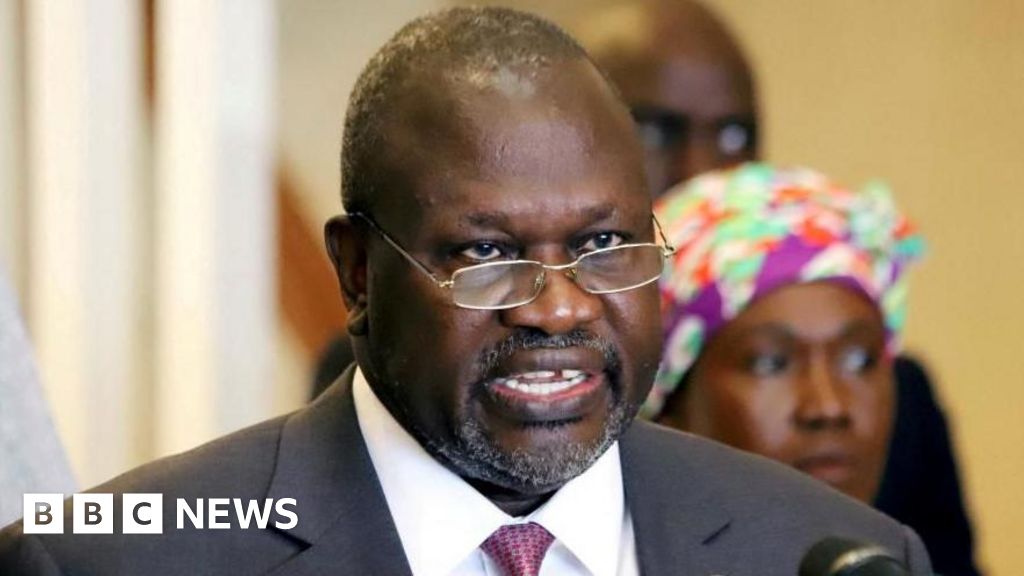
South Sudan‘s Political Crisis: Examining the Charges Against Riek Machar and the Future of Peace
Last Updated: September 11, 2025, 16:23:22
The fragile peace in South Sudan is once again under severe strain.First Vice-President Riek Machar has been formally charged with serious offenses – murder,treason,and crimes against humanity - a growth that raises the specter of renewed civil war. This isn’t simply a legal matter; it’s a critical juncture for the world’s youngest nation,demanding a nuanced understanding of its complex political landscape. This article delves into the details of the charges, the historical context, the potential ramifications, and what the international community is doing to avert a catastrophe.Understanding the South Sudan conflict requires acknowledging the deep-seated ethnic tensions and power struggles that have plagued the country as its independence.
The Formal Charges and Immediate aftermath
On September 11, 2025, Justice Minister Joseph Geng Akech announced the charges against Machar, linking them to an attack in March allegedly perpetrated by a militia with ties to the First Vice-President. The specifics of the attack remain contested, but reports indicate it involved clashes in a region already simmering with inter-communal violence.Immediately following the declaration, security forces blocked roads leading to Machar’s residence in Juba, effectively placing him under increased confinement.This action, while presented as a security measure, is widely viewed as a deliberate escalation of tensions.
The charges themselves are exceptionally grave.Crimes against humanity, under the Rome Statute, encompass widespread or systematic attacks against a civilian population. Treason, in the context of South Sudan, carries the potential for a lengthy prison sentence or even the death penalty. The speed with which these charges were brought, and the manner in which they were announced, have fueled concerns about due process and political motivations.
Historical Context: A Cycle of Violence
To understand the current crisis, it’s crucial to revisit the history of conflict in South Sudan.The roots of the current instability lie in the power struggle between President Salva Kiir,representing the Dinka ethnic group,and Riek Machar,representing the Nuer. This rivalry, fueled by competition for resources and political dominance, erupted into a full-blown civil war in December 2013.
| Event | year | Key Outcome |
|---|---|---|
| South Sudan independence | 2011 | Creation of a new nation, but with unresolved ethnic tensions. |
| Outbreak of Civil War | 2013 | Intense fighting between forces loyal to Kiir and Machar. |
| Revitalized Peace Agreement | 2018 | Power-sharing agreement aimed at ending the conflict. |
| Current crisis (machar Charged) | 2025 | Threatens to derail the peace process and reignite violence. |
The five-year civil war (2013-2018) resulted in an estimated 400,000 deaths and displaced millions.The 2018 Revitalized Agreement on the Resolution of the Conflict in the Republic of South Sudan (R-ARCSS) brought a fragile peace, establishing a power-sharing government with Kiir as President and Machar as First vice-President.However, the implementation of the agreement has been fraught with challenges.
The relationship between Kiir
Worth a look