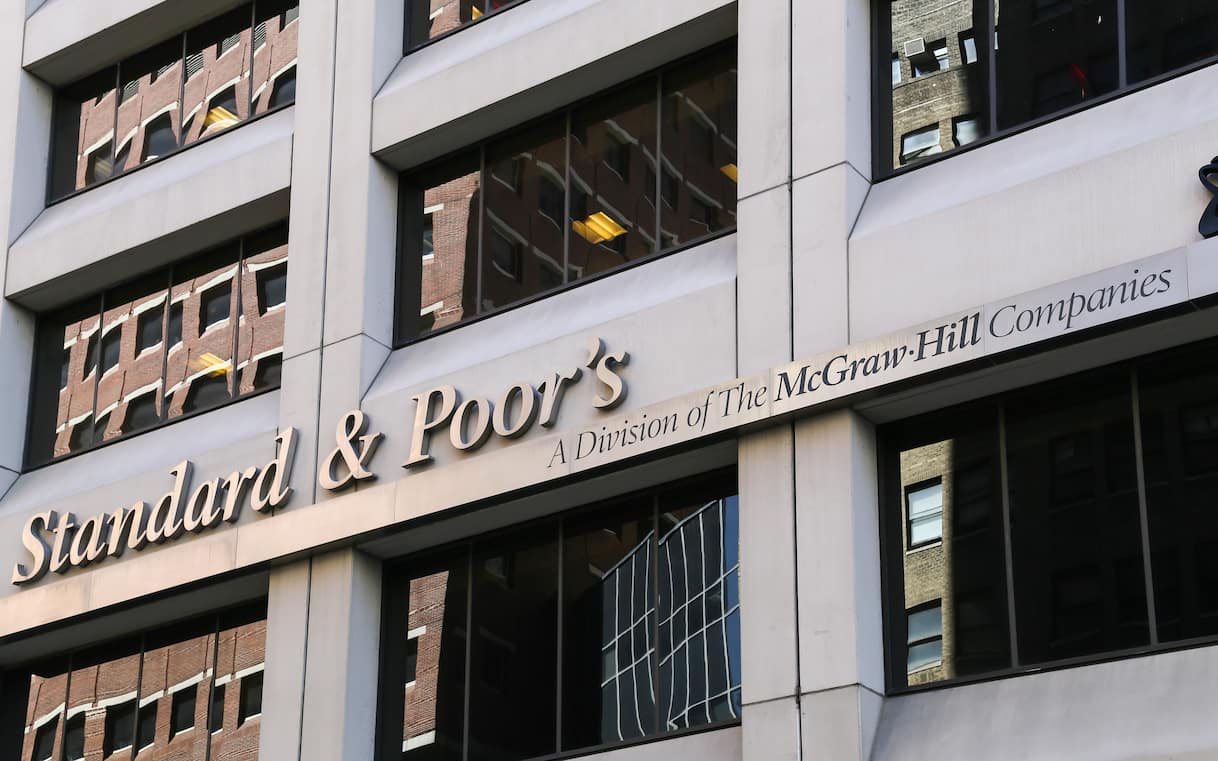
Italy’s fiscal trajectory remains a focal point for global investors as the nation navigates the complexities of high sovereign debt and the stringent requirements of European Union fiscal rules. Recent reports indicate that S&P Global Ratings has maintained Italy’s credit rating at BBB+, while shifting the outlook to positive. This adjustment suggests a potential upgrade in the coming months, provided the Italian government continues its current path of fiscal consolidation and economic stabilization.
For a country that has long struggled with a debt-to-GDP ratio that frequently exceeds 140%, a positive outlook from one of the “Big Three” credit rating agencies is a significant signal to the markets. It indicates that the risk of default is perceived as stable or declining, and that the structural reforms currently being implemented are beginning to yield tangible results in the eyes of international analysts.
As Chief Editor of Business at World Today Journal, I have tracked the volatility of Italian government bonds—specifically the BTPs (Buoni del Tesoro Poliennali)—for nearly two decades. The spread between the Italian BTP and the German Bund remains the primary barometer for market confidence in Rome. A shift toward a positive outlook typically puts downward pressure on this spread, effectively lowering the cost of borrowing for the Italian state and providing more breathing room for public investment.
Decoding the BBB+ Rating and Positive Outlook
To understand the weight of this news, one must first understand the hierarchy of credit ratings. A rating of BBB+ falls within the “Investment Grade” category. This means that S&P Global Ratings considers the issuer to have an adequate capacity to meet its financial commitments. While it is not in the “A” or “AA” tiers reserved for the world’s most fiscally conservative nations, it is safely above the “junk” or speculative-grade threshold.

The transition of the outlook to “positive” is perhaps more critical than the rating itself. In the lexicon of credit agencies, an outlook is a forward-looking indicator. A “stable” outlook suggests the rating is unlikely to change; a “negative” outlook warns of a potential downgrade. A “positive” outlook, however, means that the agency sees a clear path toward an upgrade to the next notch (in this case, A-), provided certain economic benchmarks are met.
For Italy, this potential upgrade depends on several key factors:
- Fiscal Discipline: A demonstrated ability to reduce the primary deficit and manage the overall debt-to-GDP ratio.
- GDP Growth: Consistent economic growth that outpaces the interest payments on the national debt.
- Structural Reforms: Progress in implementing the milestones tied to the National Recovery and Resilience Plan (NRRP), which is funded by the European Union.
The Macroeconomic Backdrop: Debt and Growth
Italy’s economic narrative has been dominated by its massive public debt. According to data from the European Central Bank (ECB), Italy maintains one of the highest debt-to-GDP ratios in the Eurozone. This makes the country particularly sensitive to interest rate hikes. When the ECB raises rates to combat inflation, the cost of servicing Italy’s debt increases, which can crowd out spending on infrastructure, healthcare, and education.
However, the “positive” outlook suggests that S&P is seeing a decoupling of this risk. If Italy can maintain a primary surplus—meaning the government earns more than it spends, excluding interest payments—it can stabilize its debt even in a high-interest-rate environment. The current administration’s focus on attracting foreign direct investment and improving the business climate has likely contributed to this improved sentiment.
the role of the European Union cannot be overstated. The recovery funds provided after the pandemic have acted as a catalyst for digitalization and green energy transitions. If Italy successfully deploys these funds, the resulting boost in productivity could permanently raise the country’s growth ceiling, making the BBB+ rating a floor rather than a ceiling.
Market Implications for Investors and BTPs
For institutional investors, a positive outlook reduces the “risk premium” associated with Italian assets. This often leads to increased demand for BTPs, which drives bond prices up and yields down. For the average Italian citizen, Here’s not merely a technicality of high finance; lower government borrowing costs mean the state is less likely to implement drastic austerity measures to pay off creditors.
| Rating Action | Typical Market Reaction | Impact on Borrowing Costs |
|---|---|---|
| Upgrade | Increased demand for bonds | Significant decrease in yields |
| Positive Outlook | Speculative buying/Confidence boost | Moderate decrease or stabilization |
| Stable Outlook | Neutral/Market equilibrium | No immediate change |
| Negative Outlook | Sell-offs/Risk aversion | Increase in yields (Spread widens) |
What Happens Next?
The path from a “positive outlook” to an actual rating upgrade is rarely linear. S&P will be closely monitoring Italy’s budget execution for the remainder of the fiscal year. Any significant deviation from the promised deficit targets or a political crisis that halts structural reforms could quickly revert the outlook to “stable” or even “negative.”
Investors should keep a close eye on the upcoming quarterly GDP reports and the official reports on NRRP milestone achievements. These will be the primary data points S&P uses to determine if the “positive” outlook warrants a formal upgrade to the A- category.
The next major checkpoint will be the release of the updated budget projections and the subsequent review by the European Commission, which will signal whether Italy is remaining compliant with the reformed Stability and Growth Pact. This regulatory alignment is essential for maintaining the confidence of the rating agencies.
Do you believe Italy’s current fiscal path is sustainable in the long term, or is the positive outlook premature? Share your thoughts in the comments below or share this analysis with your professional network.