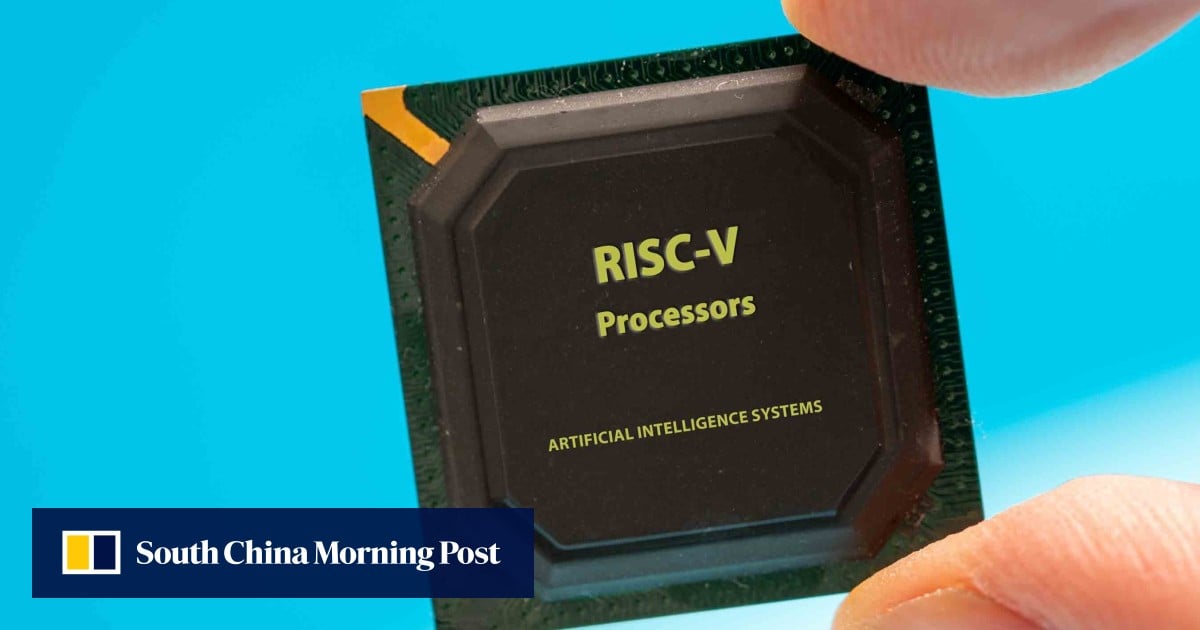
SpacemiT gears Up for Mass Production of RISC-V AI Chips
Chinese semiconductor start-up SpacemiT is preparing to begin mass production of its K3 RISC-V central processing unit (CPU) in April 2026, following the completion of the tape-out process in 2025.The company recently secured over US$86 million in Series B funding, led by investors including Huaxia Hengtian, the Beijing Artificial Intelligence Industry Investment Fund, and Brizan Ventures, to accelerate growth and expand its talent pool. This move is seen as a significant step towards China’s goal of achieving self-sufficiency in semiconductor technology.
RISC-V: An Open-Source Choice
SpacemiT’s chips are based on the RISC-V architecture, an open-source instruction set architecture (ISA) that is gaining traction as an alternative to proprietary architectures like those from Intel and Arm. RISC-V offers greater flexibility and customization options,allowing companies like SpacemiT to design chips tailored to specific applications,notably in the rapidly growing field of artificial intelligence (AI). The open-source nature also reduces reliance on foreign technology and fosters innovation.
Focus on edge AI and Large Language models
SpacemiT is specifically targeting the Edge AI market with its RISC-V chips.Edge AI involves processing AI algorithms directly on devices – such as smartphones, autonomous vehicles, and iot devices – rather than relying on cloud-based processing. This offers benefits like reduced latency, increased privacy, and improved reliability. The company’s chips are designed to efficiently support the deployment of large language models (LLMs) on these edge devices.
“We are firmly optimistic about AI and large language models,and that’s why we are driving the intelligent upgrade [with RISC-V-based chips],” said Chen Zhijian,founder and CEO of SpacemiT SCMP.
K3 CPU and Tape-Out Process
The K3 CPU represents SpacemiT’s latest advancement in RISC-V technology. the “tape-out” process, completed in 2025, is a critical milestone in semiconductor design. It signifies the finalization of the chip’s design and the creation of the manufacturing instructions sent to the fabrication facility (fab) for production. Successfully completing tape-out indicates that the design is ready for mass production.
Implications for China’s Semiconductor Industry
China has been actively investing in its domestic semiconductor industry to reduce its dependence on foreign suppliers, particularly in light of geopolitical tensions and export restrictions. Companies like SpacemiT, with their focus on open-source architectures like RISC-V, are playing a key role in this effort. The successful mass production of the K3 chip could represent a significant step forward for China’s chip self-sufficiency goals.
Key Takeaways
- SpacemiT is set to begin mass production of its K3 RISC-V AI CPU in April 2026.
- The company recently raised over US$86 million in Series B funding.
- SpacemiT is focused on developing RISC-V chips for Edge AI applications and large language models.
- The company’s efforts align with China’s broader strategy to achieve semiconductor self-sufficiency.
Related reading