
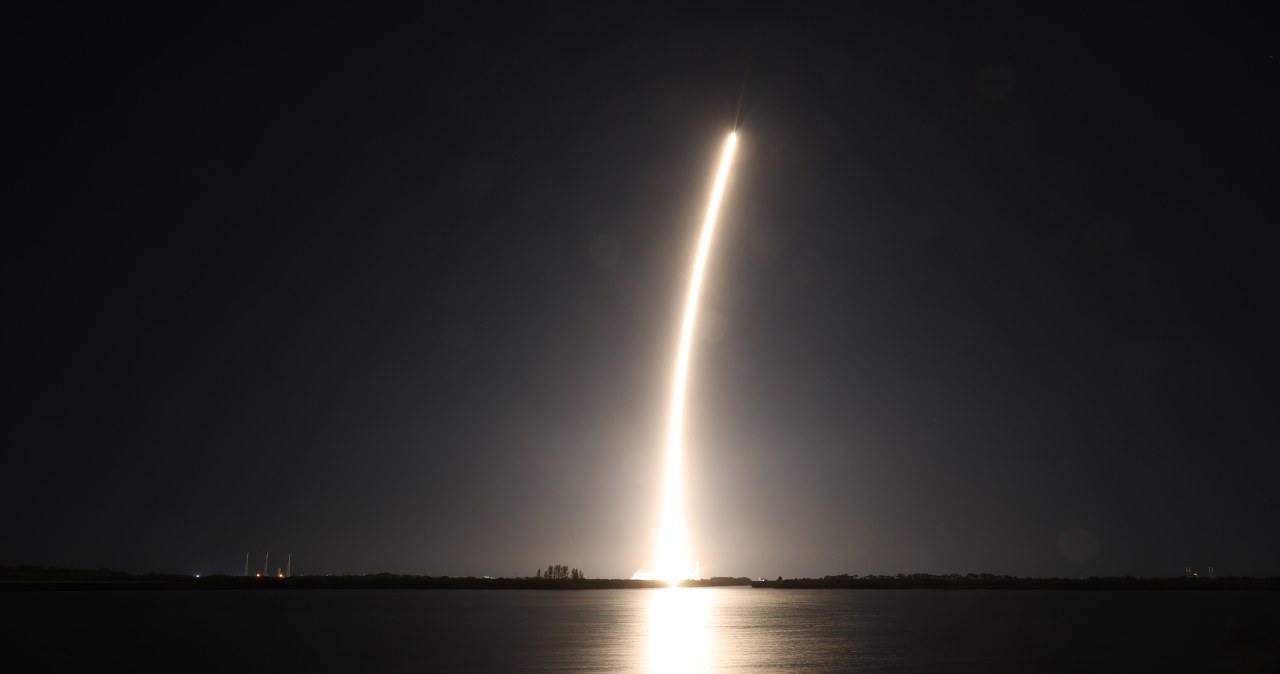
A piece of human-made space debris is on a calculated collision course with the Moon, turning a former delivery vehicle into an accidental lunar projectile. Astronomers have determined that an upper stage from a SpaceX Falcon 9 rocket is expected to strike the lunar surface in August 2026, creating a small, new crater in the process.
The Falcon 9 moon impact is not the result of a failed mission, but rather the natural conclusion of an orbital trajectory for a component that was never intended to return to Earth. According to tracking data, the object—identified as the upper stage 2025-010D—will hit the Moon on August 5, 2026, traveling at a velocity exceeding seven times the speed of sound.
This event highlights the growing challenge of “space junk” and the precision with which independent observers can now track debris across the cislunar void. While the impact will not pose a threat to any existing lunar infrastructure, it serves as a stark reminder of the materials humans leave behind in the pursuit of deep-space exploration.
The Orbital Trajectory of 2025-010D
The debris in question is the second stage of a Falcon 9 rocket launched in January 2025. This specific launch was a multi-payload mission designed to deploy two separate lunar landers: the Blue Ghost lander from Firefly Aerospace and the Hakuto-R lander from ispace. Once the landers were successfully deployed toward their respective destinations, the upper stage remained in space.
For over a year, the component remained in Earth’s orbit. While many upper stages eventually re-enter the atmosphere and burn up, the trajectory of 2025-010D was different. It remained in a stable but precarious orbit until gravitational perturbations nudged it toward a lunar intercept.
The object is substantial in size, measuring approximately 13.8 meters in length, and 3.7 meters in diameter. Because it is a hollow cylinder designed to hold propellant and house a Merlin vacuum engine, its impact will be more significant than that of a small bolt or paint chip, though it remains minuscule compared to the natural asteroids that pelt the Moon daily.
Tracking the Debris: The Role of Project Pluto
The prediction of the impact comes from the meticulous perform of Bill Gray, the creator of Project Pluto. Gray utilizes a specialized software system to track near-Earth objects and space debris, relying on thousands of individual measurements to refine the orbital path of objects moving through the solar system.
Between the rocket’s launch in January 2025 and February 2026, Gray’s team collected over a thousand measurements to track the fragment. This high volume of data allowed for a high-confidence identification of the object as the Falcon 9 upper stage, eliminating the risk of misidentifying a natural asteroid as human debris.
According to the current projections, the impact is scheduled to occur on August 5, 2026, at approximately 8:44 AM Polish time. The precision of this window is possible because the object has been monitored continuously since its separation from the primary payload.
The Physics of a Lunar Collision
When an object hits the Moon, the lack of an atmosphere means there is no air resistance to slow it down. The Falcon 9 stage will maintain nearly all of its orbital velocity until the moment of contact. At seven times the speed of sound, the kinetic energy released upon impact will be immense, instantly vaporizing a portion of the rocket’s structure and excavating a small amount of lunar regolith.
The result will be a fresh, small crater. While this may seem insignificant, such impacts are of interest to planetary scientists. They provide a baseline for understanding how human-made materials—such as the aluminum-lithium alloys used by SpaceX—interact with the lunar surface upon high-velocity impact.
Comparison of Lunar Impact Factors
| Variable | Detail |
|---|---|
| Object ID | Upper Stage 2025-010D |
| Impact Date | August 5, 2026 |
| Estimated Velocity | > 7x Speed of Sound |
| Object Dimensions | 13.8m (L) x 3.7m (D) |
| Origin Mission | January 2025 (Blue Ghost / Hakuto-R) |
What This Means for Lunar Exploration
As humanity prepares for a sustained presence on the Moon through programs like Artemis, the issue of orbital debris is becoming more pressing. The “cislunar” region—the space between Earth and the Moon—is becoming increasingly crowded with spent rocket stages, discarded fairings, and defunct satellites.

Unlike Earth’s orbit, where debris can eventually be cleared by atmospheric drag, objects in lunar or cislunar orbits can persist for vast periods or be flung into unpredictable trajectories. The case of 2025-010D demonstrates that even “stable” orbits can eventually lead to impacts.
For the scientific community, the primary concern is not the creation of a few new craters, but the potential for “collision cascades” where debris hits other active missions. While the August 5 impact is isolated, it underscores the necessitate for better international coordination in tracking and disposing of spent rocket stages.
Key Takeaways
- The Event: A SpaceX Falcon 9 upper stage (2025-010D) will hit the Moon on August 5, 2026.
- The Origin: The stage was used in a January 2025 mission to deploy the Blue Ghost and Hakuto-R landers.
- The Velocity: The impact will occur at more than seven times the speed of sound.
- The Tracking: Bill Gray of Project Pluto verified the impact using over 1,000 measurements.
- The Impact: The collision will create a small new crater but poses no threat to current lunar missions.
The next confirmed checkpoint for this event will be the final orbital refinement updates from Project Pluto as the object approaches the lunar sphere of influence in late July 2026. We will continue to monitor the trajectory as the date approaches.
Do you reckon space agencies should be required to ensure all upper stages are intentionally crashed or moved to “graveyard” orbits? Let us know your thoughts in the comments below.