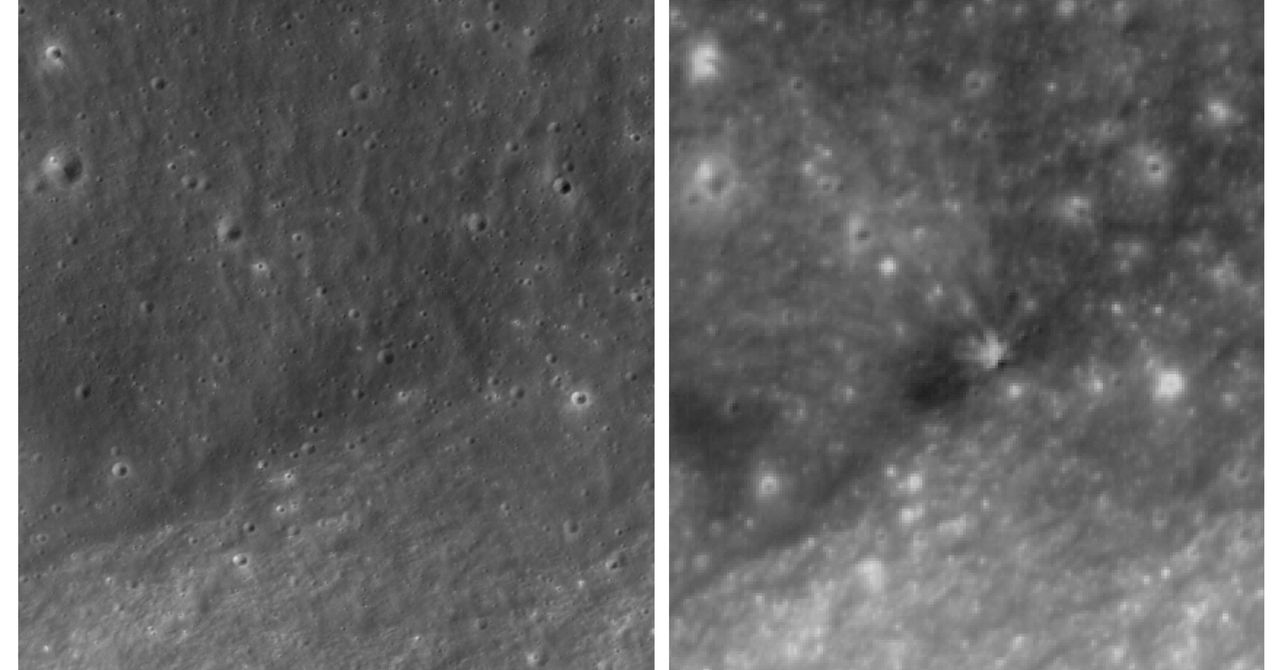
A spent SpaceX Falcon 9 rocket stage slammed into the moon at roughly 5,400 mph on August 5, 2026, creating a fresh crater and generating a dusty debris plume that telescopes in Chile detected. The unplanned collision highlights growing concerns over space debris in cislunar space as lunar missions multiply.
The roughly four-ton upper stage of a SpaceX Falcon 9, measuring more than 40 feet long and resembling the scale of a five-story building, struck the moon at about 8,700 kilometers per hour near Einstein Crater on the moon’s sunlit western limb, as reported by arkansasonline.com.
Orbital Drift and the Accidental Collision Course
The rocket stage originally launched on January 15, 2025, from Cape Canaveral, carrying a pair of private lunar landers—Firefly Aerospace’s Blue Ghost and ispace’s Resilience—toward the moon, as detailed by arkansasonline.com. While Blue Ghost successfully landed, becoming the first private spacecraft to achieve a lunar touchdown, the rocket’s upper stage remained in space in a high, looping orbit shaped by the gravity of Earth, the Moon, and the Sun.
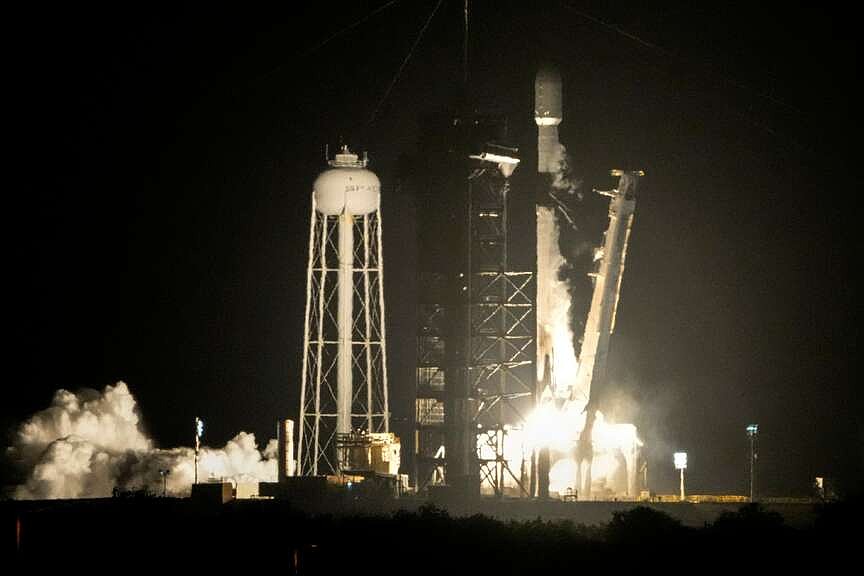
Over the course of more than a year, solar activity and gravitational forces gradually altered the spent stage’s trajectory until it intersected the moon.
“We are actively working to be as responsible as possible with the hardware left in space and to ensure space safety, even on more complex missions. In this case, over time, solar activity and gravity deflected the second stage toward the Moon. Impacts like this are rare, but they can occur with objects in these types of orbits, and we are collaborating with NASA to find the optimal disposal solution,”
Julianna Scheiman, SpaceX’s director of NASA Science and Dragon Programs
Telescopic Detection and Lunar Orbiter Imagery
Because the impact occurred on the moon’s sunlit western limb near the edge of the near and far sides, direct visual observation of the flash from Earth proved extremely difficult arkansasonline.com. However, astronomers utilized the European Southern Observatory’s Very Large Telescope in Chile to examine the aftermath Zmescience.

Researchers confirmed that the instrument detected spectral lines of sodium and lithium gas in the impact plume, which lasted for five to 10 minutes Zmescience. Carl Schmidt of Boston University’s Center for Space Physics stated that the sodium likely originated from lunar soil, while the lithium may have come from the rocket stage itself Zmescience. Schmidt noted that he was 100% certain
his team’s observations captured the debris stream arkansasonline.com.
Orbiting spacecraft also captured the event’s physical aftermath. South Korea’s Danuri lunar orbiter recorded the impact zone before and after the collision, sharing photographs that confirmed changes in the terrain and traces of ejected material mashable.com. Additional high-resolution images are anticipated from NASA’s Lunar Reconnaissance Orbiter arkansasonline.com.
Growing Concerns Over Cislunar Debris
The unplanned impact has drawn renewed attention to the accumulation of human-made debris in cislunar space. These remnants date back to the Soviet Union’s Luna 2 in 1959 and include hardware from multiple Apollo missions forbes.com, as well as an accidental lunar impact by a Chinese rocket in 2022 arkansasonline.com.
“Things are going to get a lot busier near the moon. At that point an impact like this on the lunar surface plowing up huge amounts of dust going for hundreds of miles around is not going to be acceptable.”
Jonathan McDowell, retired astrophysicist
Worth a look