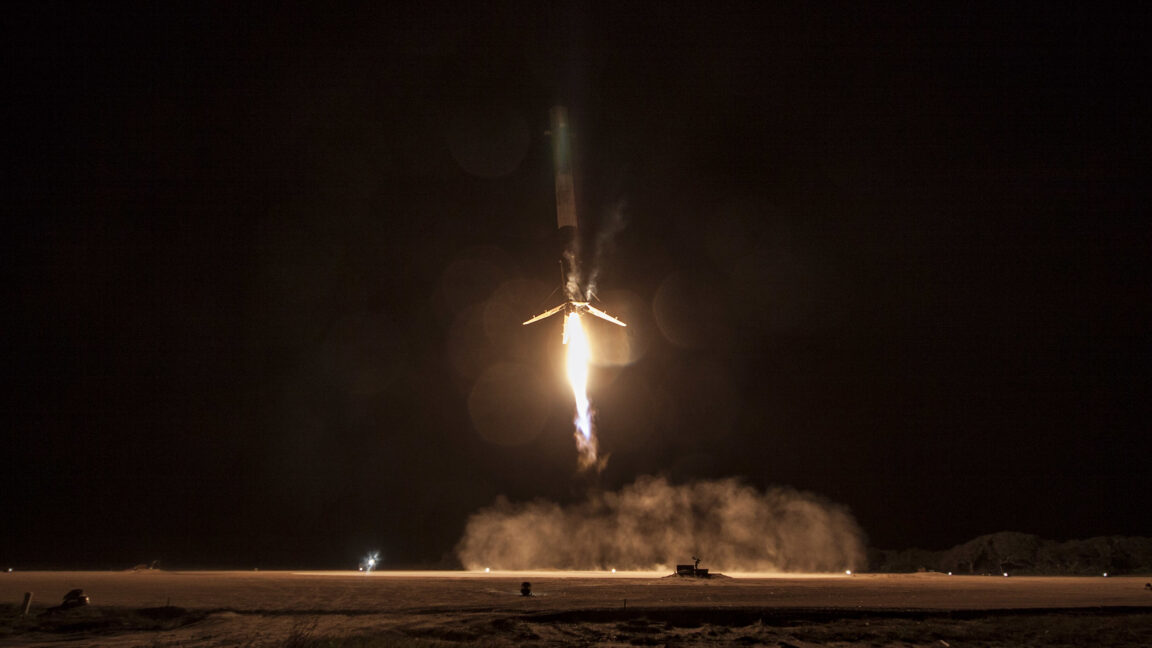
The Night SpaceX Rewrote the Rules of Spaceflight: The ORBCOMM launch and Landing
The December 2015 landing of a Falcon 9 first stage after the ORBCOMM launch wasn’t just a successful rocket recovery; it was a seismic shift in the history of space exploration. It was a moment that validated Elon Musk’s audacious vision for reusable rockets, a feat previously relegated to the realm of science fiction.But to understand the true magnitude of this achievement, we need to rewind and examine the precipice from which SpaceX launched itself – a precipice forged in the fires of a devastating failure.
From Failure to Triumph: A six-Month Sprint
Just months prior, in June 2015, a Falcon 9 rocket carrying cargo for the International Space Station (ISS) was lost just over two minutes after liftoff. The failure, caused by a faulty strut in the second stage cryogenic helium system, was a crippling blow. SpaceX was a private company, not backed by the seemingly limitless resources of a nation. This wasn’t just a setback; it threatened the company’s very existence.
Yet, from the ashes of that disaster rose an remarkable display of engineering prowess and unwavering determination. Over the next six months, the roughly 4,000 employees of SpaceX embarked on four critical, parallel projects. This wasn’t simply about getting back into flight; it was about fundamentally upgrading the Falcon 9. The ORBCOMM mission represented a “final exam” encompassing:
* Return to Flight: Restoring confidence in the Falcon 9’s reliability after the June failure.
* Full Thrust Upgrade: Implementing significant enhancements to the Falcon 9’s performance capabilities.
* Oxygen Densification: A groundbreaking program to increase the density of liquid oxygen propellant, boosting engine efficiency.
* First Landing: The ambitious attempt to land the first stage booster back on Earth – a concept considered impossible by many.
The stakes were immense.Success meant not only survival but a leap forward in reducing the cost of space access. Failure could have spelled the end of spacex.
A Moment Etched in history
On December 21, 2015, the Falcon 9 launched from Cape Canaveral Air Force Station, successfully deploying the ORBCOMM OG2 satellite constellation.But the real drama unfolded in the minutes that followed. As the first stage separated, it began a controlled descent back towards Landing Zone 1 at Cape canaveral.
The tension in mission control was palpable. Years of research, progress, and relentless testing culminated in this single moment. Then, it happened. With pinpoint accuracy, the rocket gently touched down, its legs extending to absorb the impact.
The eruption of joy was immediate and visceral. Back at spacex headquarters in Hawthorne, california, employees flooded the factory floor, chanting “U-S-A! U-S-A! U-S-A!” It was a celebration not just of a technical achievement, but of a defiant spirit that refused to accept limitations.
“It’s hard to describe how epic this comeback was after our first Falcon 9 launch failure,” recalled Gwynne Shotwell, SpaceX’s President and COO. Those present that night,including Elon Musk,looked upon the sooty rocket bathed in floodlights,realizing they had witnessed something truly extraordinary. As Musk himself has stated, “It just felt so massive.”
Beyond the footsteps: Pioneering Reusability
Prior to the ORBCOMM landing, spaceflight followed a predictable pattern. Rockets were launched, satellites were deployed, and the rockets were typically discarded into the ocean. SpaceX had already been innovating in this space, offering cheaper and more efficient launch services. But the landing changed everything.
It wasn’t just about cost savings, even though those were considerable. It was about fundamentally altering the economics of space travel. Reusability meant rockets could be flown multiple times, dramatically reducing the expense of accessing space and opening up new possibilities for exploration and commercialization.
Catriona Chambers, who joined SpaceX in 2005 as an electronics engineer, embodies the dedication and foresight that fueled this success. Initially responsible for the Merlin engine computer on the Falcon 1, she remembered early discussions about parachute deployment for reuse – a concept considered largely theoretical. Eleven years later, as Director of Avionics, she watched her vision become reality, feeling the weight of history as she celebrated with her team.
The ORBCOMM launch and landing wasn’t simply a step forward; it was a giant leap. It marked the transition from following in the footsteps of established space agencies to blazing a new trail - a trail that continues
Keep reading