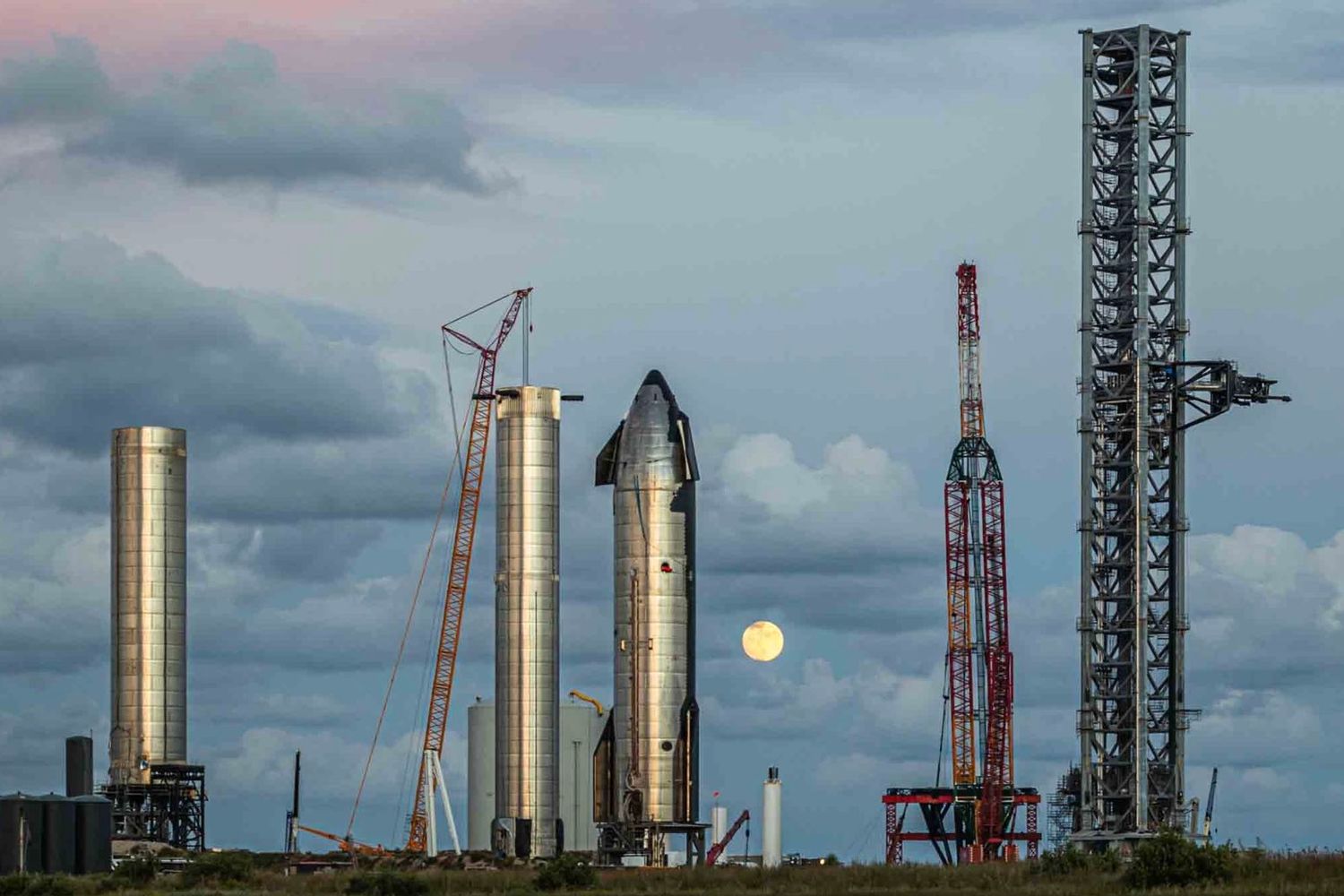
The global financial markets have long been braced for a seismic shift in the aerospace sector: the potential public debut of Elon Musk’s SpaceX. For months, speculative reports have suggested that the private space giant was preparing for a “mega-IPO” that would redefine the valuation of the modern space economy. However, recent indications suggest that SpaceX may be scaling back those immediate expectations, opting instead to maintain its private status while navigating the complex intersection of rapid technological expansion and regulatory scrutiny.
While the frenzy surrounding a potential Initial Public Offering (IPO) has not subsided, the narrative is shifting from “when” to “how.” Rather than a traditional public listing that would subject the company to the quarterly scrutiny of Wall Street, SpaceX appears to be prioritizing liquidity through secondary share sales. This strategic pivot allows the company to satisfy investor demand and provide employee liquidity without the structural constraints and transparency requirements of a public company.
The current landscape for SpaceX IPO expectations is characterized by a tension between the company’s astronomical valuation and its long-term, capital-intensive mission objectives. As SpaceX continues to push the boundaries of orbital transport with its Starship program and expands its satellite internet constellation via Starlink, the question of its capital structure remains one of the most watched stories in global finance.
The Mechanics of Private Liquidity: IPO vs. Secondary Markets
To understand why SpaceX might be tempering IPO rumors, it is essential to distinguish between a traditional IPO and the tender offers the company has frequently utilized. In a standard IPO, a company issues new shares to the public, providing a massive influx of capital but also requiring rigorous, ongoing regulatory disclosures. For a company like SpaceX, which is engaged in high-risk, high-reward experimental physics and deep-space colonization efforts, the pressure of public market volatility could be a significant distraction.

Instead, SpaceX has mastered the art of the secondary market tender offer. These transactions allow existing shareholders and employees to sell their stakes to private investors. According to recent financial reporting, these secondary sales have consistently valued the company in the range of approximately $210 billion to $250 billion, depending on the specific funding round and market conditions. This method provides the “exit” that many investors crave without the systemic changes required by a public listing.
By utilizing secondary markets, SpaceX achieves several strategic advantages:
- Capital Retention: The company can manage its valuation and investor base without the immediate need for massive public capital raises.
- Operational Focus: Elon Musk and his leadership team can focus on the iterative development of Starship and the deployment of Starlink without being judged by short-term earnings reports.
- Controlled Growth: The company can select institutional investors who align with its long-term, multi-decadal vision for Mars colonization.
The Starlink Factor: A Potential Catalyst for Spin-offs
While a total company IPO may be on the horizon much later than some analysts predict, the conversation regarding a “spin-off” of Starlink remains a central pillar of SpaceX’s financial strategy. Starlink, the company’s satellite internet division, is rapidly transitioning from a high-cost deployment phase to a high-margin revenue-generating powerhouse.

As Starlink achieves global coverage and begins to see significant cash flow, the possibility of an independent IPO for the satellite division becomes increasingly plausible. Analysts suggest that a Starlink IPO could serve two purposes: it would provide SpaceX with a massive infusion of capital to fund the Starship program, and it would allow investors to gain exposure to the burgeoning space-based internet market without the direct risks associated with heavy-lift rocket development.
The monetization of Starlink is the key metric that the global investment community is monitoring. If the division can prove sustained profitability and predictable subscriber growth, it could become one of the most valuable telecommunications entities in history, potentially acting as the financial engine that powers the rest of SpaceX’s ambitious roadmap.
Strategic Restraint and the Vision for Mars
The decision to scale back IPO expectations is deeply intertwined with Elon Musk’s stated mission: making life multi-planetary. The development of Starship—the most powerful launch vehicle ever built—requires an unprecedented level of continuous, heavy investment. The capital requirements for building a fully reusable launch architecture and eventually establishing a presence on Mars are so vast that they may exceed the typical appetite of public equity markets.
Historically, Musk has expressed a preference for private ownership when the company’s objectives are long-term and potentially disruptive to traditional market norms. The “New Space” era, characterized by rapid iteration and high failure rates during testing, is fundamentally at odds with the “predictable growth” model that public markets demand. By remaining private, SpaceX retains the agility to absorb the financial shocks of failed launches or regulatory delays—events that are a natural part of aerospace development.
the company’s relationship with the Federal Aviation Administration (FAA) and other regulatory bodies adds a layer of complexity. The regulatory landscape for commercial spaceflight is still being written. Managing the intense scrutiny of launch licenses and environmental reviews is a full-time operational priority that benefits from the relative privacy of a non-public company.
Comparative Overview: SpaceX Financial Pathways
| Feature | Traditional IPO | Secondary Tender Offer | Starlink Spin-off |
|---|---|---|---|
| Primary Goal | Massive capital influx/Public exit | Employee/Investor liquidity | Segment-specific monetization |
| Regulatory Burden | Very High (SEC/Public Filings) | Low (Private transactions) | High (Specific to Telecom/Satellite) |
| Market Volatility | High (Subject to public sentiment) | Minimal (Private valuation) | Moderate (Telecom market driven) |
| Impact on Vision | Potential distraction via quarterly goals | Maintains long-term focus | Funds core Starship mission |
The Economic Impact of the “New Space” Economy
Whether SpaceX chooses an IPO today or a decade from now, its eventual public presence will have profound implications for the global economy. The company has effectively lowered the cost of access to space, fundamentally changing the economics of satellite deployment, Earth observation, and scientific research. This “democratization of orbit” is driving a wave of innovation across multiple sectors, from global telecommunications to national security.

As SpaceX scales, it is also fostering a massive ecosystem of suppliers, launch service competitors, and downstream data users. A successful public listing—whether for the whole company or a division—would likely trigger a massive re-rating of the entire aerospace and defense sector. Investors would no longer view space as a government-funded niche, but as a commercially viable, high-growth frontier.
However, the “scaling back” of immediate expectations should not be viewed as a sign of weakness. Rather, it reflects a maturing company that understands its own unique requirements. SpaceX is navigating a period of intense operational scaling, focusing on the successful integration of Starship into regular flight cadences and the continued expansion of the Starlink constellation. These operational milestones are the true precursors to any future public market event.
Key Takeaways
- Shift in Strategy: SpaceX is prioritizing private liquidity through secondary markets over a traditional, immediate IPO.
- Valuation Stability: Recent tender offers suggest a valuation between $210 billion and $250 billion, reflecting strong private investor confidence.
- Starlink as a Catalyst: The Starlink division remains the most likely candidate for an eventual public debut or spin-off.
- Mission Alignment: Maintaining private status allows SpaceX to focus on the high-risk, long-term goals of Starship and Mars exploration without public market pressure.
- Regulatory Environment: Ongoing coordination with the FAA remains a critical operational focus for the company.
As the aerospace industry moves into a new era of commercial dominance, all eyes remain on the next major Starship flight test and the subsequent financial developments within SpaceX. While the “mega-IPO” may be a distant prospect, the company’s influence on global geopolitics and the economy is already undeniable.
Next Milestone: Investors and industry observers will be closely watching the upcoming FAA-coordinated Starship launch schedules and any official communications regarding new private funding rounds or secondary share offerings.
What are your thoughts on SpaceX’s decision to remain private? Do you believe a Starlink spin-off is the most logical path forward? Let us know in the comments below and share this article with your network.