
The global financial markets are currently bracing for a potential shift in the landscape of high-stakes technology investment. As institutional investors and venture capital firms monitor the horizon for the next generation of “mega-IPO” candidates, the spotlight has turned toward the artificial intelligence sector. While SpaceX—Elon Musk’s aerospace giant—has long been the subject of intense public speculation regarding a potential public offering, It’s the rapid maturation of AI titans OpenAI and Anthropic that is arguably driving the most significant shifts in private market valuation strategies.
For investors, the prospect of an initial public offering (IPO) from a company at the forefront of generative AI represents a rare opportunity to capture growth in a sector that has effectively redefined the parameters of global productivity. However, the path to the public markets is rarely linear. As we navigate the current economic cycle, the tension between maintaining private control and accessing the deep liquidity of public exchanges has become a defining narrative for Silicon Valley’s most influential leaders.
The Evolution of the “Mega-IPO” Landscape
The concept of a “mega-IPO” has evolved significantly since the tech boom of the late 1990s. Today, companies are staying private longer, relying on secondary markets and massive private funding rounds to fuel operations. This trend, often referred to as “private-market maturity,” allows firms to refine their business models and achieve scale without the immediate scrutiny of quarterly earnings reports. According to recent market analysis, this strategy has been particularly prevalent among capital-intensive firms like SpaceX, which has utilized private equity to maintain its operational independence while reaching a valuation that recently surpassed the $200 billion mark in secondary market transactions, as reported by Reuters.
For OpenAI and Anthropic, the stakes are fundamentally different. Both companies are navigating a complex regulatory environment while managing the immense costs associated with training large language models. The race to reach the public markets is not merely about capital; it is about establishing a permanent footprint in the global economy. Unlike traditional startups, these organizations are shaping the future of international trade, data privacy, and national security, making their eventual transition to public equity a matter of significant interest for global regulators.
OpenAI and Anthropic: Strategic Divergence
OpenAI, led by Sam Altman, has undergone a series of structural shifts to better align its governance with its commercial ambitions. The transition from a non-profit-controlled entity to a more standard corporate structure has been a prerequisite for the kind of capital infusion required to maintain its lead in the generative AI space. In October 2024, the company announced it had raised $6.6 billion in a new funding round, which pushed its valuation to an estimated $157 billion, according to official statements released by OpenAI.
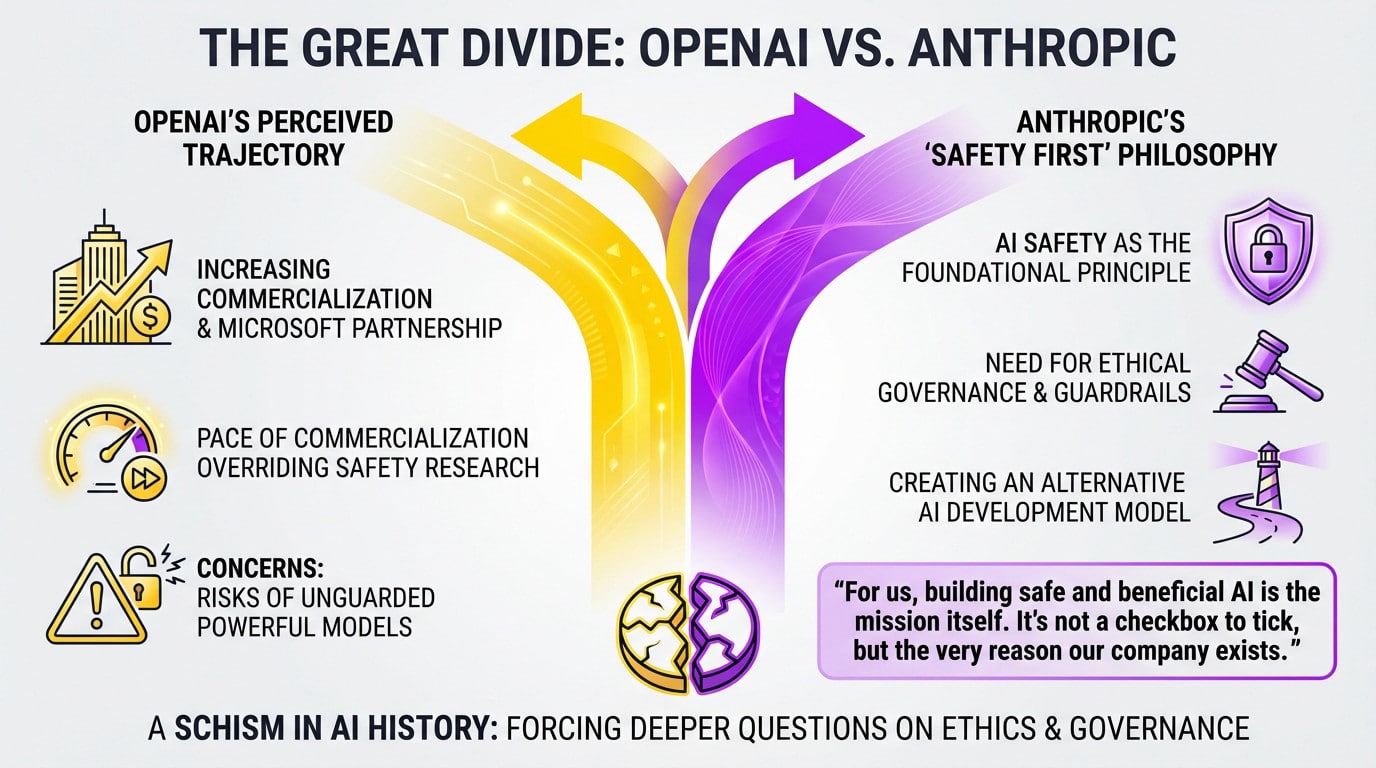
Conversely, Anthropic has taken a slightly different approach, emphasizing “Constitutional AI” and safety-first development. Backed by heavyweights such as Amazon and Google, Anthropic has focused on securing strategic partnerships that provide both capital and cloud infrastructure. While neither company has provided a firm timeline for an IPO, the financial industry is watching for signs of increased transparency, which is a standard precursor to a regulatory filing with the U.S. Securities and Exchange Commission (SEC). Under the SEC’s guidelines for going public, companies must undergo rigorous financial audits and provide comprehensive disclosures that are likely to influence market perception of their long-term viability.
Market Comparison: Private vs. Public Expectations
Investors looking at these firms must weigh several critical factors that differentiate them from previous tech IPOs:
- Capital Intensity: Both OpenAI and Anthropic require billions in compute power, which keeps burn rates high compared to traditional software-as-a-service (SaaS) companies.
- Regulatory Oversight: As AI policy continues to be debated in the European Union and the United States, any company planning an IPO must account for potential shifts in legal liability and data governance.
- Governance Structures: The unique board structures used by these AI firms to balance profit and safety may face scrutiny from public market investors accustomed to traditional shareholder-primacy models.
As noted by market observers, the ability of these firms to demonstrate a clear path toward profitability—rather than just growth—will be the ultimate determinant of their success on the New York Stock Exchange or Nasdaq. While the “mega-IPO” window remains sensitive to interest rate fluctuations and macroeconomic volatility, the sheer scale of the AI revolution suggests that a public offering from one of these entities would be among the most watched events in financial history.
What Lies Ahead for Investors
For the average investor, the most vital takeaway is that the “race to the IPO” is a marathon, not a sprint. While the allure of early entry is strong, the volatility inherent in pre-IPO private markets can be significant. Investors are encouraged to monitor official filings through the SEC EDGAR database, which serves as the primary source for authorized information regarding any company’s intention to register securities for public sale.
The next major checkpoint for these companies will likely be their next series of private funding disclosures or updates regarding their corporate governance restructuring. As these firms continue to scale, the pressure to provide liquidity to early employees and venture backers will only increase. Whether they choose to pursue a traditional IPO, a direct listing, or a merger with a special purpose acquisition company (SPAC)—though the latter has seen declining popularity—remains to be seen.
We will continue to track these developments as they unfold. For those following the intersection of high-growth technology and global economic policy, the coming months promise to be a pivotal period in the history of capital markets. We invite our readers to join the discussion in the comments section below and share their perspectives on the future of AI investment.