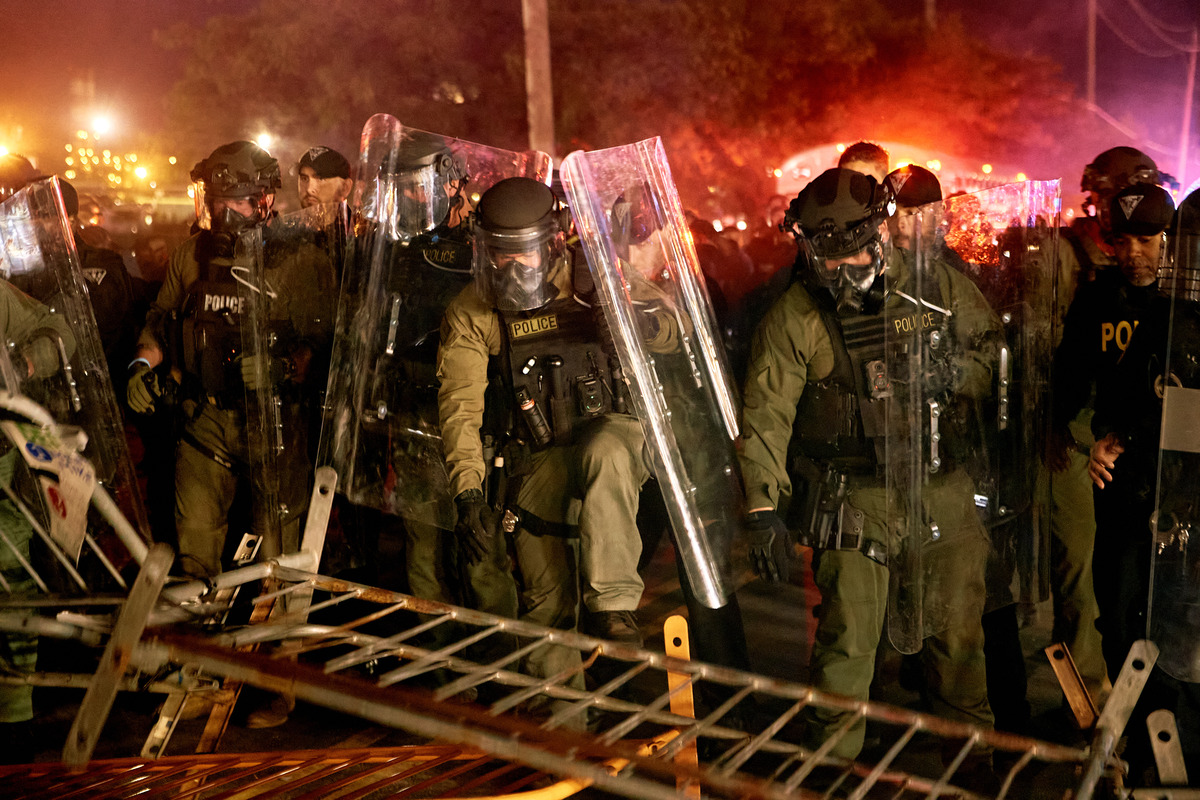
New Jersey Governor Mikie Sherrill has issued a stern directive regarding ongoing demonstrations at the Delaney Hall Detention Center, labeling the recent environment surrounding the facility as “unsafe.” The Governor’s comments follow a series of protests centered on immigration detention policies, which have recently escalated into violent clashes, prompting authorities to implement a new curfew for the surrounding area.
The situation at the Newark-based facility has drawn significant attention from both state officials and local law enforcement, as tensions rise over the management of the detention center. Governor Sherrill, addressing the public in recent statements, emphasized that while the right to peaceful assembly remains protected, the recent conduct of some individuals has crossed a line that threatens public order and the safety of the community.
Escalating Tensions at Delaney Hall
The protests, which have been organized to challenge specific immigration detention policies, have seen a marked increase in intensity over the past several days. According to official New Jersey state government reports, the decision to implement a curfew was a direct response to the documented violence that occurred during recent gatherings. Law enforcement officials have noted that the presence of outside agitators has contributed to the volatility of the demonstrations, moving them away from structured advocacy toward disruptive and dangerous confrontations.
Governor Sherrill specifically addressed these concerns, noting that the state is monitoring the situation closely to ensure that the rule of law is maintained. The detention facility, which serves as a point of contention for various advocacy groups, has become the focal point of a broader debate regarding the intersection of immigration policy and civil liberties in New Jersey.
Public Safety and the Governor’s Directive
The implementation of a curfew is intended to provide a period of stability in the neighborhoods adjacent to the detention center. Local authorities are working to balance the need for public safety with the constitutional rights of those who wish to express their grievances. The Governor’s office has clarified that the primary objective of this measure is to prevent further injuries and to protect local residents from the fallout of ongoing clashes.
For those seeking information regarding the specific parameters of the curfew or the official status of the detention center operations, the New Jersey Office of the Attorney General provides ongoing updates and public safety advisories. It remains a critical resource for residents and stakeholders looking to verify the latest developments as the situation continues to evolve.
Understanding the Context of the Protests
The current unrest is rooted in long-standing disagreements regarding the conditions and policies at the Delaney Hall facility. Protesters have characterized the facility’s practices as “unsafe, inhumane and unconstitutional,” citing concerns over the treatment of detainees and the legal frameworks governing their confinement. These arguments have gained traction among various activist organizations, which have used the site as a platform to call for systemic reform.
However, state officials maintain that the facility operates under strict regulatory oversight. The ongoing friction between these two perspectives has created a challenging environment for local law enforcement, who are tasked with maintaining order while navigating the passionate responses from both supporters and critics of the facility’s current policies.
What Happens Next
As the state continues to manage the immediate impact of these protests, the focus is shifting toward the next steps in the legal and administrative process. The Governor’s office has indicated that it will remain in communication with local law enforcement to determine when it might be appropriate to lift the curfew. Future updates will be provided through official government channels to ensure that the public is accurately informed of any changes to the current security protocols.
We encourage our readers to stay informed through official sources and to contribute to the ongoing discussion in a constructive manner. Your insights on how local communities can balance the right to protest with the need for public safety are welcome in the comments section below.