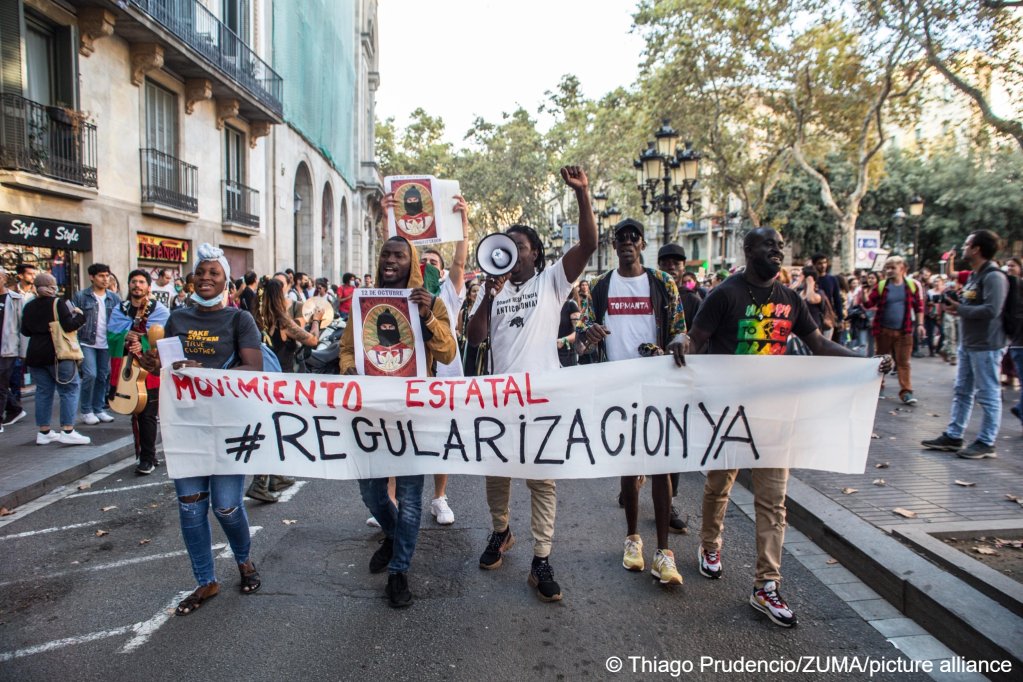
Spain is moving forward with a significant shift in its approach to immigration, launching a comprehensive Spain undocumented migrant regularization plan designed to grant legal status to hundreds of thousands of residents. On Tuesday, April 14, 2026, Prime Minister Pedro Sánchez announced that the government would initiate an extraordinary process to regularize undocumented individuals, a move he characterized as both a humanitarian necessity and a strategic economic imperative April 14, 2026.
The initiative is expected to benefit nearly half a million people, with a primary focus on Latin American migrants. By transitioning these individuals from irregular to legal status, the Spanish government aims to acknowledge the existing reality of a workforce and a community that has already integrated into the country’s daily social and economic life.
This policy pivot comes at a time of increasing migration tension across the continent. While many European nations are tightening their borders and hardening their rhetoric, Spain is opting for a path of integration. Prime Minister Sánchez, speaking during an official visit to Beijing, framed the decision as a responsible method of managing migration to ensure it transforms into “shared prosperity.”
An Act of Normalization for the National Economy
At the core of the government’s strategy is a royal decree to be approved by the Council of Ministers. Sánchez has described the regularization as an “act of normalization,” arguing that it is irresponsible to ignore the presence of nearly 500,000 people who are already contributing to the nation’s functions. This approach seeks to bring these workers out of the shadows, providing them with legal protections and ensuring the state can properly regulate and tax their labor.
The economic justifications are stark. Spain currently maintains the fourth largest economy in the eurozone and is regarded as one of the most dynamic in Europe. However, this growth is threatened by a critical demographic challenge: a rapidly aging population. The government views the regularization of undocumented residents as a “necessity” to sustain the labor market and support the economy against the pressures of a shrinking native workforce.
By formalizing the status of these migrants, the government intends to fill essential gaps in the labor market, ensuring that key sectors—often dependent on immigrant labor—remain viable. This strategy suggests that Spain is prioritizing economic pragmatism over the restrictive migration trends currently seen in other parts of the European Union.
Political Friction and the European Context
The plan has not been without domestic controversy. The initiative faces stiff opposition from right-wing and far-right political factions, including the Popular Party (PP) and Vox. These groups have historically advocated for stricter enforcement of immigration laws and have criticized the government’s perceived leniency toward those in an irregular situation.
In response to these criticisms, Prime Minister Sánchez pointed out that such regularization processes are not new to Spanish democracy. He noted that similar measures have been implemented over the last 40 years, including under previous administrations led by the Popular Party. By doing so, the Prime Minister is attempting to frame the current plan not as a radical ideological shift, but as a recurring administrative tool used to align legal frameworks with social realities.
The contrast between Spain’s approach and the broader European landscape is significant. While the European Parliament has recently discussed “return hubs” for migrants to streamline deportations, Spain is doubling down on integration. Sánchez acknowledged that while migrations pose undeniable challenges, the only responsible way to handle them is through justice and integration rather than denial.
Key Objectives of the Regularization Plan
- Economic Stability: Mitigating the effects of an aging population by securing a legal workforce to support the eurozone’s fourth-largest economy.
- Social Justice: Recognizing the human reality of nearly 500,000 people already living and working in Spain.
- Legal Normalization: Moving migrants from irregular status to legal residency via a royal decree to reduce the “shadow economy.”
- Targeted Support: Prioritizing Latin American migrants who have established deep ties within the country.
What This Means for Undocumented Residents
For the nearly half a million people affected, this plan represents a path toward stability. Legal residency typically grants access to formal employment contracts, healthcare, and the ability to travel without the fear of deportation. For Latin American migrants in particular, this process offers a way to formalize their presence in a country with which they share strong linguistic and cultural bonds.
The move is expected to reduce the vulnerability of undocumented workers, who are often subject to exploitation due to their lack of legal standing. By providing a legal pathway to residency, the Spanish government aims to transform a precarious population into a documented, tax-paying workforce that can contribute fully to the nation’s prosperity.
As the Council of Ministers moves to approve the royal decree, the focus will shift to the implementation phase. The government will need to establish clear criteria for eligibility and create an efficient administrative process to handle the volume of applications expected from the half-million potential beneficiaries.
The next confirmed checkpoint for this initiative is the official approval of the royal decree by the Council of Ministers, which is scheduled for today, April 14, 2026. Once approved, the government is expected to release the specific guidelines and application requirements for those seeking regularization.
We invite our readers to share their perspectives on Spain’s approach to migration in the comments below. How do you think this “normalization” strategy will impact the broader European migration debate?
Worth a look