
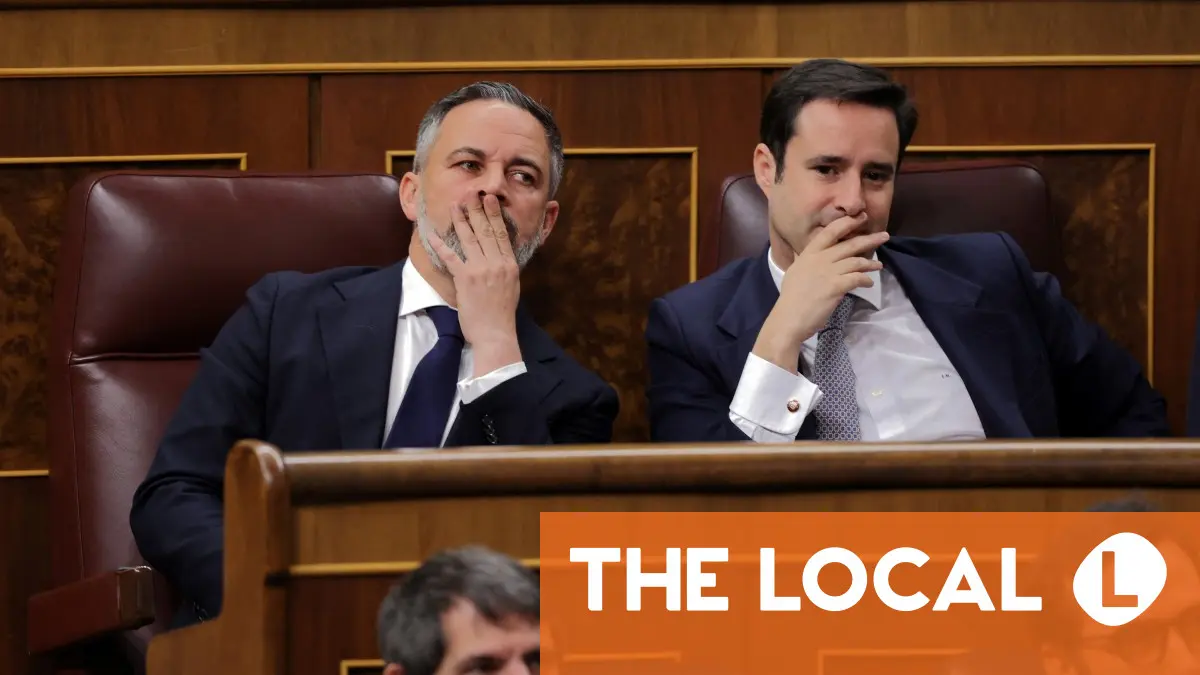
Spain’s far-right Vox party returned to power in the regional government of Extremadura on Wednesday after reaching a coalition agreement with the conservative Popular Party (PP), renewing their alliance ahead of a general election expected in 2027. The deal was confirmed during a parliamentary session in the regional assembly, where PP leader Maria Guardiola was re-elected as president of the Junta de Extremadura with Vox’s support, securing 40 votes in favor and 25 against.
The agreement marks Vox’s return to regional governance in Extremadura after withdrawing from five regional governments in 2024, including this one, due to a dispute over the distribution of unaccompanied migrant minors. According to reports from Euronews, the renewed coalition includes measures aimed at tightening immigration rules, prioritizing “aid, subsidies and public benefits” for individuals with what the parties describe as a “real, lasting and verifiable link to the territory.”
During a debate in Spain’s national parliament on the same day, Socialist Prime Minister Pedro Sánchez criticized the PP-Vox agreement in Extremadura, calling it “a kick to the constitution.” His remarks came amid broader national political tensions as parties position themselves for the upcoming general election, which current polls suggest could seize place in late 2027 unless called earlier.
Vox, founded in December 2013 and led by party president Santiago Abascal, has positioned itself as a national conservative and right-wing populist force in Spanish politics. The party entered the national parliament for the first time in April 2019 and became the third-largest party in the Congress of Deputies after the November 2019 general election, where it won 52 seats with 3.6 million votes.
In the European Parliament, Vox has been part of the Patriots for Europe (PfE) group since 2024, following a period in the European Conservatives and Reformists (ECR) group from 2019 to 2024. The party maintains affiliations with the Madrid Forum internationally and Patriots.eu at the European level since 2024.
Extremadura, located in western Spain bordering Portugal, is one of Spain’s 17 autonomous communities and holds significant authority over areas such as health, education and social services under the country’s decentralized system. Regional governments like Extremadura’s are often seen as political bellwethers for national trends, particularly in the lead-up to general elections.
The PP-Vox coalition in Extremadura now controls key regional portfolios, though specific ministerial assignments were not detailed in the immediate reports following the vote. Regional governance in Spain allows autonomous communities to manage their own budgets and public services, making such agreements consequential for local policy implementation.
As of 2026, Vox reported a membership of 63,468 according to its internal records, reflecting grassroots organization across Spain. The party’s youth wing, Vox Jóvenes, and labour wing, Sindicato Solidaridad, continue to support its outreach efforts, even as its feel tank, Fundación Disenso, produces policy analysis aligned with its ideological stance.
Óscar Fernández, identified as Vox’s regional leader in Extremadura, was named as Deputy President of the Junta under the new coalition agreement, serving alongside President Guardiola. His role reflects the power-sharing arrangements typical in PP-Vox regional coalitions, where Vox secures influential executive positions despite not holding the presidency.
The renewal of the PP-Vox pact in Extremadura comes after a period of strained relations between the two parties in 2024, when Vox exited several regional coalitions over disagreements regarding migrant reception policies. The current agreement appears to have resolved those tensions, at least temporarily, through mutually acceptable terms on immigration and social welfare distribution.
Political analysts note that such regional alliances often serve as testing grounds for broader national cooperation, especially as both parties seek to consolidate right-wing support ahead of the 2027 general election. Yet, ideological differences on issues such as European Union relations, decentralization, and social policy continue to pose challenges to long-term stability in these partnerships.
For now, the PP-Vox government in Extremadura is set to govern until the next regional elections, which are scheduled for 2027 unless the regional parliament is dissolved earlier. Official updates on the coalition’s policy agenda and governance plans are expected to be published through the Junta de Extremadura’s official website and regional gazette in the coming weeks.
As Spain approaches a pivotal electoral cycle, the Extremadura agreement will be closely watched as a potential indicator of how far-right and mainstream conservative forces may collaborate at the national level. Voters and political observers alike will monitor whether this regional model can be scaled up—or if underlying tensions will resurface as campaigning intensifies.
Stay informed about developments in Spanish politics by following official updates from the Junta de Extremadura and the Spanish Congress of Deputies. Share this article to assist others understand the evolving dynamics of regional governance in Europe.