
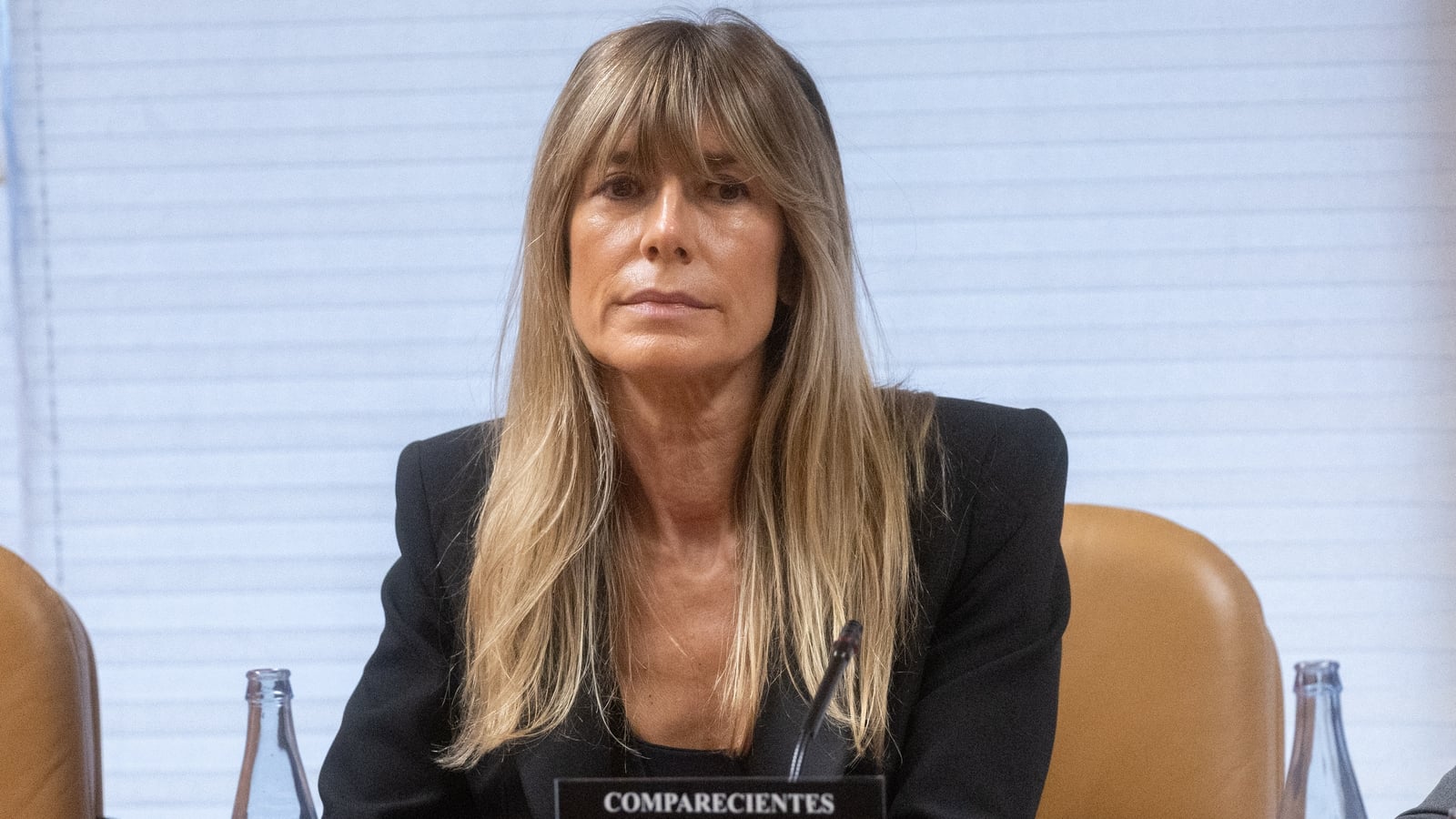
The legal landscape in Spain has shifted dramatically following a ruling by a Madrid investigating judge, who has formally charged Begoña Gómez, the wife of Prime Minister Pedro Sánchez, with four distinct crimes. The decision comes after a two-year investigation led by Judge Juan Carlos Peinado, marking a significant escalation in a case that has drawn intense international scrutiny toward the inner circle of the Spanish government.
According to court documents made public on April 13, 2026, the charges against Gómez include influence peddling, business corruption, misappropriation of public funds, and embezzlement. The judge has proposed that Gómez stand trial before a jury, alongside businessman Juan Carlos Barrabés and her aide, Cristina Álvarez according to a ruling released today.
This development represents a critical juncture for the administration of Pedro Sánchez. While the Prime Minister’s wife had previously maintained a low political profile, the current proceedings allege that her professional activities were used as a cover for illicit financial gains and the exercise of undue influence over public decisions.
The case centers on the intersection of Gómez’s academic roles and her private business interests, raising fundamental questions about transparency and the potential for conflicts of interest within the highest levels of the Spanish executive branch.
The Specific Allegations: Influence Peddling and Corruption
The core of the investigation focuses on a university “chair” at the Complutense University of Madrid, which Gómez led as the extraordinary Chair of Competitive Social Transformation since 2020. Judge Peinado argues that this academic position served as a “façade” to facilitate the movement of private funds. The court alleges that Gómez mobilized these funds not for the benefit of the university, but to integrate them into her personal assets as detailed in the judge’s ruling.
the influence peddling charge is tied to the assertion that “certain public decisions” were made to favor this specific academic initiative after Pedro Sánchez assumed the role of Prime Minister in 2018. The prosecution suggests that Gómez utilized her position as the spouse of the head of government to influence business agreements and secure “hidden compensation” linked to companies that had promises of public contracts.
The charge of misappropriation of public funds specifically involves Cristina Álvarez. The court alleges that while Álvarez was employed by the Spanish government and paid via public funds, she was actually providing services to Gómez tied to her private professional activities according to the judicial ruling.
Professional Background and Educational Controversy
Begoña Gómez, born in Bilbao on March 24, 1971, has a career history rooted in marketing and the non-profit sector. Before her husband’s ascent to the premiership, she served as the director of business outsourcing for the Inmark Group. Following Sánchez’s appointment as Prime Minister in 2018, she held the role of executive director of the Africa Center of the Institute of Enterprise from 2018 to 2022 via Wikipedia.

Her work has also extended to fundraising for prominent NGOs, including Amnesty International and Oxfam. Despite her professional trajectory, her educational credentials have develop into a point of public contention. While her curriculum vitae claimed a bachelor’s degree in marketing from ESIC University, a journalistic investigation by Okdiario reported that she actually completed a marketing program at the M&B School of Marketing and Business, resulting in a diploma rather than an officially recognized degree via Wikipedia.
Timeline of Professional Roles
| Period | Role/Organization | Context |
|---|---|---|
| Pre-2018 | Director of Business Outsourcing, Inmark Group | Private sector role prior to husband becoming PM |
| 2018–2022 | Executive Director, Africa Center (Institute of Enterprise) | Role held during early years of Sánchez administration |
| 2020–Present | Extraordinary Chair, Complutense University of Madrid | Subject of current influence peddling investigation |
Legal Next Steps and Defense Response
The decision to move toward a jury trial is a proposal by Judge Peinado. though, It’s not yet a final mandate. The defense team for Begoña Gómez and the Public Prosecutor’s Office have been granted five days to respond to the charges. The final determination on whether the case will proceed to trial will be made by a different judge per the court ruling.
It is notable that during the investigation phase, prosecutors had previously requested that the case against Gómez be dismissed, suggesting a divergence in opinion between the investigating judge and the prosecution regarding the strength of the evidence.
For those following the legal proceedings, the next critical checkpoint is the expiration of the five-day window for the defense and Public Prosecutor’s Office to file their responses. Following this, a separate judge will rule on the proposal to send the case to a jury trial.
We invite our readers to share their perspectives on the implications of this case for governmental transparency in the comments section below.