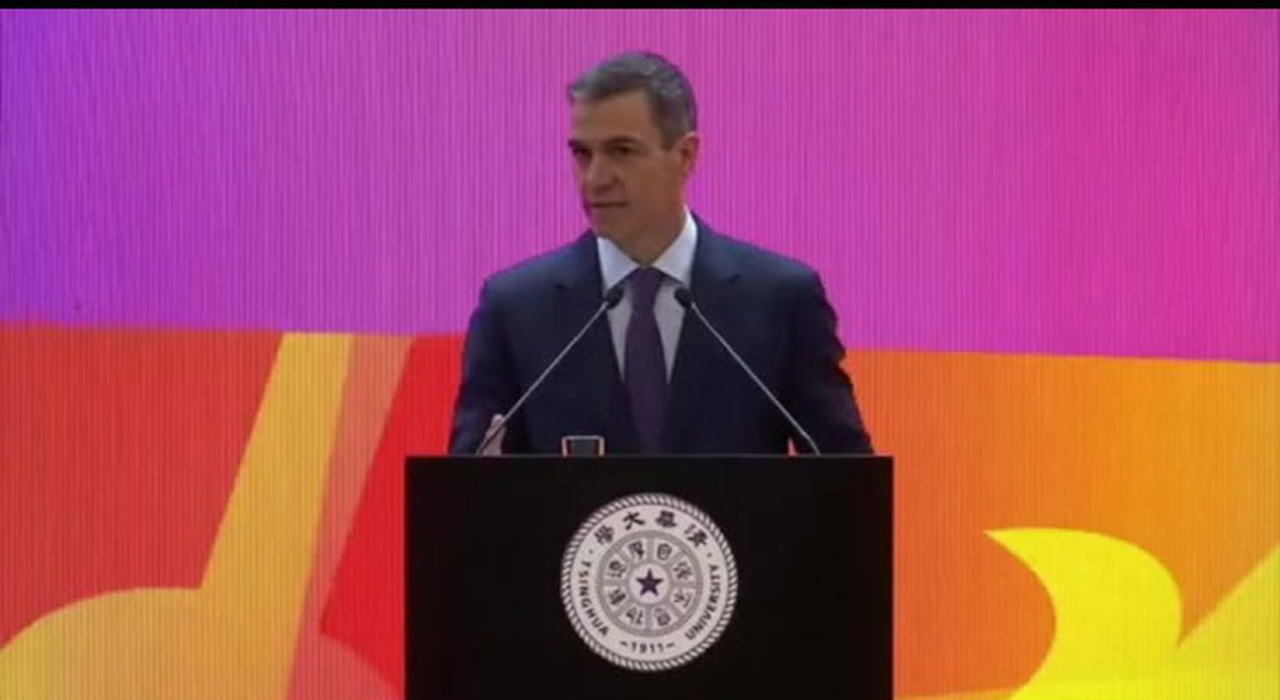
Spanish Prime Minister Pedro Sánchez has arrived in Beijing for a critical three-day official visit, seeking to navigate a complex geopolitical landscape even as addressing a deepening economic rift between the European Union and China. During his trip, Sánchez met with Chinese President Xi Jinping at the Great Hall of the People, marking his fourth visit to the country in less than four years.
The visit comes at a time of heightened international volatility. Sánchez is attempting to position Spain as a strategic bridge for economic cooperation between Beijing and the 27-member European Union, even as Spain faces its own diplomatic tensions with Israel and the United States. The Prime Minister’s agenda balances the need for strengthened bilateral ties with the urgent necessity to correct the trade deficit between the EU and China, which he has characterized as unsustainable for European businesses.
Central to the discussions is the growing imbalance in trade. Speaking at Tsinghua University, Sánchez explicitly called for China to open its markets to European imports, warning that if China does not open its doors, Europe may feel compelled to close its own. This diplomatic push occurs amidst broader Western concerns over trade policies, including the impact of tariffs imposed by U.S. President Donald Trump, which have prompted leaders from Germany, Canada, and the UK to seek closer relations with Beijing in recent months.
Addressing the “Unsustainable” Trade Imbalance
A primary focus of the Spanish leader’s visit is the economic disparity between the two trading blocs. Sánchez described the current trade deficit as “insustainable,” noting that the gap grew by 18 percent in the last year alone according to reports on the visit. He urged Beijing to accept active steps to help correct this deficit to ensure the long-term viability of European companies operating within the global market.
The Prime Minister’s rhetoric emphasizes a reciprocal relationship. By urging China to open its markets, Sánchez is advocating for a more balanced flow of goods and services, arguing that a failure to address these imbalances could lead to protective measures within the EU. This economic diplomacy is intended to secure better access for Spanish and European exports while maintaining the stability of the overall partnership.
Geopolitical Pressures and Global Conflict
Beyond trade, the visit has been marked by calls for international stability and the adherence to global law. In a speech delivered at Tsinghua University, Sánchez urged China to take a more active role in resolving ongoing global crises. He specifically called for a “greater involvement” from Beijing to ensure the respect of international law and to bring an end to conflicts in Ukraine, Lebanon, and Iran as reported by LaPresse.
These requests highlight the delicate balancing act Spain is performing. While Sánchez seeks economic concessions and stability, he is doing so while navigating a “convulsive” political moment characterized by tensions between Spain, the United States, and Israel. The meeting with President Xi Jinping serves as an attempt to leverage China’s global influence to mitigate these conflicts while securing Spain’s role as a key intermediary in EU-China relations.
Key Diplomatic Objectives of the Visit
- Market Access: Encouraging China to open its domestic markets to European imports to reduce the trade deficit.
- Economic Bridging: Establishing Spain as a primary link for cooperation between the EU and China.
- Conflict Resolution: Seeking Chinese diplomatic intervention to end conflicts in Ukraine, Iran, and Lebanon.
- Bilateral Strengthening: Consolidating direct economic and political ties through high-level meetings at the Great Hall of the People.
The Strategic Role of Spain in EU-China Relations
Sánchez’s frequent travel to Beijing—four trips in under four years—underscores a deliberate strategy to build Spain a central player in the EU’s engagement with China. As other Western powers grapple with trade wars and tariffs, Spain is attempting to maintain a channel of communication that favors economic growth and diplomatic stability.
The timing of the visit is significant, occurring on April 14, 2026, shortly after Sánchez participated in a European Union leaders’ summit in Brussels on March 19, 2026 per Reuters. This sequence suggests a coordinated effort to align Spanish national interests with the broader goals of the EU while utilizing Spain’s specific diplomatic leverage to correct the trade deficit between the EU and China.
The encounter between Sánchez and Xi Jinping concluded with official greetings and discussions held in the presence of diplomatic representatives and officials from both nations, signaling a formal commitment to continued dialogue despite the external political pressures facing the Spanish government.
The outcome of these discussions will likely depend on whether China agrees to the market openings requested by Sánchez and whether Beijing’s “greater involvement” in international conflicts manifests in tangible diplomatic actions. As the three-day visit concludes, the international community will be watching for official agreements regarding trade quotas or diplomatic frameworks that could alleviate the current economic strain on European societies.
The next confirmed checkpoint in this diplomatic process will be the official release of the joint communiqué or bilateral agreements resulting from the three-day visit to Beijing.
We invite our readers to share their perspectives on the EU-China trade balance in the comments below and share this analysis with your professional network.
Keep reading