The Spanish viticultural sector is currently navigating one of its most volatile periods in recent history. A convergence of climate instability, shifting consumer habits and a cooling global market has placed significant pressure on wineries across the Iberian Peninsula, leading to what industry analysts describe as a systemic crisis.
Recent data reveals a stark contraction in both production and demand. According to figures from the INFOVI monitoring system, Spain’s apparent wine consumption fell by 4.2% in the 12 months ending January 2026, dropping to 9.25 million hectoliters via Vinetur. This decline represents a loss of 627,374 hectoliters compared to the previous year, extending a downward trend that gained momentum in late 2025.
For many bodegas, the crisis is not merely a matter of demand but of survival against a backdrop of environmental volatility. The sector is struggling to balance the financial burden of maintaining vineyards with a market that is increasingly resistant to traditional volume-based models, forcing a painful transition toward value-added production.
The Perfect Storm: Climate Volatility and Production Drops
The foundational challenge for Spanish wineries has been the unpredictability of the harvest. After years of extreme drought and heat, the 2024 and 2025 campaigns were marked by erratic weather patterns. Even as some regions saw a return to historic temperature averages, the legacy of previous water scarcity continued to depress yields.
The impact on output has been severe. Estimates from the International Organisation of Vine and Wine (OIV) placed Spain’s 2025 wine production at 29.4 million hectoliters, a 6% decrease compared to 2024 and a 15% drop relative to the five-year average via Bulk Wine Design. This volatility has led some industry advocates, including the Unión Profesional Agraria (UPA), to sound alarms over the lack of fair pricing for grapes during what has been one of the most challenging vintages of the century.
The environmental stress is not limited to rainfall. Climate volatility is reshaping the geography of the vineyard, with some producers now questioning the viability of certain plots. Reports suggest a growing sentiment that as much as 25% of Spain’s vineyard area may now be redundant or “surplus” due to the mismatch between current production capacities and actual global demand.
Export Erosion and the Struggle for Global Market Share
Spain has historically relied on exports to offset domestic declines, but that safety net is fraying. Data from the Spanish Tax Agency (AEAT), analyzed by the Interprofessional Wine Organization of Spain (OIVE), shows that exports fell for five consecutive months leading into early 2026.
In the 12 months through February 2026, export revenue declined by 4.8% to €2,849.7 million, while volume dropped by 5% to 1,838.8 million liters via Vinetur. This represents a financial loss of €142.8 million and a volume decrease of 97.7 million liters compared to the previous year. Notably, bottled wines and Cava—the higher-margin sectors—led this downturn.
The only relative bright spot in the trade data has been bulk wine, which has acted as a buffer against the total collapse of export volumes. But, relying on bulk sales is a double-edged sword; while it clears inventory, it offers far lower profit margins than bottled exports, further squeezing the bottom lines of mid-sized bodegas.
Key Market Indicators (2025-2026)
| Metric | Change / Value | Period |
|---|---|---|
| Domestic Consumption | -4.2% (9.25M hl) | Year through Jan 2026 |
| Export Revenue | -4.8% (€2,849.7M) | Year through Feb 2026 |
| Export Volume | -5% (1,838.8M liters) | Year through Feb 2026 |
| Production (OIV Est.) | -6% vs 2024 | 2025 Harvest |
Shifting Consumer Paradigms: The Demand Gap
The crisis is compounded by a fundamental shift in how wine is consumed globally and domestically. Inflation and a general move toward healthier lifestyles or alternative beverages have eroded the “apparent consumption” of wine. The decline is not merely a dip in sales but a structural change in demand.
Wineries are now facing a “value gap.” While high-end, premium wines continue to locate a niche, the “middle market”—the bulk of Spanish production—is disappearing. Consumers are either trading down to cheaper, bulk options or abandoning wine altogether for spirits or non-alcoholic alternatives. This has left many bodegas with excess stock that they cannot sell at sustainable prices.
In response, the industry is attempting a pivot toward “added value.” This involves investing in organic certifications, sustainable farming, and diversifying into new markets outside of Europe, including West Africa and potential opportunities arising from trade agreements like Mercosur.
Institutional Response and the Path Forward
The severity of the situation has triggered a response from European regulators. By the end of 2025, the Council of the EU and the European Parliament reached an agreement to modernize wine policy, aiming to provide a new framework for wineries to adapt to climate change and market volatility.
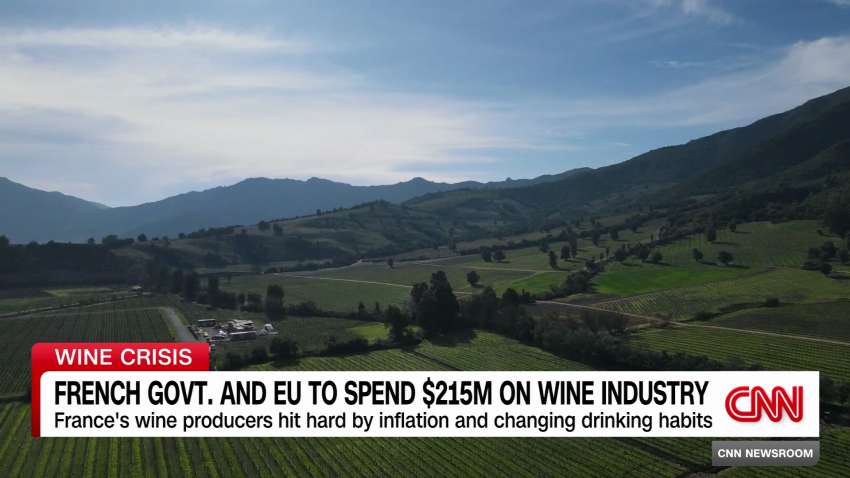
These institutional updates are designed to help bodegas transition toward more sustainable models and modernize their distribution channels. However, for many small-scale producers, the speed of this institutional support may not match the urgency of their financial distress. The pressure on surpluses remains high, and the cost of maintaining vineyards during low-yield years is becoming untenable for some.
What This Means for the Industry
- Consolidation: Smaller bodegas may be absorbed by larger conglomerates as they struggle to maintain liquidity.
- Vineyard Reduction: A strategic “uprooting” of less productive or non-competitive vineyards is likely to accelerate.
- Premiumization: A forced shift toward high-quality, low-volume production to maintain margins.
- Market Diversification: Increased focus on non-EU markets to reduce dependency on a stagnant European consumer base.
The Spanish wine sector stands at a crossroads. While the “crisis” suggests a state of emergency, it also represents a necessary, albeit painful, correction. The transition from a volume-driven industry to a value-driven one is the only viable path to long-term sustainability in an era of climate instability.
The next critical checkpoint for the industry will be the release of the full 2026 harvest projections and the implementation details of the new EU wine policy framework, which are expected to dictate the level of financial aid available to struggling regions.
We invite our readers to share their perspectives on the evolution of the global wine market in the comments below.
Worth a look