
Germany’s Social Democrats (SPD) have blocked legislation to end the long-standing practice of allowing one spouse to be insured for free under their partner’s public health insurance, a move that could shift financial burdens and gender roles in households across the country. The decision, announced this month, reverses earlier coalition discussions to phase out the “Mitversicherung” system, which currently allows dependent spouses—typically women—to remain on their partner’s health plan without contributing. According to the German public broadcaster ARD, the SPD’s stance has reignited debates over gender equality, household economics, and the future of social welfare in Germany.
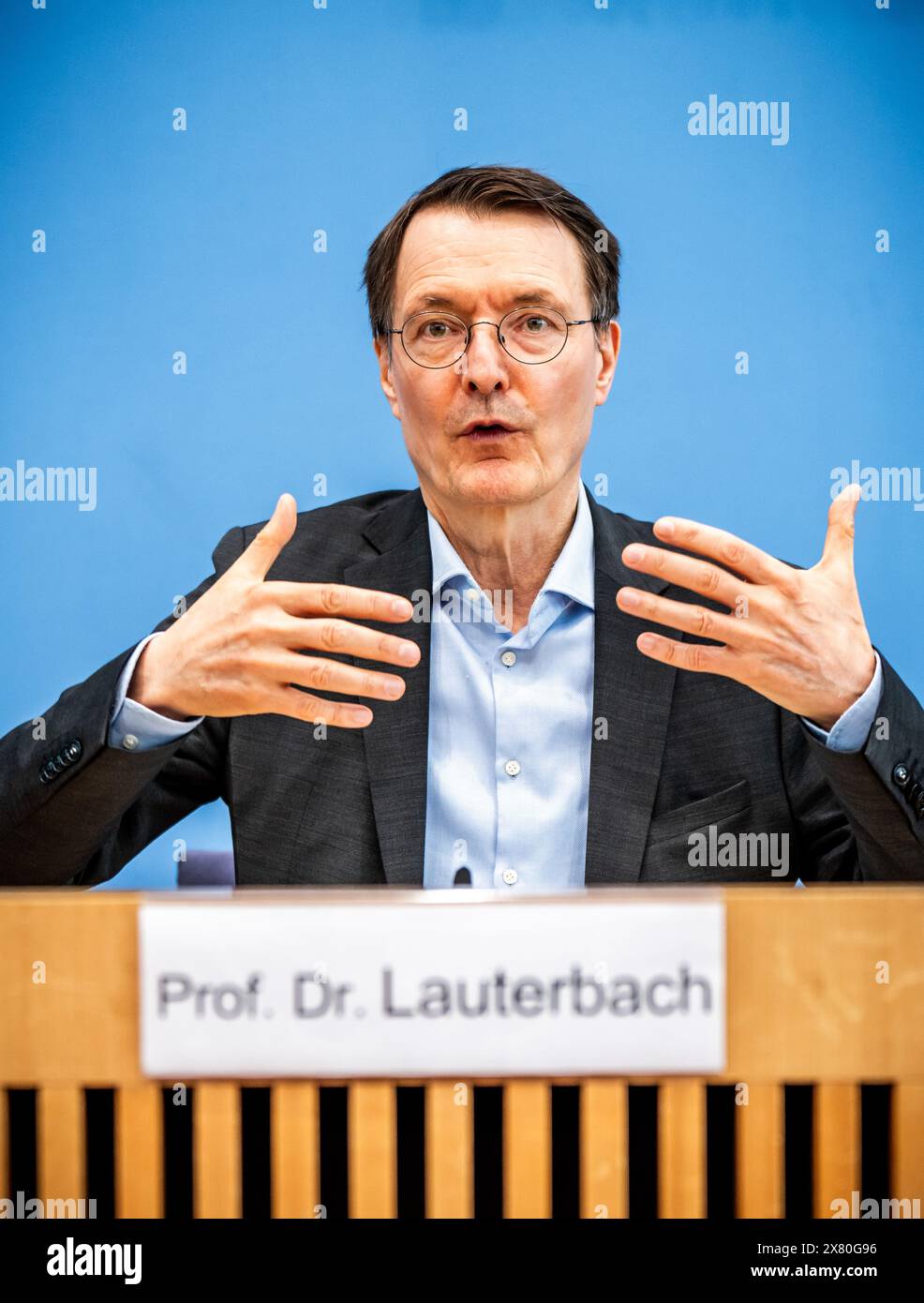
With nearly 15 million people currently covered under this system—mostly women who earn less than their partners—the policy has long been criticized by economists and feminists as an outdated relic of traditional gender roles. Yet the SPD’s decision underscores the political and social complexities of reforming a benefit that touches nearly half of all German households. “This is not just about money,” said SPD health policy spokesperson Karl Lauterbach in a statement. “It’s about recognizing the unpaid labor of caregivers, who are disproportionately women.”
The reversal comes as Germany grapples with rising healthcare costs and demographic shifts, including an aging population and labor shortages. The “Mitversicherung” system, introduced in the 1970s, was designed to support stay-at-home parents—primarily mothers—by reducing their financial burden. However, critics argue it now discourages women from entering or re-entering the workforce, as their earnings are often offset by the loss of public benefits. A 2023 study by the German Institute for Economic Research (DIW) found that ending the policy could increase female labor participation by up to 8%—a potential economic boon in a country where women’s employment rates lag behind the EU average.
What Is the “Mitversicherung” System, and Who Does It Affect?
Under Germany’s public health insurance system, spouses can be “co-insured” (Mitversichert) without paying premiums if they earn less than €538 per month (as of 2024). This threshold, set by the Association of Statutory Health Insurance Funds (GKV), applies to about 60% of co-insured individuals, the vast majority of whom are women. The policy is often tied to part-time work or caregiving roles, creating a financial disincentive for women to seek full-time employment.

Proponents argue the system provides critical support for families, particularly in cases where one partner’s income is insufficient to cover both health insurance contributions (currently around €400–€600 per month for a single person). However, opponents point to its gendered impact: women, who already face wage gaps and career interruptions due to child-rearing, are less likely to pursue higher-paying jobs if doing so would disqualify them from co-insurance. “It’s a subtle but powerful barrier to economic independence,” said Dr. Sarah Hartmann, a labor economist at the University of Cologne.
Key statistics on the “Mitversicherung” system:
- 14.8 million people were co-insured in 2023, per Federal Ministry of Health data.
- 82% of co-insured individuals are women.
- The average monthly savings per co-insured household: €350–€500.
- Only 18% of co-insured individuals are men, often due to early retirement or disability.
Why Did the SPD Block the Reform?
The SPD’s decision to halt the reform stems from internal party divisions and broader political calculations. While the coalition government—led by Chancellor Olaf Scholz (SPD)—had initially signaled support for phasing out the policy, pressure from grassroots members and women’s rights groups led to a reversal. “Many SPD voters rely on this system, and we can’t ignore that,” said SPD parliamentary leader Rolf Mützenich in a recent interview.
Critics, including the Free Democratic Party (FDP) and Green Party allies in the coalition, argue the SPD’s stance undermines Germany’s commitment to gender equality. The Greens had proposed a gradual phase-out, with transitional support for affected households, but the SPD’s blockage has stalled those plans. “This is a step backward for women’s economic empowerment,” said Green Party health spokesperson Janosch Dahmen.
Economically, the policy’s continuation could cost the public health system billions over the next decade. The GKV estimates that ending co-insurance could generate an additional €1.2 billion annually in premiums, but redistributing those funds to low-income households would require complex new welfare measures. The SPD has not ruled out future discussions, but for now, the status quo remains in place.
What Happens Next? The Political and Legal Path Forward
With the SPD’s block, the reform’s fate now hinges on three potential paths:
- Legislative deadlock: The coalition’s “traffic light” government (SPD-Greens-FDP) may struggle to find common ground, especially as the next federal election looms in 2025. The FDP has already signaled it will push for reform in the next legislative session.
- Legal challenges: Advocacy groups like Terre des Femmes are considering constitutional complaints, arguing the policy violates gender equality principles under Germany’s Basic Law (Grundgesetz). A 2021 ruling by the Federal Constitutional Court on similar welfare disparities could set a precedent.
- Regional experiments: Some German states, such as Bavaria, have already begun phasing out co-insurance for civil unions (not just marriages), testing a model that could influence national policy.
The next critical checkpoint is the September 2024 coalition talks, where health policy will be a key topic. If no agreement is reached, the issue could become a campaign issue in 2025, with parties staking out positions on gender equity versus fiscal responsibility.
How Would Ending Co-Insurance Work? A Step-by-Step Breakdown
If reforms were to proceed, here’s how a phase-out might unfold, based on proposals from the FDP and Greens:
| Phase | Timeline | Key Changes | Impact |
|---|---|---|---|
| 1. Transition Period | 2025–2027 | Gradual increase in income threshold (e.g., from €538 to €650/month). Subsidies for low-income households. | Reduces but doesn’t eliminate co-insurance for some. |
| 2. Full Phase-Out | 2028 | End of automatic co-insurance; spouses must enroll independently or qualify for public assistance. | Estimated 500,000 women would need to adjust their work or benefits. |
| 3. Redistribution | Ongoing | Funds from eliminated co-insurance premiums redirected to childcare subsidies or tax relief for single parents. | Potential to reduce child poverty by 15%, per DIW projections. |
Note: These timelines are speculative, based on past reform discussions. The SPD’s current blockage means no official plan exists.
Who Wins and Who Loses? The Human Cost of the Policy
The debate over “Mitversicherung” is more than a bureaucratic squabble—it reflects deeper societal tensions. Take the case of Claudia Meier, 42, a part-time nurse in Hamburg who relies on co-insurance to cover her husband’s health plan while caring for their two children. “If I worked full-time, I’d lose this coverage, and my take-home pay would drop by €400 a month,” she told Welt am Sonntag. “I’d have to choose between my job and my family’s health.”
On the other hand, Markus Bauer, 38, a freelance IT consultant in Berlin, argues the system is unfair to men who also take on caregiving roles. “Why should only women benefit from this? If I were the primary caregiver, I’d want the same security,” he said. Bauer’s wife earns more than him, but he remains uninsured because he doesn’t meet the income threshold.
Economists warn that ending co-insurance could also hit rural areas hardest, where women’s labor force participation is already low. In Saxony, for example, only 68% of women work—compared to the EU average of 72%. “This policy isn’t just about health insurance; it’s about regional economic survival,” said Dr. Jens Südekum, an economist at Leipzig University.
What This Means for Germany’s Future
The SPD’s decision to block the reform underscores a broader challenge: balancing fiscal responsibility with social equity in an aging society. Germany’s fertility rate remains below replacement level (1.5 children per woman), and labor shortages are acute in healthcare and education—sectors where women are overrepresented. “If we want to fill these gaps, we need women in the workforce,” said Federal Family Minister Lisa Paus (Greens) in a recent speech. “Policies like co-insurance push them in the opposite direction.”
Internationally, Germany’s approach contrasts with other EU nations. In Sweden, for example, spousal co-insurance was phased out in the 1990s, contributing to a female employment rate of 80%. Meanwhile, in France, reforms in 2020 introduced means-testing for co-insurance, reducing the gender gap in labor participation. “Germany is lagging behind its peers in gender equity reforms,” said MEP Evelyn Regner, chair of the European Parliament’s Women’s Rights Committee.
The SPD’s stance may also reflect political reality: in a country where 40% of voters identify as “socially conservative,” abrupt changes to family policies can backfire. A 2023 INFAS poll found that 58% of Germans oppose ending co-insurance, even if it means higher taxes for some.
Key Takeaways: What Readers Need to Know
- The SPD’s block: Germany’s Social Democrats have halted plans to end free spousal health insurance, citing social and political concerns.
- Gender impact: 82% of co-insured individuals are women, many of whom face financial barriers to full-time work.
- Economic trade-offs: Ending the policy could raise €1.2 billion annually for the health system but requires new welfare measures.
- Legal risks: Advocacy groups may challenge the policy under Germany’s gender equality laws.
- Next steps: Coalition talks in September 2024 will determine whether reform efforts resume.
The debate over “Mitversicherung” is far from over. As Germany’s population ages and labor markets tighten, the question of who bears the cost of caregiving—and how the state can support both workers and families—will define the next decade of social policy. For now, millions of households remain in limbo, waiting to see whether tradition or progress will prevail.
What do you think? Should Germany end the co-insurance system, or does it provide necessary support for families? Share your perspective in the comments below.