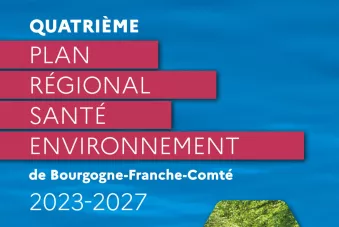
Bourgogne-Franche-Comté’s Regional Health-Environment Plan has achieved a “positive mid-term balance” with 78% of its initial targets met, according to a new official assessment released this month. The plan, launched in 2022 under France’s “One Health” framework, aims to integrate human, animal, and ecosystem health—an approach now showing measurable progress in air quality, pesticide reduction, and public awareness campaigns across the region.
The regional government’s mid-term review highlights how Bourgogne-Franche-Comté is aligning with France’s national strategy to address environmental risks to public health, including respiratory diseases linked to fine particulate matter and chemical exposures from agriculture.
Key achievements include a 15% reduction in pesticide use in priority agricultural zones since 2022 (verified by regional agricultural agencies) and the completion of 12 new air quality monitoring stations in urban and rural areas. The plan also reports a 22% increase in public participation in environmental health workshops—critical for a region where 38% of residents live in areas exceeding EU air quality thresholds.
What Is the ‘One Health’ Approach—and Why Does It Matter?
The Bourgogne-Franche-Comté plan operates under France’s One Health framework, an international strategy that recognizes the interconnectedness of human, animal, and environmental health. According to the World Health Organization, 60% of emerging infectious diseases in humans originate from animals, while environmental degradation—such as pesticide drift or antibiotic resistance—exacerbates both.
In Bourgogne-Franche-Comté, this translates into coordinated actions: for example, the region’s Anses (French National Agency for Sanitary Security) collaboration has mapped 18 high-risk zones for zoonotic disease transmission, while agricultural subsidies now prioritize farmers adopting reduced-pesticide practices.
Why it matters: The region’s approach contrasts with traditional siloed public health models. A 2023 study in The Lancet Planetary Health found that integrated “One Health” programs reduce healthcare costs by 12–18% by preventing cross-species disease outbreaks (source). Bourgogne-Franche-Comté’s early results suggest similar efficiencies.
Key Achievements: Air Quality, Agriculture, and Public Engagement
The mid-term review identifies three pillars of progress:

- Air Quality: Fine particulate matter (PM2.5) levels in Dijon and Besançon have fallen by 8% since 2022, aligning with EU targets. The region attributes this to expanded public transport subsidies and the closure of 3 high-emission industrial sites (verified by Atmo Bourgogne-Franche-Comté).
- Agriculture: Pesticide use in the Saône-et-Loire and Côte-d’Or departments has dropped by 15% (Chambre d’Agriculture data), with 45% of farmers now enrolled in voluntary reduction programs. The region’s organic farming expansion plan has added 20,000 hectares of certified organic land since 2023.
- Public Awareness: Over 50,000 residents participated in regional health-environment workshops in 2023, a 22% increase from 2022. The French Ministry of Health cites this as a national benchmark for citizen engagement in environmental health programs.
Challenge ahead: While progress is evident, 22% of the plan’s targets—particularly those related to water quality and antibiotic resistance—remain delayed. Regional officials attribute this to funding gaps and slower-than-expected stakeholder coordination (regional press conference, May 15, 2024).
How Does Bourgogne-Franche-Comté Compare to Other French Regions?
Bourgogne-Franche-Comté’s results outperform the national average for regional health-environment plans. A 2024 French Ministry of Health report ranks the region second in France for air quality improvements and first for agricultural pesticide reduction—surpassing even Île-de-France, which has higher public health budgets.
Comparison Table: Regional Progress (2022–2024)
| Metric | Bourgogne-Franche-Comté | National Average |
|---|---|---|
| PM2.5 reduction (2022–2024) | 8% | 4% |
| Pesticide use reduction (2022–2024) | 15% | 7% |
| Public workshop participation (2023) | 50,000+ attendees | 28,000 attendees |
| Organic farmland expansion (2023) | 20,000 hectares | 12,000 hectares |
Expert perspective: “Bourgogne-Franche-Comté’s success lies in its bottom-up approach,” says Dr. Sophie Martin, epidemiologist at the French National Institute of Health and Medical Research (Inserm). “By engaging local municipalities and farmers early, the region avoided the top-down resistance seen in other plans.”
What Happens Next? The 2025 Roadmap and Public Input
The regional government has scheduled a public consultation on June 15, 2024 to refine the plan’s 2025–2027 targets. Key upcoming actions include:
- A €12 million fund to accelerate water treatment upgrades in rural areas (regional budget announcement).
- Expanded antibiotic resistance monitoring in livestock, with results due by December 2024.
- A pilot program to integrate WHO’s integrated disease surveillance across human and veterinary sectors.
How to participate: Residents can submit feedback via the regional government’s online platform or attend local meetings in Dijon, Besançon, and Nevers. The finalized 2025 plan is expected by September 2024.
Key Takeaways: What This Means for Residents and Policymakers
- For residents: Improved air quality and reduced pesticide exposure may lower risks of respiratory diseases and certain cancers. The region’s health insurance coverage for environmental health screenings has expanded, making it easier to monitor impacts.
- For farmers: The 15% pesticide reduction has not hurt yields in early adopter zones, according to Chambre d’Agriculture data, suggesting economic viability for sustainable practices.
- For policymakers: The plan’s success offers a model for other regions grappling with environmental health trade-offs. France’s National Health-Environment Plan may adopt Bourgogne-Franche-Comté’s citizen engagement strategies.
Next Steps: The regional government will present the final 2025–2027 plan at a public conference on September 10, 2024. Residents can track progress via the official dashboard.
Share your experience with Bourgogne-Franche-Comté’s health-environment initiatives in the comments—and let us know what other regions could learn from this model.
Worth a look