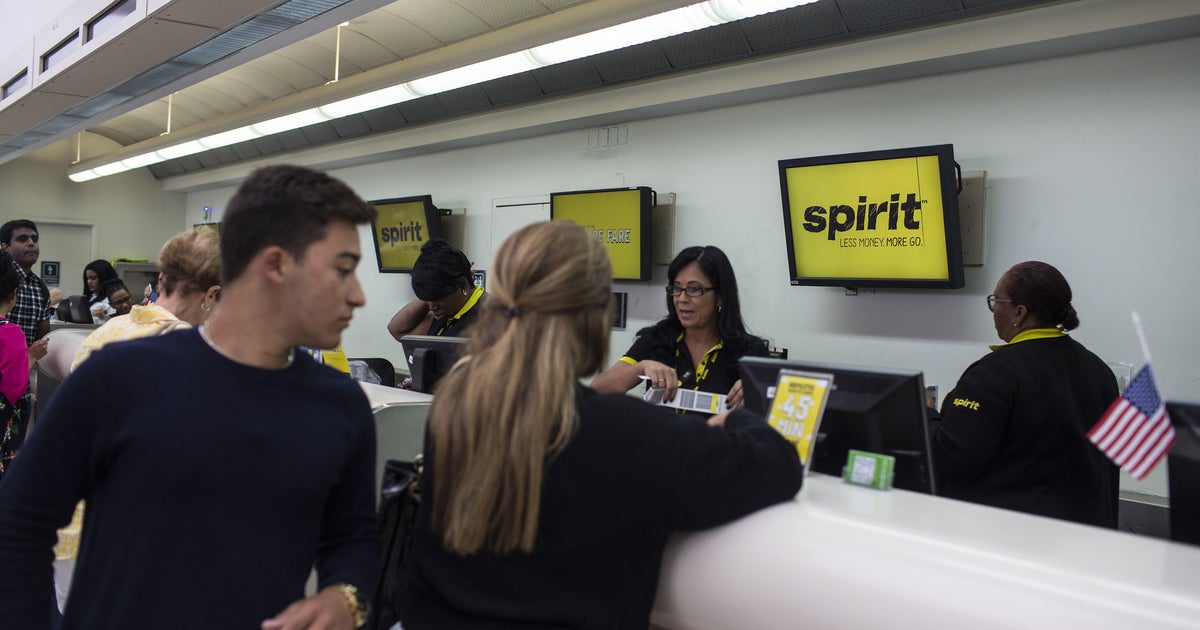
The American aviation landscape shifted dramatically early Saturday morning as Spirit Airlines officially ceased all operations. In a move that leaves thousands of passengers stranded and marks the end of an era for ultra-low-cost travel in the U.S., Spirit Aviation Holdings, Inc. Announced an orderly wind-down of operations
effective immediately on May 2, 2026.
The collapse follows a series of desperate attempts to restructure the company’s debt and secure a critical financial lifeline. According to official statements, all Spirit flights have been cancelled and the airline has issued a stark warning to its customers: guests should not go to the airport.
For the millions of travelers who relied on the carrier’s “bare fare” model, the shutdown creates an immediate logistical crisis. The sudden nature of the cessation—occurring just as many were preparing for weekend travel—has triggered a scramble for alternative transportation and a rush to secure refunds.
The catalyst for the final collapse was the failure of a high-stakes rescue attempt. Spirit had been pursuing a $500 million federal bailout from the White House. When talks failed to yield a deal, the airline, which had already filed for bankruptcy twice since 2024, found itself without the liquidity necessary to maintain flight operations.
What a Spirit Airlines Shutdown Means for Travelers
The immediate impact for passengers is the total loss of their scheduled transport. Unlike a typical airline bankruptcy where a company continues to fly under Chapter 11 protection, Here’s a wind-down, meaning the planes are grounded indefinitely. This creates a vacuum in the budget travel market, particularly for routes serving leisure destinations in Florida, Las Vegas, and the Caribbean.
Travelers currently holding tickets face three primary challenges: securing a modern way to reach their destination, recovering their funds, and managing the potential for significant price spikes on remaining flights as other carriers absorb the displaced demand.
Refunds and Financial Recovery
For those who purchased tickets directly through Spirit, the company has committed to a specific refund process. According to the airline’s dedicated restructuring portal, Spirit will automatically process refunds for any flights purchased through Spirit with a credit or debit card to the original form of payment
. Spirit’s guest advisory explicitly states that the company is unable to assist in rebooking flights on other airlines.
However, the path to recovery varies depending on how the ticket was purchased:
- Direct Bookings: Automatic refunds to the original credit or debit card.
- Third-Party Agencies: Passengers who booked via Expedia, Priceline, or other Online Travel Agencies (OTAs) must contact those agencies directly to initiate refund requests.
- Credit Card Protections: Travelers who encounter delays in refunds are encouraged to contact their credit card issuers to dispute the charges or utilize built-in travel insurance.
Finding Alternative Flights
With thousands of passengers suddenly displaced, the demand for seats on competing carriers—such as Frontier, JetBlue, and Southwest—is expected to surge. Travelers are advised to monitor flight aggregators immediately, as remaining seats on popular routes may sell out or increase in price rapidly.
Industry analysts note that while other budget carriers may eventually expand into Spirit’s vacated slots, the immediate transition will be chaotic. Passengers are urged to check the status of their flights through their respective booking portals and avoid traveling to airports until they have confirmed alternative arrangements.
The Path to Collapse: Why Spirit Failed
The downfall of Spirit Airlines was not the result of a single event, but a culmination of systemic economic pressures and strategic failures. The airline’s business model, predicated on high aircraft utilization and minimal overhead, became unsustainable as several macroeconomic factors converged.
A primary driver was the volatility of fuel prices. Recent reporting indicates that a surge in fuel costs, exacerbated by geopolitical tensions including the Iran war, severely eroded the carrier’s slim margins. J.P. Morgan analysts had previously warned that margins could plunge to approximately negative 20% if fuel prices remained elevated.
the airline struggled to emerge from its repeated bankruptcy filings. While Spirit had reached an agreement in principle with secured creditors on February 24, 2026, to emerge as a smaller airline, the financial stability required for that transition never materialized. The inability to secure the $500 million government lifeline served as the final blow, leaving the company with only a few days of available cash.
Impact on the Aviation Market
The disappearance of Spirit removes a significant competitive force from the U.S. Domestic market. Spirit’s presence often forced legacy carriers to lower prices on specific routes to remain competitive. Without this “downward pressure,” travelers may spot a long-term increase in fares for short-haul and leisure flights.
the shutdown affects airport infrastructure. Many airports had invested in facilities and slots based on Spirit’s growth projections. The sudden vacancy of these slots will now be contested by other airlines, potentially leading to a reconfiguration of hub-and-spoke operations at several major U.S. Airports.
Key Takeaways for Affected Passengers
| Situation | Recommended Action | Expected Outcome |
|---|---|---|
| Directly booked ticket | Wait for automatic refund to original payment method | Full refund of fare and taxes |
| Third-party booking (OTA) | Contact agency (e.g., Expedia) immediately | Refund processed via agency policy |
| Immediate travel need | Search alternative carriers (Frontier, Southwest, etc.) | Likely higher fares due to surge demand |
| Refund not received | Initiate credit card chargeback/dispute | Recovery of funds via bank protection |
Frequently Asked Questions
Q: Should I go to the airport to talk to a Spirit representative?
A: No. The airline has explicitly stated that Spirit Guests should not go to the airport
as all flights have been cancelled and operations have ceased.

Q: Will Spirit rebook me on another airline?
A: No. Spirit has confirmed they are not able to support rebook your flight on another airline
.
Q: How long will it take to get my refund?
A: While Spirit has stated refunds will be automatic, the timing depends on the processing speed of the original payment provider. Those using third-party agencies may experience longer wait times.
Q: What happens to my Spirit flight credits or vouchers?
A: In a wind-down scenario, vouchers are typically treated as unsecured claims in bankruptcy court, meaning they are unlikely to be honored in full. Passengers should check the official restructuring site for specific guidance on credits.
What Happens Next
The immediate focus for Spirit Aviation Holdings, Inc. Is the liquidation of assets and the settlement of debts. As the company enters an orderly wind-down, the priority will be the processing of passenger refunds and the handling of employee severance and contractual obligations.
The next critical checkpoint will be the formal filings in bankruptcy court, where the priority of creditors will be established. Passengers seeking refunds are considered “unsecured creditors,” and the speed of their recovery depends on the remaining cash reserves of the company.
We will continue to monitor official court filings and government announcements regarding the distribution of remaining assets. We encourage readers to share this guide with anyone affected by today’s shutdown and to leave comments below regarding their experiences with the refund process.