
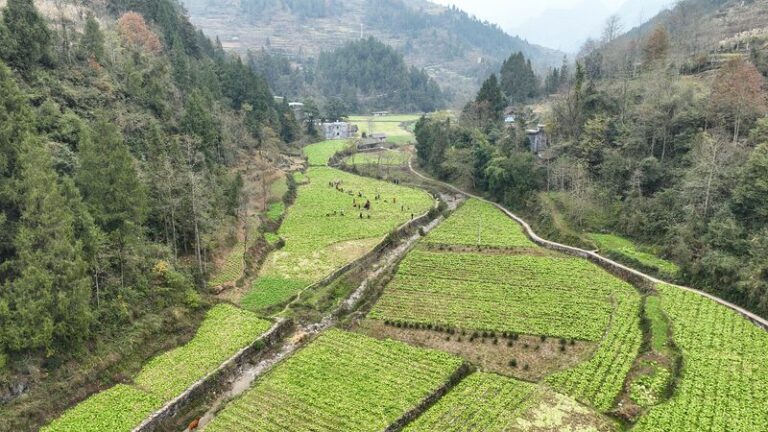
In the rolling landscapes of Zhejiang province, a shift in rural strategy is transforming the traditional concept of “spring tourism.” In Tongqian Village, located within Shiliang Town of the Kecheng District in Quzhou, the seasonal bloom of rapeseed flowers is no longer just a backdrop for photographs, but the engine of a sophisticated economic model known as the “flower economy.”
By moving beyond “single-point check-ins”—where tourists visit briefly for a photo and leave—the village has implemented a full-chain driver approach. This strategy integrates aesthetic appeal with agricultural productivity and social welfare, ensuring that the 300-acre fields of colorful rapeseed flowers deliver tangible financial returns to the local community source.
The transition from “viewing scenery” to “living a life” is evidenced by the village’s “rapeseed + rice” crop rotation system. This model ensures that the land remains productive throughout the four seasons, providing both a tourist attraction in the spring and a sustainable food source for the residents. For the people of Tongqian, the beauty of the blooms is secondary to the “economic account” hidden within the petals.
This systemic approach is supported by a “village + enterprise + farmer” cooperation model. Through the assistance of the Shiliang Chamber of Commerce, the village has moved from simple aid to full-chain empowerment, creating a sustainable ecosystem where the flow of tourists is converted into collective strength and local wealth source.
The Mechanics of the “Flower Economy”
The economic viability of Tongqian Village’s strategy rests on the ability to provide local employment and direct benefits to its residents. Rather than relying solely on external tourism revenue, the village prioritizes the ability of residents who cannot migrate for work to earn a living at their own doorsteps.

For residents like Yu Haibao, this shift has provided a stable income of 4,500 yuan per month, offering a more convenient alternative to working in the town center source. This localized employment is a cornerstone of the village’s goal to turn scenic beauty into a poverty-alleviating industry.
The labor model is designed to scale based on seasonal needs. While only one person is employed permanently to manage the flower fields, the village hires 30 to 40 villagers during peak agricultural periods for tasks such as harvesting rapeseed and leveling the land. With daily wages set at 150 yuan for men and 100 yuan for women, the village distributes more than 200,000 yuan in wages to local workers annually source.
Agricultural Synergy: Rapeseed and Rice
The “flower economy” in Tongqian is not merely about tourism; it is rooted in a strategic agricultural rotation. The village utilizes a “rapeseed + rice” cycle that maximizes land use and ensures food security for the local population.
The rapeseed harvest serves a dual purpose. While the flowers attract visitors, the seeds are processed into oil. According to village official Tong Shuifu, the production of over 10,000 kilograms of rapeseed oil is sufficient to supply the 400 to 500 households in the village for an entire year source. Last year, nearly all the harvested rapeseed was purchased by the village’s own residents.
Following the rapeseed season, the fields are used for single-season rice. This rice is produced as a “green food” product with strict controls on pesticide use. Last year, the village harvested 200,000 jin of grain, which was processed into more than 100,000 jin of ecological rice, highly favored by the local community source.
Impact on Collective Village Wealth
The integration of tourism and agriculture has significantly bolstered the village’s collective finances. By ensuring that the land is never idle, the village has seen a marked increase in its operating income.
Tong Shuifu reported that the village’s collective economic operating income reached over 700,000 yuan last year. Notably, the combination of rapeseed and rice production alone contributed more than 400,000 yuan to this total source.
This financial success is attributed to the leadership of Tong Chungu, the Party Branch Secretary of Tongqian Village and Vice Chairman of the Shiliang Chamber of Commerce. His focus has been on transforming the “traffic” generated by the flowers into a collaborative effort that benefits the entire community, ensuring that the “flower economy” is a sustainable engine for rural revitalization.
Key Takeaways of the Tongqian Model
- Full-Chain Integration: Transitioning from simple sightseeing to a model that combines tourism, labor, and agricultural production.
- Localized Employment: Prioritizing jobs for residents who cannot leave the village, providing monthly wages of up to 4,500 yuan.
- Crop Rotation: Using a “rapeseed + rice” cycle to ensure land productivity and local food security.
- Collective Benefit: Generating significant collective income, with rapeseed and rice contributing over 400,000 yuan to a 700,000 yuan total operating income.
As the spring season continues, the model in Tongqian Village serves as a blueprint for other rural areas seeking to balance environmental beauty with economic necessity. The focus remains on the “economic account”—ensuring that every bloom contributes to the prosperity of the people who tend the land.
For those following the developments of rural revitalization in Zhejiang, further updates on the collective economic performance of Shiliang Town are expected following the next harvest cycle.
World Today Journal encourages readers to share their thoughts on sustainable rural development in the comments below.