Taiwanese opposition leader Cheng Li-wun has arrived in China for a six-day visit aimed at reducing tensions between Taipei and Beijing. The trip, which Cheng has characterized as a “journey to peace,” culminates in a high-stakes meeting with Chinese President Xi Jinping in Beijing later this week Al Jazeera.
Cheng, the recently elected chairperson of the Kuomintang (KMT), traveled to Shanghai on Tuesday with a delegation of party members. In a media briefing prior to her departure, Cheng stated her objective is to demonstrate that Taiwan and China “are not destined for war, nor do they necessitate to remain on the brink of military conflict” Al Jazeera.
The visit comes at a critical juncture for Cheng’s political career, as the Taiwanese public closely monitors how the two leaders address the disputed political status of Taiwan. The summit in Beijing is expected to serve as a significant test of Cheng’s diplomatic skill in navigating the complex cross-strait relationship.
A Strategic Itinerary: From Nanjing to Beijing
Cheng’s six-day itinerary includes a symbolic visit to Nanjing, the capital of China’s eastern Jiangsu province. There, she is scheduled to visit the mausoleum of Sun Yat-sen, the revolutionary leader regarded by both sides of the Taiwan Strait as the “father of modern China” Al Jazeera.
Following the visit to Nanjing, Cheng will head to Beijing for the summit with President Xi. This meeting marks a rare direct engagement between a high-ranking KMT leader and the Chinese head of state. The last sitting Taiwanese leader to meet with Xi in an official capacity was former KMT President Ma Ying-jeou during a 2015 summit in Singapore Al Jazeera.
Analyzing the Historical Context of Xi-KMT Relations
While the current visit is framed as a quest for peace, historical data suggests a consistent posture from the Chinese Communist Party (CCP). According to an official cited by the Taipei Times, rhetoric used by President Xi during nine previous meetings with current, former, or honorary KMT chairpersons indicates that the CCP has no intention of changing its fundamental policy on Taiwan Taipei Times.
Previous interactions between the CCP and KMT leadership have consistently centered on the “one China” principle and the goal of unification. Key historical precedents include:
- February 2013: Xi met with then-KMT honorary chairman Lien Chan, where Xi declared the need to “promote peaceful unification” while Lien proposed “one China, cross-strait peace” Taipei Times.
- June 2013: In a meeting with then-KMT honorary chairman Wu Poh-hsiung, Xi stated that both the CCP and KMT should adhere to the “one China” principle Taipei Times.
- 2015: Then-KMT chairman Eric Chu met with Xi, during which the KMT expressed hope to join the Asian Infrastructure Investment Bank based on the “1992 consensus” Taipei Times.
Lien Chan also maintained a recurring dialogue with Xi, holding additional meetings in 2014, 2015, and 2018, and attending a CCP military parade in Tiananmen Square in 2015 to commemorate the 70th anniversary of the finish of the Second Sino-Japanese War Taipei Times.
What So for Cross-Strait Diplomacy
The “1992 consensus” and the “one China” principle remain the primary friction points in these discussions. For the CCP, these frameworks are non-negotiable prerequisites for dialogue. For the KMT, these meetings represent an attempt to maintain a channel of communication to prevent military escalation, even if a final political agreement remains elusive.
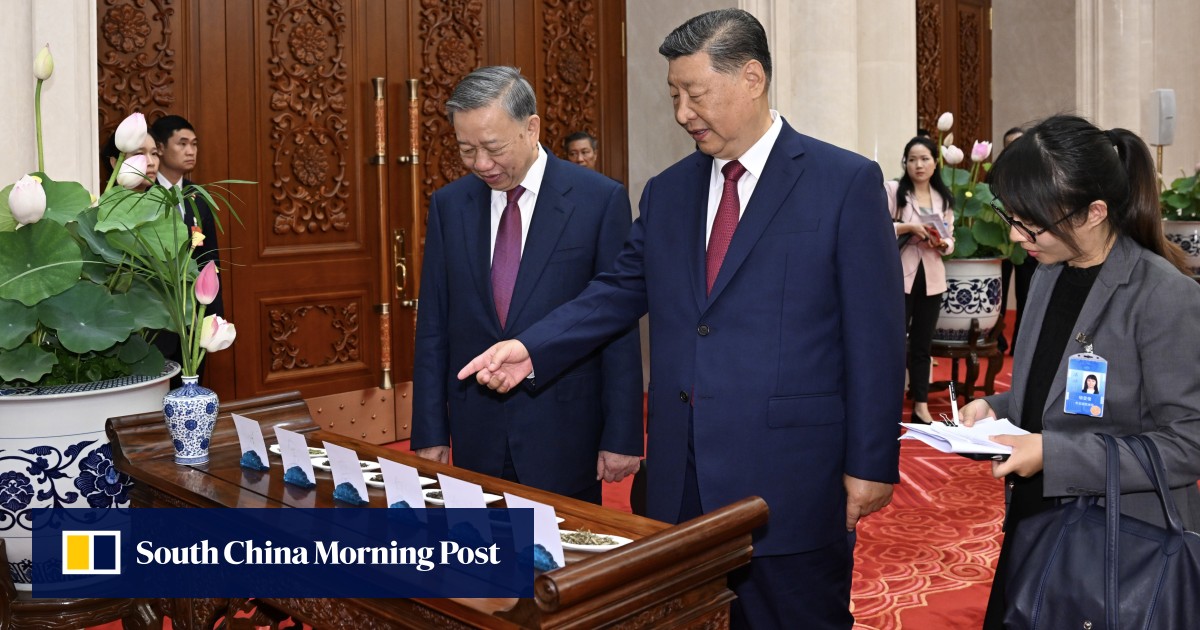
Cheng Li-wun’s current mission to prove that the two sides are not “destined for war” is a strategic attempt to pivot the conversation toward stability. However, the historical pattern of Xi’s meetings suggests that the Chinese leadership views these engagements as a means to reinforce its goal of unification rather than as a path toward recognizing Taiwan’s disputed political status as a separate entity.
| Date | KMT Representative | Key Outcome/Rhetoric |
|---|---|---|
| February 2013 | Lien Chan | Xi emphasized “peaceful unification” |
| June 2013 | Wu Poh-hsiung | Call to adhere to “one China” principle |
| November 2015 | Ma Ying-jeou | Official summit in Singapore |
| 2015 | Eric Chu | Discussion on Asian Infrastructure Investment Bank |
| April 2026 | Cheng Li-wun | Current “journey to peace” summit (pending) |
The next confirmed checkpoint for this diplomatic effort is the summit between Chairperson Cheng Li-wun and President Xi Jinping in Beijing, scheduled for the end of this week.
We invite our readers to share their perspectives on the impact of these diplomatic engagements in the comments section below.