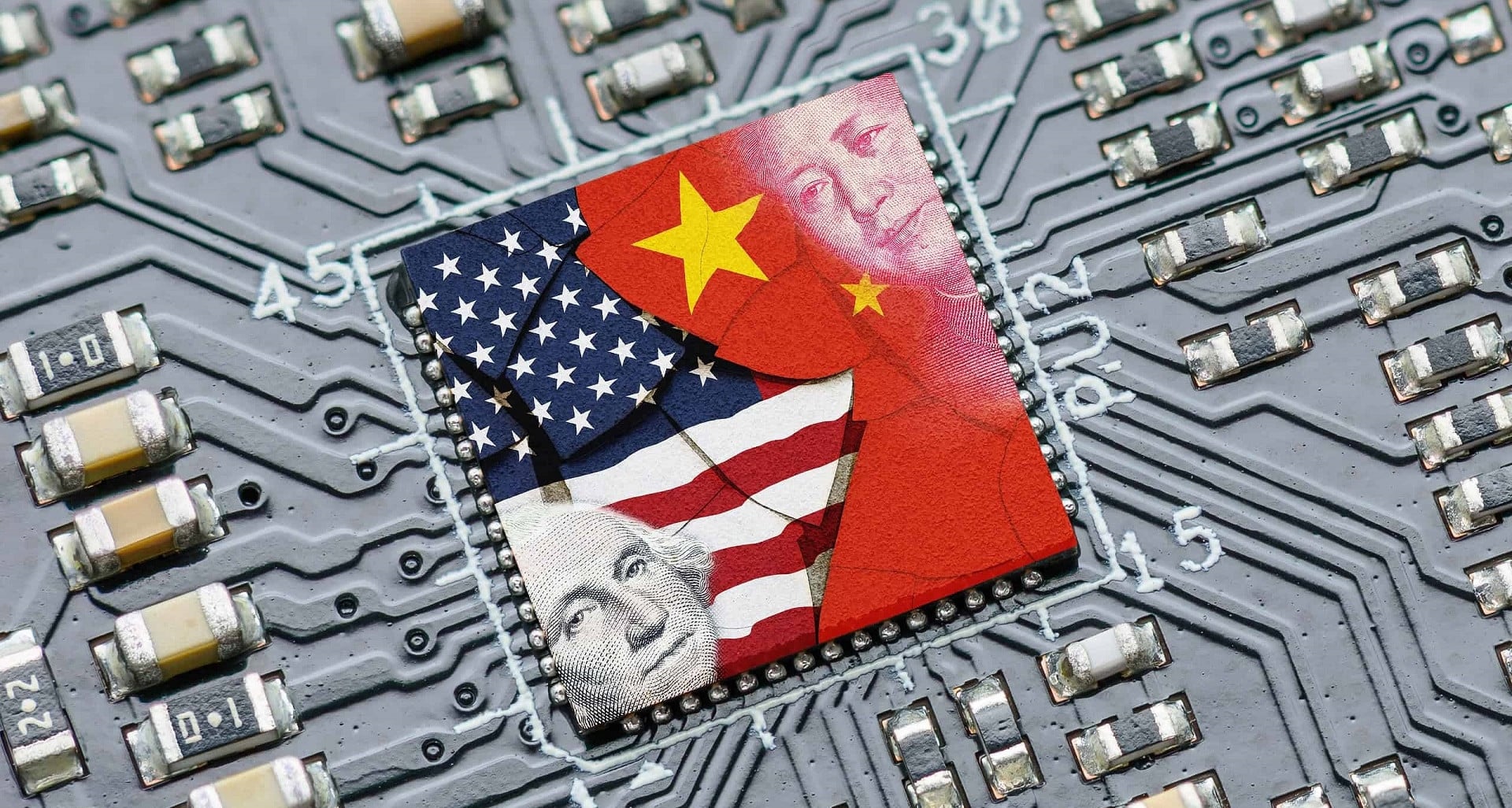
China’s rapid advancement in artificial intelligence has narrowed the performance gap with the United States to near parity in key AI bot capabilities, according to the latest findings from Stanford University’s Human-Centered Artificial Intelligence (HAI) Institute. The 2026 AI Index report highlights significant progress in China’s AI research output, patent filings, and robotic systems integration, signaling a pivotal shift in the global technological landscape. Although the U.S. Still maintains advantages in foundational AI models and private-sector investment, China’s coordinated state-backed innovation strategy has accelerated its capabilities across multiple fronts, raising questions about the future balance of power in AI development.
This convergence is not merely incremental; it reflects a structural transformation in how AI innovation is pursued and scaled. Where the U.S. Model relies heavily on decentralized private-sector R&D and venture capital, China’s approach integrates national planning, talent recruitment, and infrastructure investment to drive breakthroughs in applied AI. The HAI report notes that Chinese institutions now publish more AI-related research papers annually than their American counterparts, and Chinese firms lead in AI patent grants — particularly in computer vision, natural language processing, and AI-driven robotics. These metrics, while not perfect proxies for innovation quality, underscore a systemic effort to close and potentially surpass existing gaps.
The implications extend beyond technical benchmarks. As AI becomes embedded in defense, healthcare, manufacturing, and governance, the ability to develop and deploy advanced systems influences economic competitiveness and national security. Analysts warn that if current trends continue, the U.S. May face increasing pressure to adapt its innovation policies, particularly around immigration reform for high-skilled tech workers, federal funding for basic research, and public-private collaboration models. Conversely, China’s rise also prompts scrutiny over data governance, algorithmic transparency, and the ethical use of AI in surveillance and social control systems — areas where international norms remain contested.
Understanding the Metrics Behind the AI Index
The Stanford HAI AI Index is one of the most comprehensive annual assessments of global AI activity, tracking benchmarks across research, education, technical performance, policy, and industry adoption. For the 2026 edition, researchers evaluated over 150 indicators, including AI bot performance on standardized language and reasoning tasks, where Chinese models such as those developed by Baidu, Alibaba, and Huawei showed scores within 2–3 percentage points of leading U.S. Systems like GPT-4 and Gemini Ultra on benchmarks like MMLU and HumanEval.
In robotics, China accounted for over 50% of global industrial robot installations in 2025, according to data from the International Federation of Robotics (IFR), a figure that reflects both domestic demand and export growth. Chinese firms like DJI and UBTECH have expanded their AI-integrated drone and service robot offerings into Southeast Asia, Africa, and Latin America, often bundling hardware with locally adapted software platforms. This vertical integration gives Chinese companies an edge in emerging markets where affordability and end-to-end solutions are prioritized.
On the innovation front, the World Intellectual Property Organization (WIPO) reported that Chinese applicants filed more than 68,000 AI-related patent applications in 2025 — nearly double the number submitted by U.S. Inventors. While patent quantity does not always correlate with impact, the trend reflects sustained investment in AI R&D across universities, state labs, and corporate research arms. Notably, Tsinghua University and the Chinese Academy of Sciences ranked among the top five global institutions for AI paper output in 2024, according to bibliometric analysis by Elsevier’s Scopus database.
What This Means for the Global Tech Ecosystem
The narrowing gap between U.S. And Chinese AI capabilities challenges long-held assumptions about American technological primacy. For decades, the U.S. Benefited from a combination of world-class universities, open immigration policies for scientists and engineers, and a culture of risk-tolerant entrepreneurship. These advantages allowed Silicon Valley to dominate early AI breakthroughs, from deep learning architectures to large language models. However, recent restrictions on visa programs, rising costs of higher education, and geopolitical tensions have begun to erode some of these strengths.
In response, U.S. Policymakers have launched initiatives such as the CHIPS and Science Act, which allocates billions to semiconductor manufacturing and AI research infrastructure. The National AI Initiative Act of 2020 continues to coordinate federal efforts, though critics argue implementation remains fragmented across agencies. Meanwhile, private firms like Google, Microsoft, and OpenAI continue to push the frontier in model scaling and multimodal AI, maintaining leadership in areas such as reasoning, creativity, and zero-shot learning.
China’s progress, meanwhile, is bolstered by its New Generation Artificial Intelligence Development Plan, launched in 2017 with the goal of becoming the world leader in AI theory and application by 2030. Intermediate milestones include achieving major breakthroughs in foundational theories by 2025 and establishing AI as a core driver of economic growth by 2030. Government funding for AI research has grown steadily, with provincial and municipal governments offering subsidies, tax breaks, and access to vast datasets — including those from surveillance, transportation, and healthcare systems — to train models at scale.
Stakeholders and Real-World Impact
The shifting dynamics affect a broad range of stakeholders. For multinational corporations, the need to navigate divergent regulatory environments — such as the EU’s AI Act, U.S. Executive orders on AI safety, and China’s own algorithmic recommendation regulations — complicates global deployment strategies. Companies must now consider data localization requirements, model transparency obligations, and restrictions on cross-border data flows when designing AI systems for international markets.
Developers and researchers face a more complex talent landscape. While the U.S. Still attracts top global AI talent, visa delays and political rhetoric have prompted some to consider alternatives in Canada, Europe, or Asia. Tsinghua University, Peking University, and the University of Science and Technology of China have strengthened their graduate programs, offering competitive stipends and access to cutting-edge computing resources. Some Western-trained Chinese researchers have returned home under talent recruitment programs like the Thousand Talents Plan, bringing international experience to domestic labs.
Consumers may benefit from increased competition, which could drive down costs and accelerate the availability of AI-powered tools in areas like language translation, healthcare diagnostics, and smart home devices. However, concerns persist about bias, accountability, and the potential misuse of AI in authoritarian contexts. Independent audits of AI systems remain rare in both countries, though civil society groups in the U.S. And Europe are pushing for stronger algorithmic impact assessments and public oversight mechanisms.
Looking Ahead: What Comes Next
The next major milestone in tracking global AI competitiveness will be the release of the 2027 AI Index report from Stanford HAI, expected in early spring 2027. This edition will likely include updated benchmarks on AI agent performance, energy efficiency of large models, and the emergence of AI-integrated scientific discovery tools. Researchers also plan to expand metrics on AI’s environmental footprint and labor market disruption — areas where comparative data remains limited.
In the interim, key events to watch include the U.S. Senate’s anticipated debate on the Future of AI Innovation Act later in 2026, which could shape federal support for open-source AI development and national AI research clouds. China is expected to unveil further details on its next-generation AI computing infrastructure at the Zhongguancun Forum in Beijing in mid-2026, potentially revealing advances in domestically produced AI chips and quantum-AI hybrid systems.
For readers seeking authoritative updates, official sources include the Stanford HAI website (Stanford HAI), the National Science Foundation’s AI research portal (NSF AI), and China’s Ministry of Science and Technology (MOST China). These platforms provide access to reports, funding announcements, and policy documents that reflect the evolving state of AI development in both nations.
The race for AI leadership is no longer a foregone conclusion. As capabilities converge, the focus may shift from who leads to how AI is governed, shared, and shaped by societal values. The coming years will test not only technical prowess but also the willingness of nations to collaborate on shared challenges — from climate modeling to pandemic preparedness — where AI could serve as a force for global good.
What do you think this shifting balance means for the future of technology? Share your thoughts in the comments below, and help spread the conversation by sharing this article with others interested in the global AI landscape.
Related reading