
As the healthcare industry continues to grapple with rising costs and the complexities of patient outcomes, Garner Health has secured significant new capital to advance its data-driven approach to medical care navigation. The startup, which specializes in helping employers and individuals identify high-performing medical providers, has successfully raised $100 million in a Series E funding round, bringing the company’s total valuation to $2.74 billion, according to recent industry reports confirmed by financial disclosures.
This latest infusion of capital underscores a growing market trend toward value-based care, where the focus shifts from the volume of services provided to the quality and efficiency of medical outcomes. By leveraging large-scale claims data to evaluate doctor performance, Garner Health aims to optimize how patients interact with the healthcare system. The company has indicated that the newly acquired funds will be directed toward scaling its AI-powered product innovation, expanding its existing provider quality platform, and broadening access to its services for a wider range of employers and patients as reported in recent business coverage.
The Role of Data in Modern Care Navigation
At the heart of the Garner Health model is the use of extensive datasets to provide actionable insights for patients. The organization manages a significant database of medical records, which it utilizes to identify healthcare providers who demonstrate higher accuracy in diagnoses and better overall patient results. For many patients, navigating the healthcare landscape—specifically finding the right specialist or primary care provider—can be a daunting experience, often complicated by network restrictions and varying levels of provider quality.

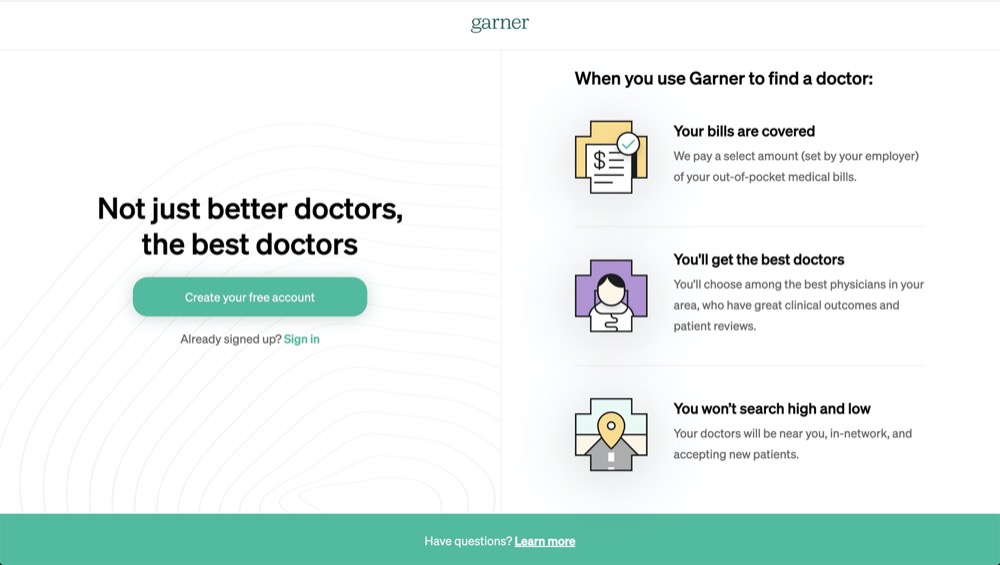
Garner Health offers a platform designed to simplify this process. By providing performance data that highlights “top providers,” the company seeks to steer patient traffic toward doctors who have a track record of effective care. This approach is intended to not only improve health outcomes but also to reduce the financial burden on patients, as the platform often includes features that assist in covering out-of-pocket costs, such as copays and surgical expenses, when members utilize these recommended providers.
Expanding Financial and Operational Reach
The transition toward value-based care strategies is increasingly relevant for employers, who are tasked with managing rising healthcare costs while maintaining employee engagement. Many organizations are turning to third-party navigation tools to help their workforce make more informed medical decisions without necessarily requiring a complete overhaul of their existing insurance networks. Garner Health’s business model is structured to integrate into these benefits strategies, offering a “nondisruptive” service that aims for real savings.
With this $100 million injection, the startup is positioned to further refine its analytical capabilities. As artificial intelligence continues to play a larger role in medical diagnostics and administrative efficiency, scaling AI-powered innovation could allow the company to process larger volumes of claims data with greater speed, and precision. This technological growth is essential for maintaining the accuracy of provider recommendations, which rely on up-to-date performance metrics to remain relevant in a rapidly changing medical field.
What This Means for Patients and Employers
For the individual patient, the primary benefit of such platforms is the promise of lower out-of-pocket costs and access to high-quality care. The ability to use a digital assistant to find in-network, high-performing doctors near one’s location addresses a common pain point in modern medicine: the lack of transparency in provider quality. When patients are empowered with data, they can make decisions that align both with their health needs and their financial constraints.
For employers, the value proposition lies in the reduction of overall healthcare spend. By incentivizing the use of top-tier providers, companies can see a decrease in unnecessary testing, ineffective treatments, and costly complications. This shift represents a broader institutional move toward accountability in healthcare, where the performance of the provider is directly linked to the value delivered to the patient and the payer.
Key Takeaways
- Significant Funding: Garner Health has raised $100 million in Series E funding, reaching a valuation of $2.74 billion.
- Strategic Focus: The capital is earmarked for AI-powered product development and the expansion of the company’s provider quality platform.
- Value-Based Care: The platform focuses on identifying high-quality doctors to improve patient outcomes and reduce out-of-pocket medical expenses.
- Market Application: The service is designed for employers to integrate into existing benefits plans, aiming to drive engagement and cost savings without changing network structures.
As Garner Health moves forward with its expansion plans, the industry will be watching to see how these new resources impact the broader landscape of healthcare navigation. While the company has not yet announced a specific timeline for the rollout of new features, stakeholders expect continued updates regarding platform enhancements and service availability throughout the remainder of the year. We invite our readers to share their thoughts on the role of AI and data-driven navigation in their own healthcare experiences in the comments section below.

Worth a look