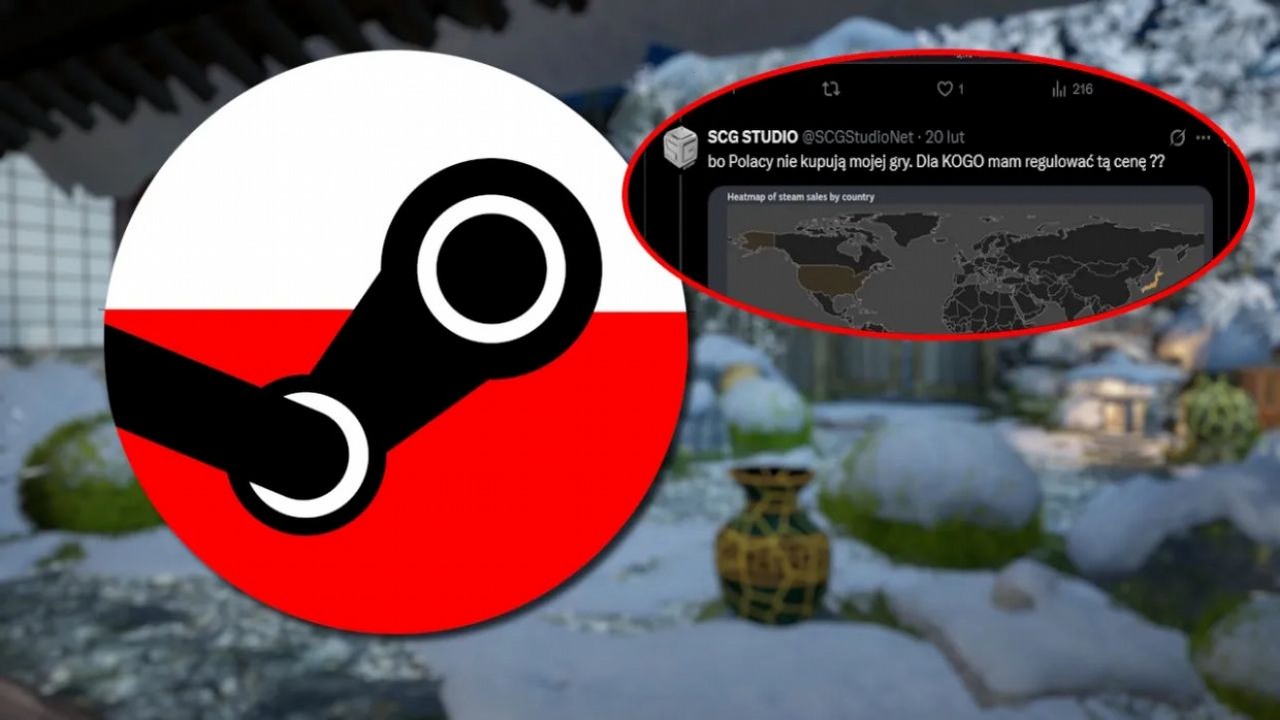
The debate over game pricing on Steam, particularly for players in Poland, continues to escalate. Even as frustration has long simmered among gamers regarding perceived price discrepancies, the issue has now moved beyond online forums and into the political arena. A recent exchange on social media, involving a Polish game developer and political figures, has highlighted the complexities of pricing on the platform and sparked renewed calls for fairer practices. The core of the dispute centers on whether Valve, the company behind Steam, or game developers themselves are responsible for the higher prices observed in Poland.
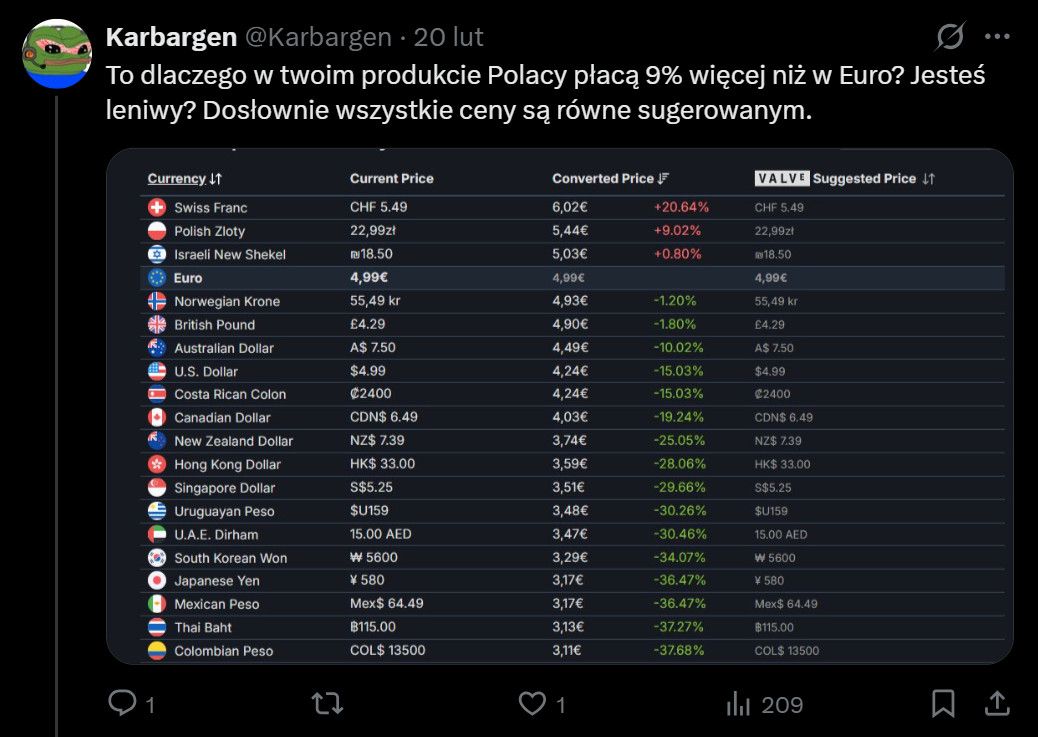
The controversy resurfaced when a representative from SGC Studio, a Polish game development company, responded to a post by a left-wing political group, Lewica, on X (formerly Twitter). Lewica had revisited the issue of price differences on Steam, prompting the developer to argue that pricing is ultimately controlled by developers, who have the ability to set prices in each currency. This response, however, backfired as many users quickly pointed out the developer’s own pricing practices for their game, Kintsugi – A Journey Through The Broken Pieces, which is reportedly priced higher in Poland than in many other regions. The ensuing discussion quickly devolved into a heated exchange, as reported by multiple sources.
The Polish Pricing Puzzle: Why Are Games More Expensive?
For years, Polish gamers have voiced concerns about the high cost of games on Steam. The issue stems from the way Steam converts prices from US dollars to Polish złoty (PLN). The automatic currency conversion used by Steam often results in higher prices for Polish consumers compared to those in the United States or Eurozone countries. This is due to the fluctuating exchange rate and the way Steam applies a margin during the conversion process. According to a report from ixbt.games, Polish politicians have formally complained to Valve about these inflated prices.
While Valve maintains that developers have the flexibility to set regional pricing, many developers opt to apply Steam’s automatic currency conversion due to the administrative burden of manually adjusting prices for each country. Setting individual prices for every currency requires significant effort, and many smaller studios simply lack the resources to do so. This reliance on the automatic system, perpetuates the issue of higher prices for Polish consumers. A post on Reddit’s r/Steam forum highlights the frustration of players, with many calling on Valve to take more responsibility for the pricing discrepancies.
SGC Studio’s Controversial Response and the Backlash
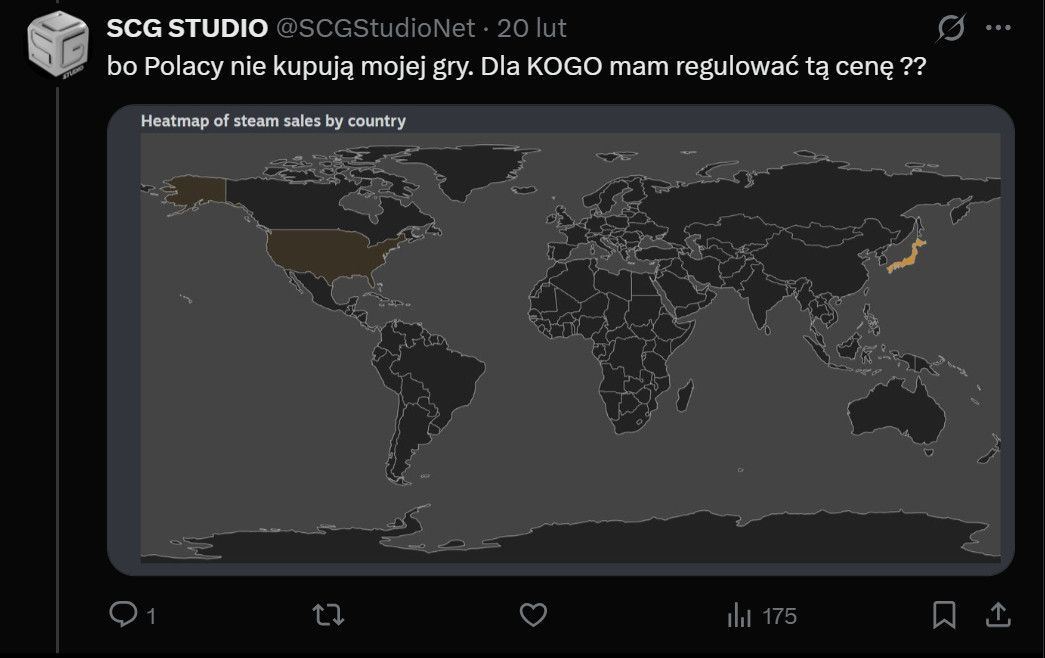
The situation escalated when SGC Studio, in responding to Lewica’s post, appeared to deflect blame onto consumers, stating, “Polacy nie kupują mojej gry. Dla KOGO mam regulować tę cenę?” (translated as “Poles don’t buy my game. For WHOM should I adjust the price?”). This statement, widely circulated online, was met with immediate and strong criticism. Gamers argued that developers have a responsibility to consider the purchasing power of consumers in different regions and that prioritizing sales in larger markets at the expense of smaller ones is unfair. The comment was perceived as dismissive and insensitive to the financial realities of Polish gamers.
The irony of the situation was not lost on observers, as the discussion centered around a relatively inexpensive game – Kintsugi – A Journey Through The Broken Pieces, priced at approximately 23 złoty (roughly $5.75 USD as of February 21, 2026). Despite its low price point, the game was still identified as being more expensive in Poland compared to other markets, further fueling the debate. SteamDB data confirms that the price of Kintsugi in Poland is among the highest globally, as noted in reports from gry-online.pl.
Regulatory Scrutiny and the “Polish Our Prices” Initiative
The growing discontent over Steam’s pricing practices has prompted action from both political groups and consumer advocacy organizations. The “Polish Our Prices” initiative, a grassroots movement advocating for fairer pricing, has gained significant momentum. This campaign, supported by Polish media outlets and the MKwadrat Podcast, has successfully brought the issue to the attention of the Urząd Ochrony Konkurencji i Konsumentów (UOKiK), the Polish Office for Competition and Consumer Protection. The UOKiK has launched an investigation into the pricing practices on Steam, as reported by gry-online.pl.
The UOKiK’s investigation will focus on whether Steam’s automatic currency conversion system violates Polish competition law. The office will examine whether the system unfairly disadvantages Polish consumers and whether Valve has taken sufficient steps to ensure fair pricing. The outcome of this investigation could have significant implications for Steam’s operations in Poland and potentially set a precedent for other countries facing similar pricing issues. The investigation is still in its early stages, but it represents a significant step towards addressing the concerns of Polish gamers.
Valve’s Position and the Developer’s Role
Valve has not directly addressed the specific complaints from Polish politicians or the UOKiK investigation as of February 21, 2026. However, the company has previously stated that developers have complete control over pricing on Steam and that Valve does not impose any restrictions. This position places the onus on developers to manually adjust prices for different regions, a task that many are reluctant to undertake due to the associated workload. The debate highlights a fundamental tension between Valve’s hands-off approach to pricing and the desire for fairer prices for consumers in countries with weaker currencies.
The incident with SGC Studio underscores the challenges faced by smaller developers. While they have the technical ability to set regional prices, they may lack the resources or incentive to do so, particularly if they perceive the Polish market as relatively small. This situation raises questions about whether Valve should implement more automated tools or incentives to encourage developers to adopt regional pricing strategies. The current system, as it stands, appears to disproportionately disadvantage consumers in countries like Poland.
What’s Next for Steam Pricing in Poland?
The UOKiK’s investigation is expected to continue in the coming months, with a preliminary report anticipated by late spring 2026. The outcome of the investigation could lead to a range of outcomes, from a formal reprimand for Valve to the imposition of fines or requirements for changes to its pricing system. The “Polish Our Prices” initiative is continuing to gather support and is planning further actions to raise awareness of the issue. The situation remains fluid, and it is unclear whether Valve will proactively address the concerns of Polish gamers before the UOKiK releases its findings.
The broader implications of this dispute extend beyond Poland. Similar concerns have been raised by gamers in other countries with weaker currencies, suggesting that the issue of regional pricing on Steam is a global one. The outcome of the UOKiK investigation could therefore have a ripple effect, influencing pricing practices on Steam in other regions as well. The debate highlights the need for greater transparency and fairness in the digital distribution of games.
As the investigation progresses, gamers in Poland and beyond will be closely watching to see whether Valve and developers will take steps to address the issue of inflated prices. The current situation underscores the importance of consumer advocacy and the potential for regulatory intervention to ensure a more equitable gaming marketplace.
Key Takeaways:
- Polish gamers are facing higher prices on Steam due to unfavorable currency conversion rates.
- A Polish game developer’s controversial statement sparked a wider debate about pricing responsibility.
- The UOKiK, Poland’s competition authority, has launched an investigation into Steam’s pricing practices.
- The “Polish Our Prices” initiative is advocating for fairer pricing and has gained significant support.
- The outcome of the investigation could have implications for Steam’s operations in Poland and beyond.
Stay tuned to World Today Journal for further updates on this developing story. We encourage readers to share their experiences with Steam pricing in the comments below and to engage in constructive discussion about this vital issue.
Related reading