
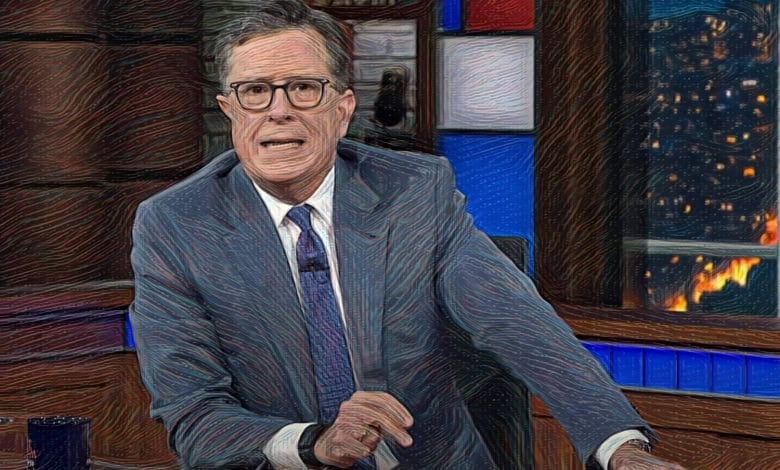
Late-Night Satire and the Pandemic: Examining the Legacy of Stephen Colbert’s COVID-19 Commentary
In the spring of 2020, as the world grappled with the unprecedented onset of the COVID-19 pandemic, the landscape of American media underwent a profound transformation. For late-night television, a medium traditionally defined by escapism and lighthearted celebrity anecdotes, the era demanded a pivot toward heavy political satire and social commentary. Among the most prominent voices in this shift was Stephen Colbert, host of CBS’s The Late Show, whose monologues became both a lifeline for some and a lightning rod for intense criticism from others.
As lockdowns were implemented across the United States to curb the spread of the virus, the tension between public health mandates and economic survival reached a boiling point. For many Americans, the period was defined by the sudden collapse of small businesses and the loss of personal liberties. It was within this volatile atmosphere that Colbert’s comedic approach—often characterized by sharp, partisan critiques—began to draw scrutiny from those who felt the late-night establishment was increasingly out of touch with the struggles of the working class.
This article examines the specific moments from The Late Show that fueled these debates, the socio-political context of the early pandemic era, and the enduring questions regarding the role of comedy during a national crisis. By analyzing the intersection of satire, science, and economic hardship, we can better understand how the pandemic reshaped the relationship between late-night hosts and their global audience.
The Monologues That Sparked Debate
The controversy surrounding Colbert’s pandemic-era commentary often centered on his treatment of those protesting social distancing measures. During a period of intense isolation, Colbert utilized his platform to address the growing unrest regarding lockdown protocols. However, his choice of language and tone led to accusations that he was mocking citizens who were facing significant personal and financial distress.
In one notable segment, Colbert addressed protesters in Washington State, specifically referencing an individual carrying a sign that read, “Give me liberty, or give me Covid-19.” Colbert’s response, which characterized the protesters as “idiots” who were “starting to go a little kooky in the old squirrel cage,” was seen by critics as a dismissal of the legitimate fears regarding government overreach and economic stability. The monologue highlighted a growing divide: while many viewed the protests as dangerous defiance of health guidelines, others saw them as a desperate cry for the preservation of their livelihoods.

The criticism extended to his commentary on other regional protests. Colbert famously targeted a woman in Wisconsin who had been seen with a sign stating, “I want a haircut.” In a biting critique, Colbert suggested the sign should instead read, “I want to endanger the lives of your grandparents in exchange for frosted tips.” While the joke landed with viewers who supported strict adherence to health mandates, it drew sharp backlash from those who felt the humor was a “low blow” against people mourning the loss of normal social interactions and the ability to maintain basic services.
A Divide in Perspective: Economic Hardship vs. Public Health
At the heart of the backlash against Colbert was a perceived disconnect between the lifestyle of a high-profile media figure and the reality of the American public during 2020. As Colbert broadcasted The Late Show from the relative safety of his home, continuing to collect significant compensation from CBS, a narrative began to emerge that he embodied a “Let Them Eat Cake” style of celebrity detachment.
This sentiment was fueled by the stark contrast between the mandates imposed on the general public and the perceived inconsistencies among political leaders. Critics frequently pointed to instances where government officials appeared to bypass the very rules they championed. For example, the controversy surrounding high-profile gatherings, such as the dining incident involving California Governor Gavin Newsom at The French Laundry, served as a recurring point of contention for those who felt the “lockdown mania” was being applied inequitably. Although Colbert did not focus his satire on these specific political hypocrisies, the absence of such critiques in his monologues contributed to the perception that he was siding with “Big Government” over the struggling individual.
the economic impact of the lockdowns cannot be overstated. For millions of Americans, the “draconian measures” mentioned by critics were not merely abstract policy decisions but lived realities that resulted in the closure of family-owned businesses and the evaporation of personal savings. When late-night hosts utilized these struggles as comedic fodder, it created a friction point that transcended simple political disagreement, touching on deeper issues of class and empathy in the media.
The Political Dimension: Satire in a Polarized Era
Colbert’s comedy has always been deeply intertwined with political satire, but the pandemic added a layer of complexity to his relationship with the then-administration of President Donald Trump. During the early months of 2020, Colbert frequently linked the rise of anti-lockdown protests to the rhetoric of the White House, suggesting that the President was actively encouraging his followers to challenge health recommendations.
In a segment that became widely discussed, Colbert utilized a colorful metaphor to describe the President’s relationship with his base, comparing him to “angry Tinkerbell.” He suggested that the administration relied on the energy of “chanting mobs” to maintain political momentum, specifically referencing the “lock her up” slogans used during various political rallies. This approach solidified Colbert’s status as a primary critic of the Trump administration, but it also deepened the partisan divide among his viewers.
For his supporters, this was the essential function of late-night comedy: speaking truth to power and holding leadership accountable during a time of chaos. For his detractors, however, this was evidence that late-night television had moved away from being a unifying cultural force and had instead become a tool for political tribalism, further polarizing an already fractured nation.
Scientific Scrutiny and the Social Distance Debate
The effectiveness and scientific basis of certain pandemic-era mandates also became a central theme in the criticisms directed at Colbert. One of the most significant points of contention was the “six-foot rule” for social distancing. While this guideline was widely adopted by the public and frequently cited by media figures like Colbert, it eventually became a subject of intense debate among scientists and policy experts.
Critics of the media’s handling of the pandemic noted that the six-foot recommendation was often presented as an absolute scientific fact rather than a flexible guideline. As the nuances of aerosol transmission and ventilation became better understood, the debate over the specific distance required for safety intensified. For those who felt the rules were arbitrary or lacked a definitive scientific foundation, Colbert’s insistence on the necessity of these distances—often framed as common sense rather than evolving science—was seen as a failure to acknowledge the complexity and uncertainty of the era.
Key Takeaways: The Impact of Pandemic Comedy
- Cultural Polarization: Late-night monologues during the pandemic acted as a mirror to the intense political and social divisions within the United States.
- The Empathy Gap: A significant portion of the audience felt that satire directed at protesters ignored the genuine economic desperation caused by lockdown protocols.
- Role of the Host: The transition to remote broadcasting highlighted the perceived “disconnect” between media elites and the public facing economic hardship.
- Scientific Communication: The reliance on simplified guidelines, such as the six-foot rule, created challenges for media figures when scientific consensus evolved.
As the media landscape continues to evolve in the post-pandemic era, the legacy of 2020 remains a significant case study in the power and pitfalls of political satire. The question of whether late-night hosts should act as social stabilizers or as aggressive political critics remains a central debate in entertainment journalism.
We want to hear from you: How do you view the role of late-night comedy during times of national crisis? Did the satire provide necessary perspective, or did it deepen social divides? Share your thoughts in the comments below and share this article with your network.