
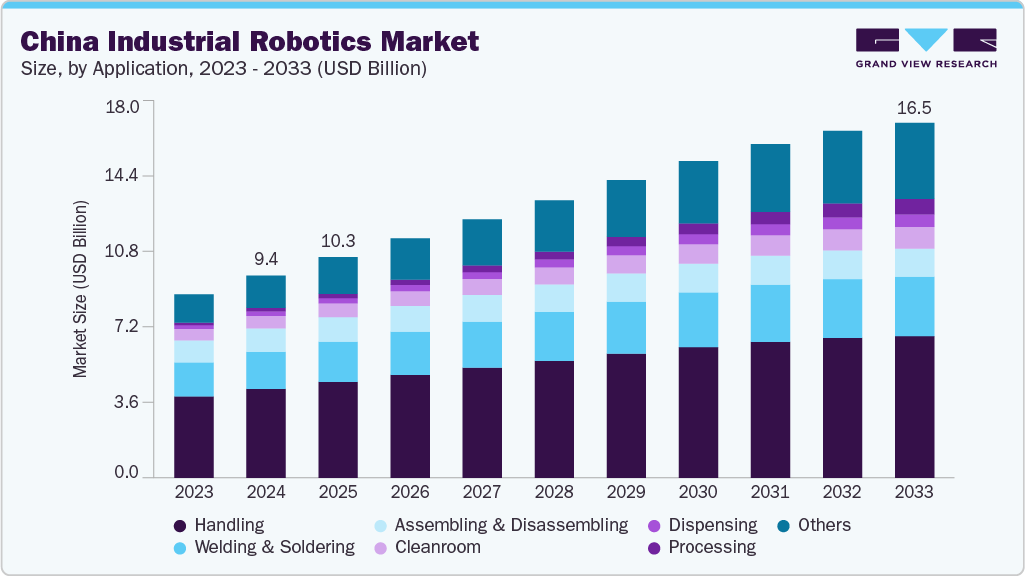
The global technological landscape is currently witnessing a profound convergence of silicon and steel. As artificial intelligence transitions from a theoretical frontier to a foundational layer of global industry, the race to dominate the sectors of robotics and autonomous systems has become a centerpiece of geopolitical and economic strategy. For investors looking to capture this shift within the world’s largest manufacturing ecosystem, the Global X China Robotics and AI ETF has emerged as a highly specialized vehicle designed to target the heart of China’s high-tech evolution.
This thematic investment approach does not merely track broad market indices; instead, it seeks to isolate the specific companies driving China’s transition from a low-cost assembly hub to a leader in “new quality productive forces.” By focusing on the intersection of advanced software and sophisticated hardware, the fund aims to provide exposure to the rapid advancements in automation, intelligent machines, and the autonomous mobility solutions that are reshaping the Chinese industrial landscape.
However, investing in such a concentrated, sector-specific fund requires more than just an appreciation for the technology. It demands a sophisticated understanding of the unique regulatory, geopolitical, and macroeconomic forces that define the Chinese tech sector. As we analyze the potential of this ETF, we must look beyond the immediate growth trajectories and examine the structural drivers and systemic risks that will dictate its long-term performance.
The Core Investment Thesis: Targeting the High-Tech Pivot
The central premise of the Global X China Robotics and AI ETF is to capitalize on China’s strategic national priority to achieve self-reliance in critical technologies. Unlike broader emerging market funds, this ETF is architected around four distinct yet interconnected technological pillars: robotics, industrial automation, autonomous vehicles, and artificial intelligence.
The integration of these technologies creates a powerful multiplier effect. For instance, the advancement of artificial intelligence provides the “brain” for autonomous vehicles, while robotics and automation provide the “limbs” and “nervous systems” required for smart manufacturing. By investing in companies that operate across these domains, the ETF attempts to capture the entire value chain of the fourth industrial revolution within the Chinese market.
Key Pillars of the Fund’s Focus:
- Robotics: This includes both industrial robots used in high-precision manufacturing and the emerging field of service robotics designed for healthcare, logistics, and consumer interaction.
- Automation: The focus here is on the software and hardware systems that enable “smart factories,” reducing human intervention and increasing production efficiency through the Internet of Things (IoT) and advanced sensors.
- Autonomous Vehicles: Beyond just electric vehicles (EVs), this sector encompasses the critical technologies required for self-driving capabilities, including LiDAR, advanced driver-assistance systems (ADAS), and sophisticated mapping software.
- Artificial Intelligence: This covers the foundational AI technologies, from machine learning algorithms and computer vision to the specialized semiconductor hardware required to process massive datasets.
Technological Drivers: Why China, Why Now?
To understand the momentum behind this ETF, one must look at the structural imperatives facing the Chinese economy. For decades, China’s growth was fueled by labor-intensive manufacturing. However, several converging factors are now mandating a shift toward high-tech, capital-intensive production.
First, demographic shifts are playing a critical role. As China’s working-age population begins to contract, the economic necessity for automation becomes undeniable. Robotics and AI are no longer just tools for efficiency; they are essential components for maintaining industrial output in the face of a shrinking labor force. This “demographic dividend” is being replaced by a “technology dividend,” where productivity gains must come from innovation rather than headcount.

Second, the Chinese government has signaled a clear, long-term commitment to technological sovereignty. Through various state-led initiatives, there is significant capital and policy support directed toward mastering the “choke point” technologies—such as high-end semiconductors and advanced AI frameworks—that are currently subject to international export controls. This state-backed momentum provides a unique tailwind for companies within the robotics and AI sectors that are aligned with national strategic goals.
Finally, the sheer scale of China’s domestic market provides a massive testing ground for these technologies. The rapid deployment of autonomous delivery drones, smart city infrastructure, and automated logistics hubs in major metropolitan areas creates a feedback loop of data and revenue that is hard to replicate in other markets. This massive data ecosystem is the fuel that drives the continuous improvement of AI models and autonomous systems.
Navigating the Risk Landscape: Geopolitics and Regulation
While the growth narrative is compelling, the path for a specialized ETF like this is fraught with volatility. Investors must weigh the high-reward potential against a complex set of risks that are often unique to the Chinese technology ecosystem.
Geopolitical Friction and Export Controls: One of the most significant headwinds is the ongoing technological competition between the United States and China. Strict export controls on advanced semiconductors and AI-related equipment can disrupt the supply chains of Chinese tech companies. If companies within the ETF’s holdings are unable to access the cutting-edge hardware required to train next-generation AI models, their competitive edge could be significantly hampered.
The Regulatory Environment: The Chinese regulatory landscape has proven to be highly dynamic. In recent years, sudden shifts in oversight regarding data privacy, algorithmic transparency, and anti-monopoly practices have caught even the largest tech giants off guard. For an ETF focused on AI and data-driven automation, the risk of new regulations governing how data is collected, stored, and utilized is a constant factor that can lead to sudden market corrections.
Market Volatility and Macroeconomic Factors: As noted in recent market reports, global investors have been navigating a period of significant volatility driven by shifting bond yields and inflationary concerns. While the tech sector often acts as a high-beta play—meaning it can outperform during bull markets but fall harder during downturns—the specific sensitivity of Chinese tech to domestic economic policy and international trade relations adds another layer of complexity. Investors should be prepared for significant price swings that may not always correlate with global tech trends.
Investor Utility: How to Approach Thematic Tech Investing
Investing in a niche ETF like the Global X China Robotics and AI ETF should not be a cornerstone of a conservative portfolio. Instead, it is best viewed as a tactical allocation for those with a higher risk tolerance and a long-term horizon. To maximize the utility of such an investment, consider the following framework:
1. Diversification vs. Concentration: Because this ETF is highly concentrated in a single country and a single sector, it should complement, rather than replace, broad-based international or total-market funds. The goal is to use the ETF to “tilt” a portfolio toward a specific growth theme without over-exposing the total capital to a single point of failure.

2. Monitor Policy Cycles: In the Chinese market, policy is often as significant as product. Keeping a close eye on official government communiqués regarding industrial policy, “new quality productive forces,” and semiconductor self-sufficiency will provide vital clues about which sub-sectors are likely to receive the next wave of support.
3. Understanding the Tech Lifecycle: Robotics and AI are in different stages of maturity. While industrial automation is a relatively mature field, autonomous driving and generative AI are still in high-growth, high-uncertainty phases. A sophisticated investor will recognize that the volatility in the ETF may be driven by the “frontier” technologies rather than the established industrial players.
Frequently Asked Questions
Is this ETF suitable for long-term retirement planning?
Thematic ETFs are generally considered high-risk/high-reward. While they offer significant growth potential, their volatility makes them more suitable as a satellite holding within a diversified long-term strategy rather than a primary retirement vehicle.
How does this differ from a standard Nasdaq-100 investment?
While the Nasdaq-100 provides exposure to global tech giants (mostly US-based), this ETF provides concentrated exposure to a specific technological theme (Robotics/AI) within a specific geographic market (China), which operates under different regulatory and economic drivers.
What are the main risks of investing in Chinese tech?
The primary risks include geopolitical tensions (US-China trade relations), domestic regulatory shifts, and the potential for sudden changes in how data and AI are governed within China.
As the global race for technological supremacy continues, the outcome of China’s push into robotics and AI will have profound implications for the global economy. For the discerning investor, the Global X China Robotics and AI ETF offers a direct, albeit volatile, window into this transformative era.
Next Milestone to Watch: Investors should monitor upcoming official statements from China’s Ministry of Industry and Information Technology (MIIT) regarding new standards for industrial automation and AI integration, as these often signal the next phase of state-directed investment.
What are your thoughts on the long-term potential of Chinese robotics? Do you believe the technological upside outweighs the geopolitical risks? Share your analysis in the comments below and share this article with your network.