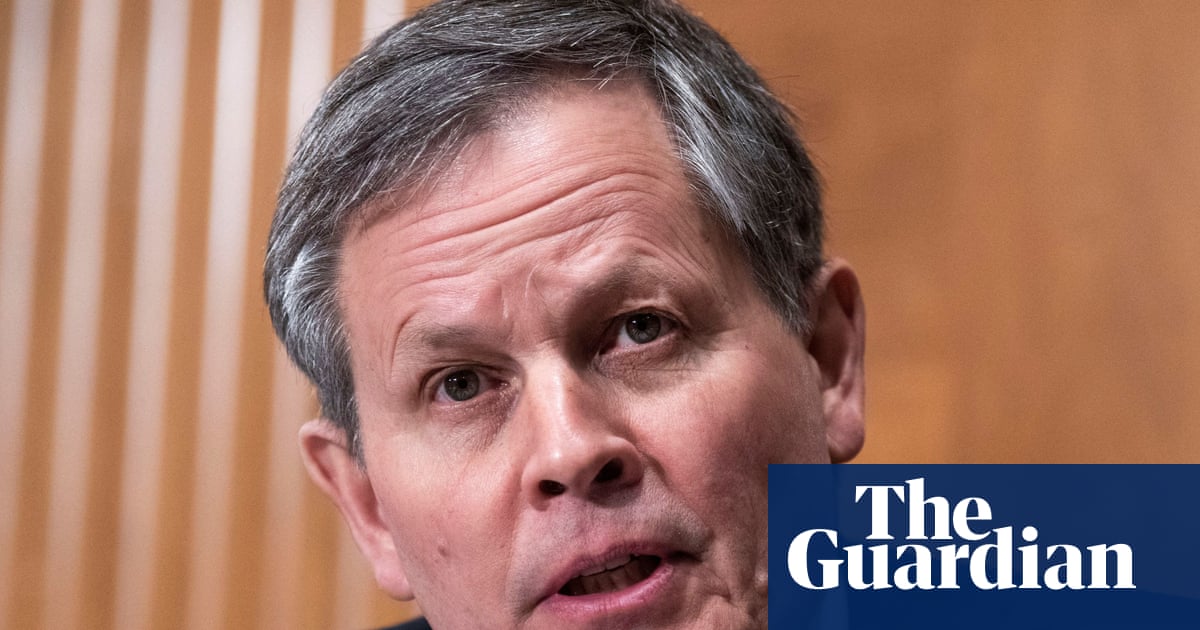
Montana Senator Steve Daines Announces Shock Retirement, Triggering Senate Race Shuffle
BILLINGS, Montana – In a stunning development just hours before the candidate filing deadline, Republican U.S. Senator Steve Daines of Montana announced Wednesday he will not seek a third term in the Senate. The move throws the upcoming November election into uncertainty and sets off a scramble for both parties to recalibrate their strategies in a state increasingly leaning conservative. Daines, a close ally of former President Donald Trump, endorsed U.S. Attorney for the District of Montana, Kurt Alme, as his successor, a recommendation swiftly echoed by Trump himself. This unexpected decision comes as Republicans hold a narrow majority in the Senate, currently comprised of 53 seats to the Democrats’ 45, plus two independents.
The announcement, delivered in a written statement and a video posted to social media, caught many in the political world off guard. Daines stated he had been “wrestling with this decision for months,” but ultimately concluded it was “time for new leaders” to represent Montana in Washington. The timing of the announcement, mere minutes before the filing deadline with the Montana Secretary of State’s office, effectively cleared the field for Alme, a relatively unknown candidate before Daines’s endorsement. The 2026 United States Senate election in Montana is scheduled for November 6, 2026, according to Wikipedia.
A Rapid Succession of Candidates
The political landscape shifted dramatically on Wednesday with a series of rapid-fire candidate announcements. Shortly before Daines’s withdrawal, Kurt Alme, the current U.S. Attorney for Montana, filed for the Senate seat. Alme’s candidacy was immediately bolstered by Daines’s endorsement, and within hours, former President Trump also publicly backed him. This swift consolidation of support within the Republican party signals a clear attempt to present a unified front.
Adding another layer of complexity to the race, Seth Bodnar, the former president of the University of Montana, launched an independent campaign for Daines’s seat on the same day. Bodnar’s decision to run as an independent underscores the challenges facing Democrats in Montana, a state where they currently hold no statewide offices following the 2024 defeat of three-term incumbent Senator Jon Tester. The lack of a prominent Democratic challenger further complicates the path for the party to regain a foothold in Montana’s federal representation.
Montana’s Shifting Political Landscape
Montana has undergone a significant political transformation in recent years, trending increasingly conservative. The state’s voters have consistently favored Republican candidates in recent elections, and the Democratic party has struggled to mount competitive campaigns. This shift is reflected in the current political makeup of the state, where Republicans control both chambers of the state legislature and hold all statewide elected offices. The defeat of Senator Tester in 2024, a long-time Democratic stalwart, was seen as a clear indication of this changing political dynamic.
Analysts suggest several factors contribute to this trend, including a growing emphasis on rural issues, a decline in union membership, and a shift in demographics. The state’s strong ties to agriculture and natural resource industries have also played a role, with voters often aligning with candidates who prioritize these sectors. The lack of a strong Democratic bench in Montana further exacerbates the challenges facing the party.
Kurt Alme: A Profile of the New Frontrunner
Kurt Alme, the Republican candidate now poised to lead the race, currently serves as the U.S. Attorney for the District of Montana, a position he has held since 2021. Prior to his appointment, Alme served in the Montana Army National Guard and worked as a prosecutor in several Montana counties. His background as a federal prosecutor is expected to resonate with voters concerned about law and order and border security.
While Alme’s name recognition is currently limited, Daines’s endorsement and Trump’s backing provide him with a significant advantage in terms of fundraising and media attention. He is expected to campaign on a platform of conservative principles, emphasizing limited government, individual liberty, and a strong national defense. His campaign will likely focus on appealing to rural voters and those concerned about the economic challenges facing Montana.
The Impact on the Senate Balance of Power
The Montana Senate race is now being closely watched by both parties, as it could have significant implications for the balance of power in the Senate. With Republicans holding a slim majority, the outcome of this election could determine which party controls the upper chamber of Congress. A Republican victory would solidify their control, while a Democratic upset could potentially shift the balance of power.
The national political climate is also expected to play a role in the race. The upcoming presidential election will likely influence voter turnout and candidate messaging. The outcome of the presidential race could also impact the level of enthusiasm among voters in Montana, potentially affecting the results of the Senate election.
BREAKING: Montana Sen. Steve Daines will not seek re-election, sources tell @axios. He’s endorsing Kurt Alme, U.S. Attorney for the District of Montana. https://t.co/wJq9wJqJ9q
— David Shepardson (@davidshepardson) March 5, 2026
Daines’s decision to step aside comes after months of speculation about his political future. He had previously indicated he was considering a run for governor of Montana, but ultimately decided against it. His decision to retire from the Senate opens up a significant opportunity for other candidates, and the race is expected to be highly competitive. The filing deadline has now passed, and the official list of candidates will be released by the Montana Secretary of State’s office in the coming days.
The next key date in the election cycle is the primary election, scheduled for June 2, 2026. This will be the first major test for the candidates, and will provide an indication of their level of support among voters. Following the primary election, the candidates will begin to focus on the general election, which will be held on November 6, 2026. Voters are encouraged to register to vote and participate in the upcoming elections to ensure their voices are heard.
As the race unfolds, World Today Journal will continue to provide comprehensive coverage of the candidates, the issues, and the political dynamics shaping the outcome of this crucial Senate election. We invite readers to share their thoughts and perspectives on the race in the comments section below.
Keep reading
- Taiwan’s “Oil Not For You” Controversy: Selective Law Enforcement or Legal Accountability?
- Controversy Over Public Book Box in Lyon’s Point-du-Jour
- The Senate Blue Slip, Explained: The Custom Trump Wants Gone (daybreakwire.com)
- Signum Global Advisors Formula Forecasts Trump Policy Pivot on Iran (archyworldys.com)