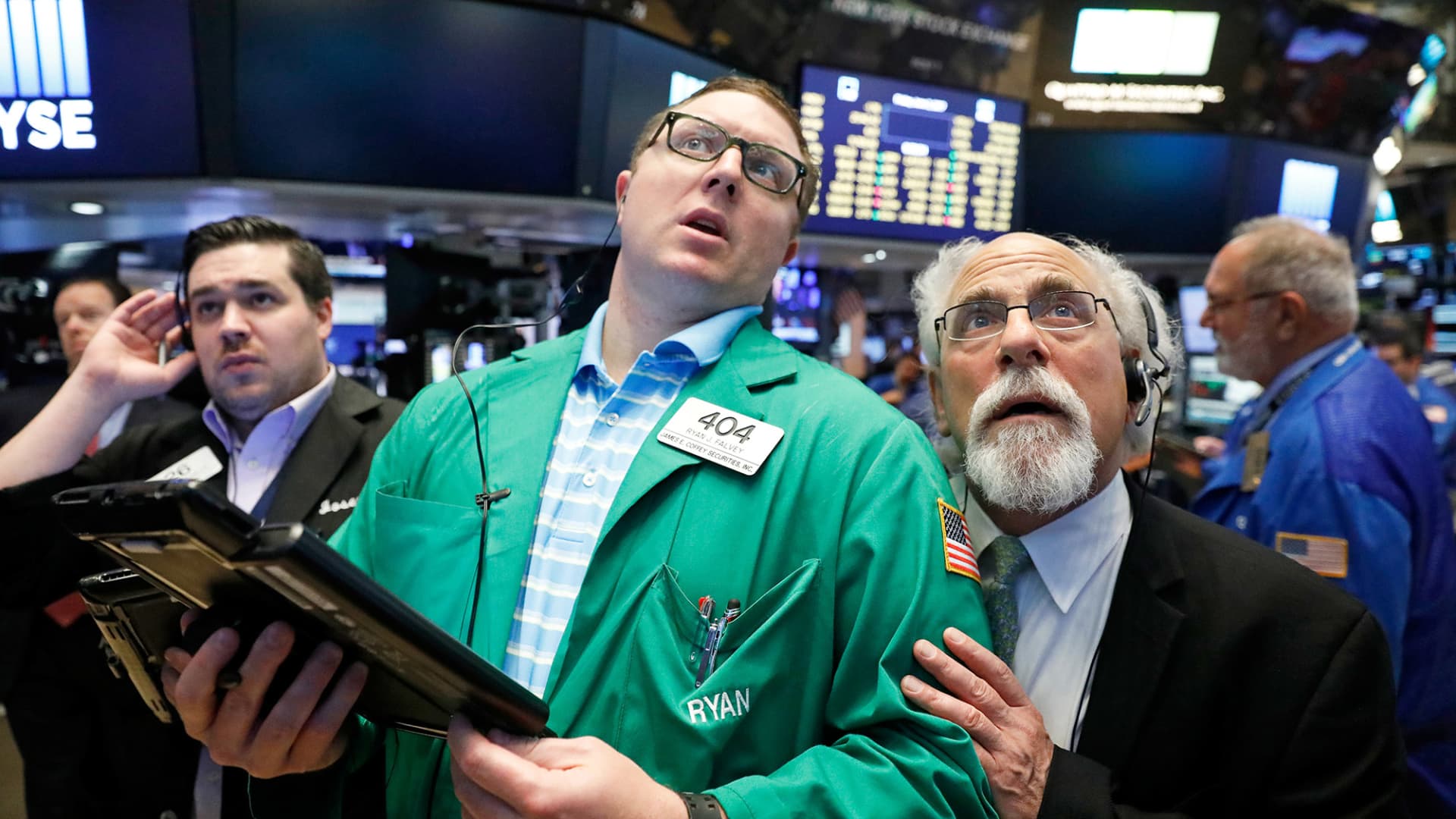
The global stock market experienced a sharp reversal this past week, as a sudden wave of selling on Friday abruptly ended a period of optimism that had pushed major indices to record highs. Investors, who had spent much of the week celebrating fresh market peaks, retreated in the face of shifting economic signals, leading to a volatile close that left many wondering if the recent rally had finally run out of steam.
As an editor following these shifts closely from London, it is clear that this volatility was not a random event. Instead, it was the result of a convergence of three distinct forces: cooling enthusiasm for artificial intelligence-led growth, uncertainty regarding the Federal Reserve’s interest rate trajectory, and a sudden rotation out of high-growth technology stocks into more defensive assets. Understanding these drivers is essential for anyone trying to make sense of the current market climate.
The Rotation Out of Big Tech
The most immediate factor behind the late-week sell-off was a significant shift in investor sentiment toward the “Magnificent Seven”—the group of large-cap technology stocks that have been the primary engine of the market’s performance throughout 2024. According to data from Reuters, investors began aggressively trimming their positions in major semiconductor and software firms, signaling a potential cooling in the AI-investment frenzy that defined the first half of the year.

This rotation is not necessarily a sign of a market crash, but rather a rebalancing. When a small group of stocks drives the majority of an index’s gains, the market becomes vulnerable to profit-taking. As noted in recent market analysis from the Financial Times, the move toward smaller-cap stocks and more defensive sectors, such as utilities and consumer staples, suggests that institutional investors are beginning to prioritize capital preservation over the high-growth, high-risk strategies that dominated the spring and early summer.
Federal Reserve Policy and Economic Uncertainty
Beyond the tech sector, the week’s volatility was heavily influenced by the latest labor market indicators. On Friday, the U.S. Bureau of Labor Statistics released an employment report showing that the unemployment rate rose to 4.3% in July, a figure higher than many analysts had projected. You can review the full breakdown of these figures in the official Bureau of Labor Statistics report.
This data point triggered a sharp reaction because it fundamentally changed the narrative surrounding the Federal Reserve’s next policy move. Markets had been pricing in a “soft landing”—a scenario where inflation cools without a significant spike in unemployment. However, the rise in joblessness has stoked fears that the central bank may have kept interest rates at their current restrictive levels for too long, potentially stifling economic growth. As reported by the Wall Street Journal, the shift in labor data has accelerated calls for the Fed to initiate rate cuts sooner than previously anticipated to prevent a deeper economic slowdown.
The Impact of Global Macroeconomic Sentiment
The third force driving this whirlwind week was the interplay between domestic U.S. economic data and global market stability. International markets often take their cues from Wall Street, and the sudden decline in the S&P 500 and Nasdaq Composite had a ripple effect across European and Asian exchanges. This global interconnectedness means that volatility in the U.S. tech sector is rarely contained; it quickly translates into broader risk-off behavior globally.
Investors are now looking toward the next major checkpoint: the Federal Reserve’s Jackson Hole Economic Symposium, scheduled for late August. This event is expected to provide more clarity on how policymakers view the recent labor market data and whether they are prepared to shift their stance on monetary policy. In the meantime, market participants will be closely monitoring upcoming corporate earnings reports and secondary economic indicators to gauge whether the recent sell-off is a temporary correction or the beginning of a more sustained trend.
Whether you are a seasoned investor or simply following global affairs, the volatility seen this past week serves as a stark reminder of how sensitive the markets remain to both policy shifts and shifts in corporate sentiment. We will continue to track these developments as more data becomes available. If you have thoughts on how these economic forces are impacting your own perspective, I invite you to join the conversation in the comments section below.
Worth a look