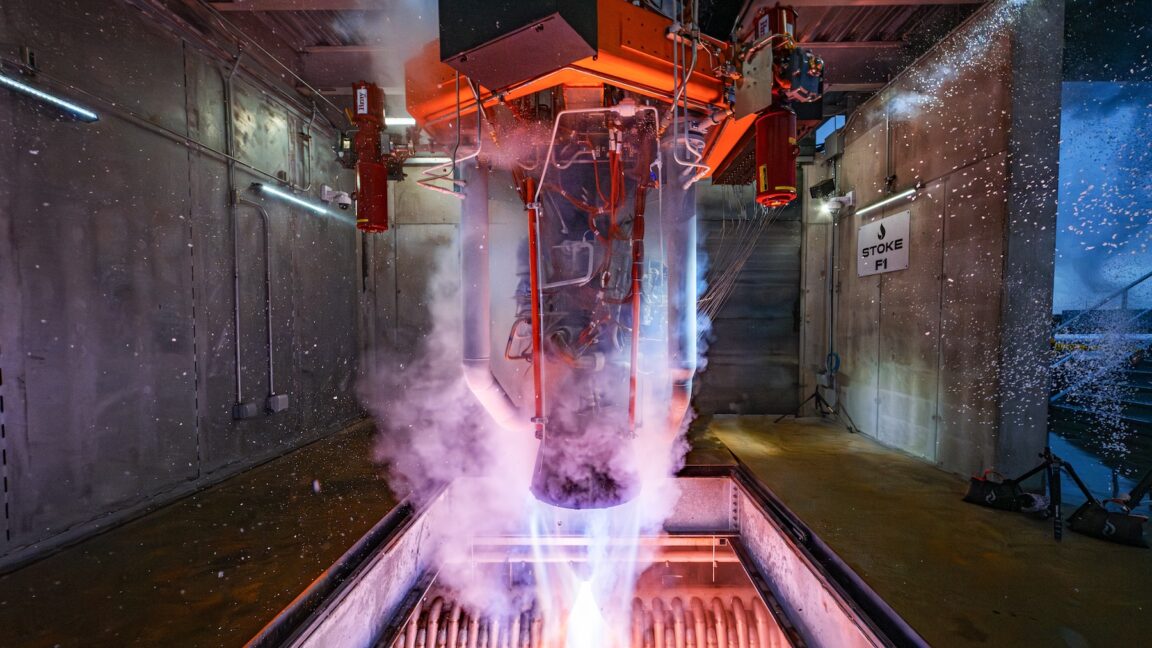
Stoke Space Secures $510 Million: Will Full Reusability Redefine Rocketry?
are you following the rapid advancements in space launch technology? The race to lower the cost of access to space is heating up, and Stoke Space just made a major move. On Wednesday,October 8th,2024,stoke Space announced a massive $510 million Series D funding round,bringing their total funding to an notable $990 million. But what does this mean for the future of space travel, and can Stoke Space deliver on its enterprising promises?
Stoke Space: A Rising Star in Reusable rocket Technology
Founded in 2020, Stoke Space is quickly becoming a name to watch in the launch vehicle industry. This latest funding injection provides the company with the crucial runway needed to finalize growth and execute the first flights of its innovative nova rocket.
So, what makes Nova different? It’s designed for full reusability - from the nose cone down.This isn’t just about recovering the first stage booster, like SpaceX does. Stoke Space aims to reuse every component, dramatically reducing launch costs.
Here’s a quick look at Nova’s key specs:
* Payload Capacity: 3 metric tons to low-Earth orbit (LEO) in fully reusable mode.
* Expendable Mode: Up to 7 metric tons to LEO.
* Key Innovation: A regeneratively cooled heat shield on the second stage, enabling reuse.
* Target First Launch: 2026.
this ambitious design, if successful, could revolutionize space access. but is it a realistic goal?
The Reusability Revolution: Lessons from Relativity Space
Stoke Space’s fundraising success echoes that of Relativity Space, another ambitious launch company. In November 2020, Relativity also secured a $500 million Series D round, fueled by the promise of 3D-printed rockets.
Though, the story of Relativity Space serves as a cautionary tale. Despite initial hype,their Terran 1 rocket didn’t launch until 2023,and the company faced near-bankruptcy before a bailout from Eric Schmidt. they’ve since pivoted away from fully 3D-printed rockets to a more conventional design,the Terran R.
Currently, Stoke Space employs around 280 people, compared to Relativity’s 230 at the time of their Series D announcement. Both companies aimed for a launch within a year of their funding, highlighting the inherent challenges in rocket development.
The key difference? Stoke Space is focusing on a proven concept – reusability - with a novel approach to achieving it. While 3D printing was a radical departure, full reusability builds upon the foundation laid by SpaceX and others.
What Does This Mean for You?
This funding round isn’t just good news for Stoke Space; it’s a positive sign for the entire space industry. Increased investment and competition drive innovation, ultimately benefiting everyone.
Here’s how Stoke Space’s success could impact you:
* Lower Launch Costs: Full reusability promises significantly cheaper access to space.
* More Frequent launches: Reduced costs enable more frequent missions.
* Accelerated Space Exploration: Affordable access to space unlocks new possibilities for scientific finding and exploration.
* Expanded Space-Based Services: Cheaper launches make satellite-based services like internet access and Earth observation more accessible.
Looking Ahead: The Road to Nova’s First Flight
The next few years will be critical for Stoke Space. Successfully demonstrating the full reusability of the Nova rocket is a monumental task. it requires overcoming significant engineering challenges and navigating the complex regulatory landscape.
However, with $510 million in new funding and a dedicated team, Stoke Space is well-positioned to make its mark on the future of space travel. Will they succeed where others have stumbled? Only time will tell.
What are yoru thoughts on Stoke Space’s ambitious goals? Share your predictions in the comments below! Don’t forget to share this article with anyone interested in the future of space exploration.
Evergreen Insights: The Future of Reusable Rockets
The pursuit of full and rapid reusability is the holy grail of rocketry. While SpaceX has demonstrated the viability of first-stage reuse, achieving