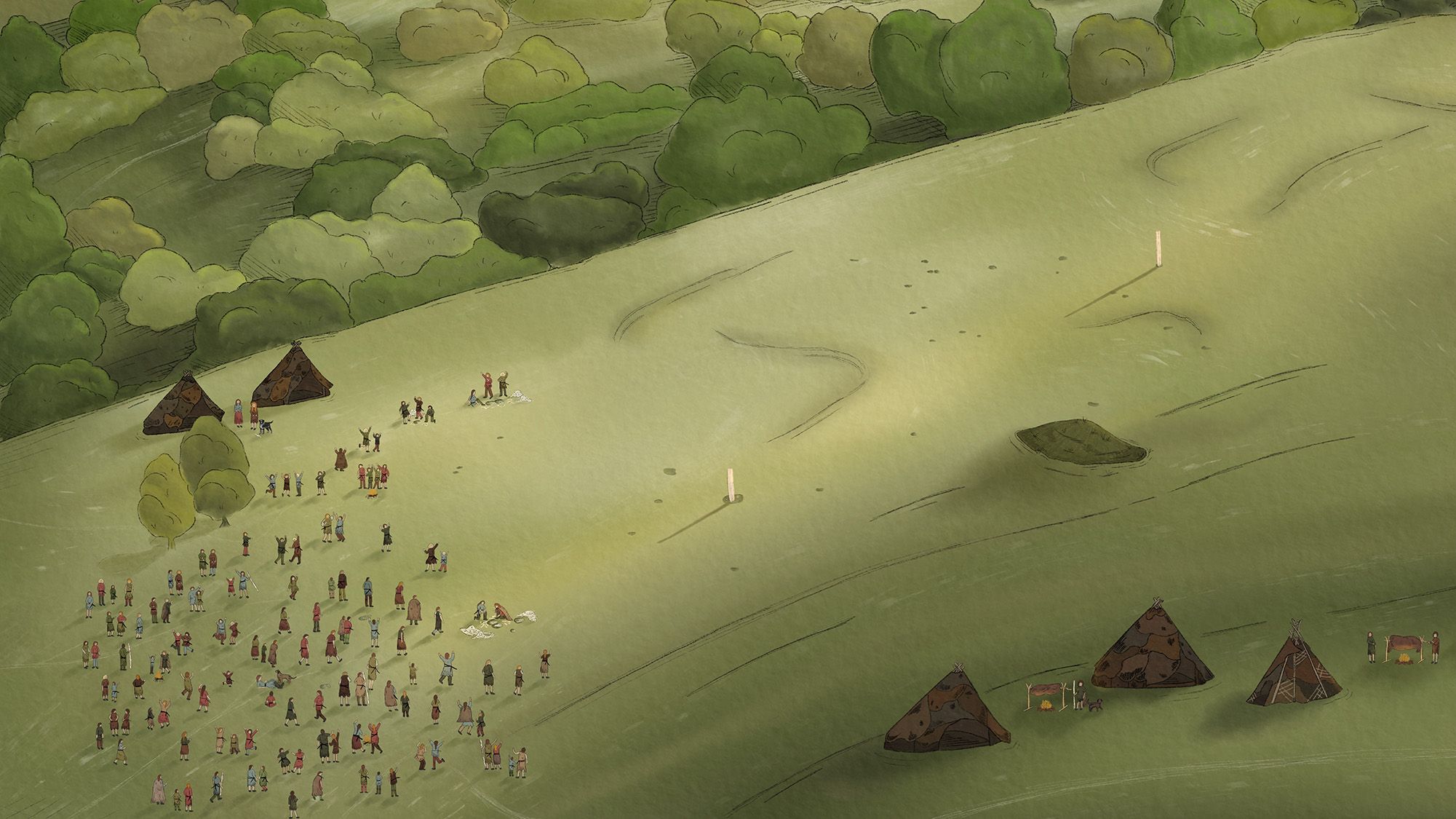
Archaeologists have identified evidence of two ancient postholes at the Stonehenge site that suggest prehistoric communities were tracking solar cycles centuries before the construction of the famous megalithic stone circle. These findings indicate that early inhabitants of the Salisbury Plain utilized wooden structures to observe the summer and winter solstices as early as 5,000 years ago, according to research published by the English Heritage organization, which manages the site.
The discovery provides a new perspective on the chronological development of the monument. While the iconic sarsen stones and bluestones are often the primary focus for visitors, the identification of these postholes points to a long-standing tradition of astronomical observation at the location. This early activity suggests that the landscape held ceremonial significance well before the massive stone architecture was erected during the Neolithic period, as documented in the Council for British Archaeology archives.
Evidence of Pre-Megalithic Astronomy
The two postholes were identified through geophysical surveys and targeted excavations near the central area of the monument. Researchers believe these posts served as markers to align with the rising and setting sun during the solstices. By placing timber posts in specific configurations, ancient people could track the sun’s movement across the horizon, a practice that required significant mathematical and observational coordination. This discovery aligns with findings from other Neolithic sites across Europe, where timber circles often preceded stone structures, as noted by the Historic England heritage body.

The precision required for such alignments suggests a sophisticated understanding of the solar calendar. According to archaeological analysis, this capability allowed ancient communities to synchronize seasonal activities, such as planting and harvest, with celestial events. The transition from temporary timber markers to permanent stone monoliths marks a shift in the cultural and architectural complexity of the society that occupied the Wiltshire region.
Understanding the Stonehenge Landscape
Stonehenge is not a singular construction but a complex of monuments built in several phases over approximately 1,500 years. The earliest components, including the circular ditch and bank, date to roughly 3000 BCE. The discovery of these postholes suggests that the site’s function as a solar observatory was established at the very beginning of its use. Experts affiliated with the UCL Institute of Archaeology emphasize that these wooden structures were likely maintained and replaced over generations, demonstrating a continuous commitment to the site’s astronomical function.
The presence of these holes challenges the notion that the site’s astronomical significance was solely tied to the later stone phases. Instead, the data suggests a layered history where architectural materials changed, but the primary intent—to mark the solstices—remained constant. This continuity is a hallmark of Neolithic ritual sites, where the landscape itself acted as a living calendar for agrarian societies.
Why Solar Alignment Mattered to Neolithic Societies
For Neolithic populations, the ability to predict the turning of the seasons was a matter of survival and social order. The summer and winter solstices represented the extremes of the solar year, and by anchoring these dates with physical markers, communities could establish a reliable timeline. The National Trust, which maintains the surrounding landscape, highlights that these sites often served as gathering points where disparate groups could congregate for shared ritual and resource exchange.

The labor involved in erecting and maintaining these posts speaks to the social cohesion of the era. Organizing the community to dig deep pits and transport timber was an act that reinforced group identity and shared belief systems. These findings illustrate that Stonehenge was the heart of a vibrant, organized society long before the arrival of the iconic sarsen stones that define its modern silhouette.
Future Research and Site Preservation
Archaeologists continue to analyze the soil samples and sediment layers within these postholes to refine the dating of the site. Future investigations will likely utilize advanced LiDAR technology and ground-penetrating radar to determine if other, undiscovered timber markers exist elsewhere within the Stonehenge World Heritage Site. These ongoing efforts are critical for maintaining an accurate timeline of human activity in the region.

As academic scrutiny of the site continues, the UNESCO World Heritage Centre maintains strict oversight to ensure that excavation efforts do not compromise the integrity of the monument. Visitors interested in the latest findings can access updated reports through official heritage portals. We encourage readers to share their thoughts on these findings below or join the conversation on our social media platforms as new data emerges from the field.