
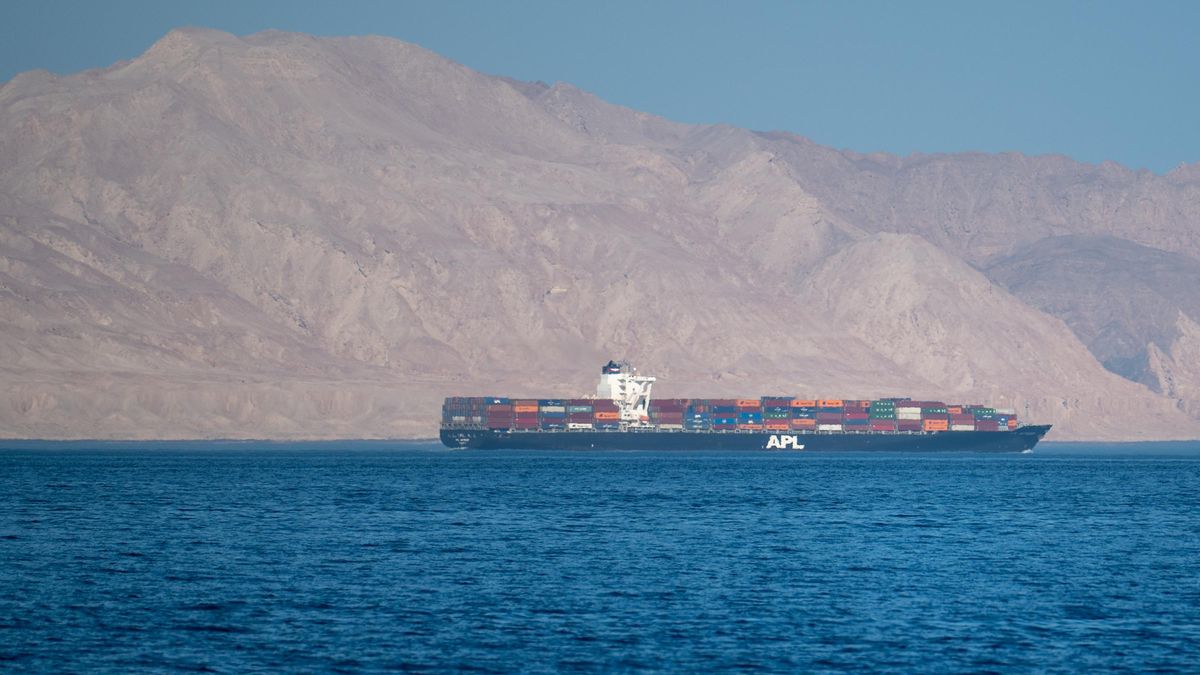
The Strait of Hormuz, one of the world’s most critical maritime chokepoints, has seen the first signs of activity following a fragile agreement to cease hostilities. The movement of the first ships through the strait marks a tentative step toward normalcy after a period of severe disruption that threatened global energy security.
This cautious reopening follows a two-week truce agreed upon between Iran and the United States. According to data from MarineTraffic, the Liberian-flagged vessel Daytona Beach passed through the strait at 8:59 AM SELČ, followed by the Greek tanker NJ Earth at 10:44 AM SELČ ČT24. While these sightings provide a glimmer of hope, the shipping industry remains deeply skeptical about a swift return to full operational capacity.
The current crisis, which began on February 28, 2026, was triggered by coordinated joint attacks by Israel and the United States on various locations in Iran, resulting in the deaths of several high-ranking Iranian officials, including Supreme Leader Ali Khamenei Wikipedia. In retaliation, Iran launched drone and missile strikes and declared the Strait of Hormuz closed, warning that any ship attempting to navigate the waters would become a target.
The impact on global markets was immediate and severe. The closure led to the most significant disruption of oil supplies since the 1970s energy crisis, with Brent crude prices climbing back to 100 US dollars per barrel for the first time since 2022 Wikipedia. Natural gas prices also spiked, rising from 30 EUR/MWh to 53 EUR/MWh.
Industry Warnings: A Long Road to Full Recovery
Despite the passage of a few vessels, the shipping industry warns that the “full opening” of the strait is still far off. The German shipping company Hapag-Lloyd has cautioned that it could take between six to eight weeks before the strait is completely open for business ČT24.
The disparity between current traffic and pre-war levels is stark. Before the conflict, approximately 135 ships passed through the area daily. Since the truce was announced, Bloomberg data indicates that only seven vessels have navigated the strait ČT24. This represents a continuing state of blockade for the vast majority of commercial traffic.
Risk remains high due to the unresolved root causes of the tension. Neil Roberts of the Lloyd’s Market Association noted that it is incredibly unlikely that traffic in the Persian Gulf will simply resume immediately, as the fundamental drivers of the conflict have not been addressed ČT24. Some nations are maintaining strict avoidance policies; for instance, Norwegian ships are currently not navigating the strait.
Geopolitical Stakes and the Trump Ultimatum
The diplomatic tension surrounding the strait has been amplified by the administration of U.S. President Donald Trump. Trump stated that the United States would agree to a two-week cessation of strikes on Iran on the condition that Iran immediately opens the Strait of Hormuz MSN.
This strategic maneuver highlights the immense leverage the strait provides. Located between Iran and Oman, the strait is approximately 167 km long and only 39 km wide at its narrowest point Wikipedia. Under normal circumstances, it facilitates the transport of 15 to 20 million barrels of oil per day, making it one of the most important strategic locations on Earth.
The blockade was not merely a declaration; reports from CNN indicated that Iran had been laying mines in the strait to deter passage Wikipedia. This physical danger, combined with the threat of direct attack from the Iranian Revolutionary Guard, caused shipping traffic to plummet by approximately 90% from the start of the war Wikipedia.
Analysis: Temporary Calm or Lasting Peace?
Analysts are divided on whether the recent movement of ships signifies a genuine shift toward peace or a tactical maneuver. Ana Subasič of Kpler, the owner of MarineTraffic, suggested that while the passage of the NJ Earth is a sign of revival, it is too early to determine if This represents a broad reopening linked to the truce or simply the result of permissions granted prior to the current escalation ČT24.
The global economy remains sensitive to any fluctuation in this region. The “practically closed” status of the strait, as described by Iranian media, has forced a reconfiguration of energy supply chains and pushed oil and gas prices to volatile heights Wikipedia.
| Date/Period | Event | Impact |
|---|---|---|
| February 28, 2026 | US and Israeli strikes on Iran | Death of Supreme Leader Ali Khamenei |
| Post-Feb 28 | Iran closes Strait of Hormuz | Traffic drops by ~90%; Oil reaches $100/barrel |
| April 2026 | Two-week truce agreed | First ships (Daytona Beach, NJ Earth) pass through |
| Future Outlook | Estimated 6-8 week window | Potential for full reopening per Hapag-Lloyd |
The international community now watches to see if the two-week truce will hold or if the region will slide back into open conflict. The immediate focus remains on whether more commercial vessels will risk the passage and whether Iran will fully remove the obstacles and threats that led to the blockade.
The next critical checkpoint will be the expiration of the current two-week truce, at which point the international community will see if the agreement is extended or if strikes resume.
We invite our readers to share their perspectives on the global energy impact of this crisis in the comments below.