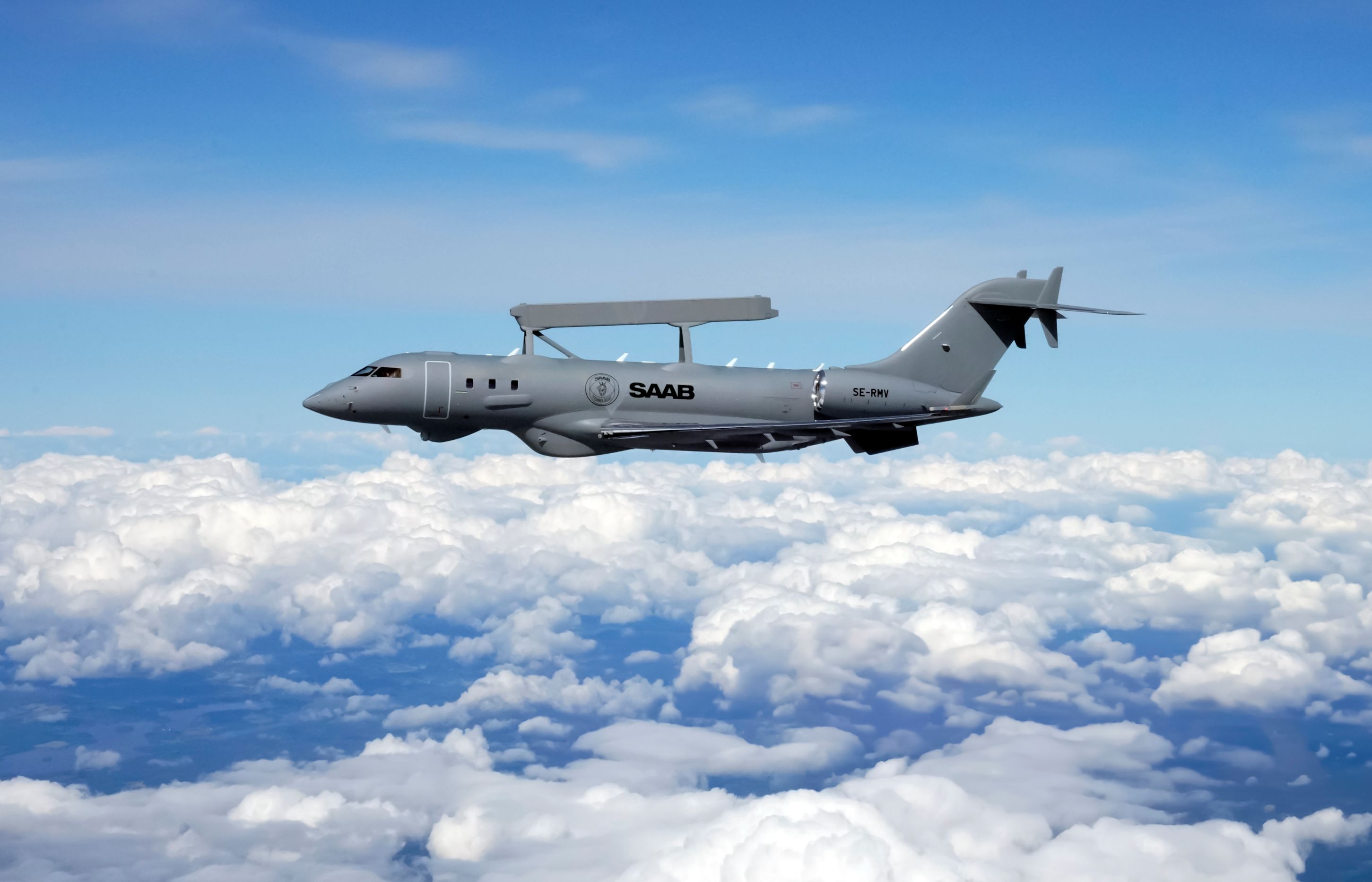
NATO allies are increasingly integrating the GlobalEye early warning and control (EW&C) system, a joint Swedish-Canadian aerospace project, to enhance surveillance capabilities across the alliance. Developed by Saab, the system provides a combined air and maritime surveillance capability that allows member nations to detect and track aircraft and ships over vast distances, according to official Saab technical specifications.
The adoption of GlobalEye reflects a strategic shift toward European-led surveillance architectures. By utilizing a platform that integrates radar and electronic intelligence (ELINT), NATO nations aim to reduce reliance on single-source intelligence and increase resilience against evolving threats in the Baltic and North Atlantic regions. The system is designed to operate in contested environments, providing a comprehensive “recognized air picture” to command centers in real-time.
The GlobalEye system is based on a modified Global 6000 business jet, which allows for long-endurance flights and high-altitude operation. This configuration enables the Erieye ER (Early Warning) radar to scan thousands of square kilometers of airspace and sea surface simultaneously. According to Saab’s product documentation, the system’s ability to perform multi-role missions—combining surveillance, command and control, and intelligence gathering—reduces the number of aircraft required in the air to maintain a secure perimeter.
Strategic Integration of GlobalEye in NATO Operations
The integration of GlobalEye into NATO’s operational framework is driven by the need for persistent surveillance in the wake of geopolitical shifts in Northern Europe. Sweden’s formal accession to NATO in March 2024 has further streamlined the interoperability of this technology, as the Swedish Armed Forces already utilize the platform for national defense. The system’s ability to share data via Link 16 and other NATO-standard communication protocols ensures that intelligence gathered by a GlobalEye aircraft is immediately available to allied fighters and naval assets.

Military analysts note that the system’s “dual-band” capability—monitoring both the air and the sea—fills a critical gap in the alliance’s early warning network. While traditional AWACS (Airborne Warning and Control System) platforms focus primarily on aerial threats, GlobalEye’s maritime radar allows for the detection of surface vessels, which is essential for monitoring naval movements in the North Sea and the Baltic Sea. This versatility is a primary reason why several NATO members have pursued the platform over older, single-purpose systems.
Technical Capabilities and the Swedish-Canadian Partnership
The GlobalEye program is the result of a long-term collaboration between Sweden and Canada, focusing on the evolution of the Erieye radar technology. The Canadian Air Force operates a fleet of modified aircraft that have served as a testing ground for the system’s long-range capabilities. The core of the system is the Active Electronically Scanned Array (AESA) radar, which provides high-resolution tracking without the need for a rotating dome, reducing the aircraft’s radar cross-section and increasing its survivability.
Beyond radar, the GlobalEye incorporates a sophisticated Electronic Intelligence (ELINT) suite. This allows the aircraft to intercept, identify, and locate electronic emissions from enemy radars and communication systems. By combining this “passive” listening with the “active” scanning of the radar, the system can create a detailed map of adversary electronic warfare capabilities without alerting the target to the aircraft’s presence.
The aircraft’s endurance is another critical factor. Based on the Bombardier Global 6000, the platform can remain on station for extended periods, reducing the frequency of rotations and ensuring a constant surveillance “eye” over critical corridors. This endurance is vital for the “Early Warning” aspect of the system, providing NATO commanders with the minutes or hours of lead time necessary to scramble interceptors or move naval assets out of harm’s way.
Impact on European Defense Resilience
The move toward a European-led surveillance architecture, centered on providers like Saab, is intended to bolster the “strategic autonomy” of the alliance’s European members. By developing and procuring systems within the continent, NATO allies can ensure more streamlined maintenance, software updates, and customization of the systems to meet specific regional threats. This reduces the logistical burden of relying on non-European supply chains for critical software patches or hardware replacements.
Furthermore, the GlobalEye’s open-architecture design allows for the integration of new sensors and AI-driven data processing tools. As the volume of data collected by modern sensors increases, the ability to automatically filter “noise” and highlight actual threats is becoming a priority. Saab has indicated that the system is designed to evolve, allowing users to plug in new capabilities as electronic warfare tactics change.
Comparison of Surveillance Architectures
When compared to the Boeing E-3 Sentry (AWACS), which has been a staple of NATO surveillance for decades, the GlobalEye offers a different operational profile. While the E-3 provides massive capacity for command and control, the GlobalEye is more agile, has a lower operating cost per flight hour, and provides integrated maritime surveillance that the E-3 lacks. This makes the GlobalEye a complementary asset rather than a direct replacement, allowing NATO to layer its surveillance from high-capacity command hubs to agile, multi-role scouts.

The shift toward the GlobalEye also reflects a trend toward “network-centric warfare,” where the aircraft acts as a node in a larger web of sensors, including satellites and ground-based radars. The ability to fuse this data into a single, coherent picture is what enables the “early warning” capability to function effectively across different national borders and military branches.
The next phase of GlobalEye’s deployment involves the continued delivery of aircraft to partner nations and the integration of advanced software suites to handle the increasing complexity of hypersonic threats. NATO’s ongoing modernization efforts will likely see further synchronization of these assets as part of the alliance’s broader air policing and maritime security strategies.
For official updates on NATO procurement and aerospace defense contracts, readers can monitor the NATO official portal or the press releases from the Swedish Ministry of Defence.
Share this report on your professional network or leave a comment below regarding the future of European defense technology.