
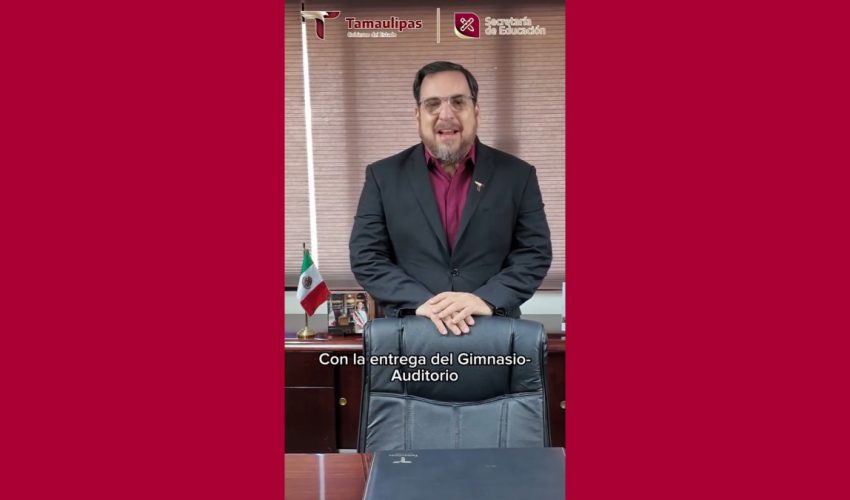
The Government of the State of Tamaulipas is currently executing a series of infrastructure projects aimed at upgrading educational facilities across the region, a program officially designated as Infraestructura educativa para el éxito. This initiative, managed by the state’s education department, focuses on the renovation and expansion of school buildings to meet current safety and pedagogical standards, according to official statements from the Secretaría de Educación de Tamaulipas.
The program serves as a central pillar in the state’s broader strategy to improve the quality of public schooling. By investing in physical infrastructure, officials aim to create environments that facilitate academic performance and student retention. These efforts are part of a multi-year fiscal commitment to modernize regional public schools, ensuring that facilities comply with updated building codes and educational requirements established by the Secretaría de Educación Pública (SEP).
Objectives of the Educational Infrastructure Program
The primary objective of Infraestructura educativa para el éxito is to address historical deficits in school maintenance and construction. According to the state government, the program prioritizes schools in areas with high population growth and those requiring urgent structural repairs. This focus is intended to reduce the digital and physical divide between urban and rural educational centers, ensuring that students have access to functional laboratories, classrooms, and administrative spaces.
The state government has emphasized that these projects are not merely aesthetic, but essential to the safety and future development of the student body. By integrating modern utilities and structural reinforcements, the initiative seeks to prolong the life cycle of existing schools while reducing long-term maintenance costs. These interventions are conducted in coordination with ITIFE (Instituto Tamaulipeco de Infraestructura Física Educativa), the agency responsible for overseeing the technical execution and budget allocation for all school construction projects in the state.
Economic and Social Impact
Investing in education infrastructure is frequently cited by economists as a driver for regional development. According to research from the Organisation for Economic Co-operation and Development (OECD), the quality of the learning environment is directly correlated with student motivation and academic outcomes. In Tamaulipas, the state government argues that by providing adequate facilities, they are supporting the long-term employability of the youth population and fostering a more competitive local workforce.
The financial resources for these projects are drawn from both state and federal budget lines. The transparency of these investments is monitored through public bidding processes, which are published on the state’s official transparency portal. Residents and stakeholders can verify the progress of specific projects by checking the Tamaulipas Transparency Platform, which provides data on the allocation of public funds for infrastructure development.
Next Steps for Facility Development
The next phase of the program involves the evaluation of schools that have yet to receive upgrades, based on the current fiscal year’s assessment. The state government has indicated that they will continue to release reports detailing the completion of specific school projects throughout the remainder of the year. For parents and community members, the most effective way to stay informed about scheduled improvements is through the official website of the Secretaría de Educación de Tamaulipas, where project updates and safety advisories are posted regularly.

As the administration moves forward, the focus remains on the timely delivery of these construction works to ensure that students can access improved facilities without unnecessary disruption to their academic calendars. We invite our readers to share their experiences regarding local school infrastructure in the comments section below, or join the ongoing discussion regarding educational policy in our community forums.