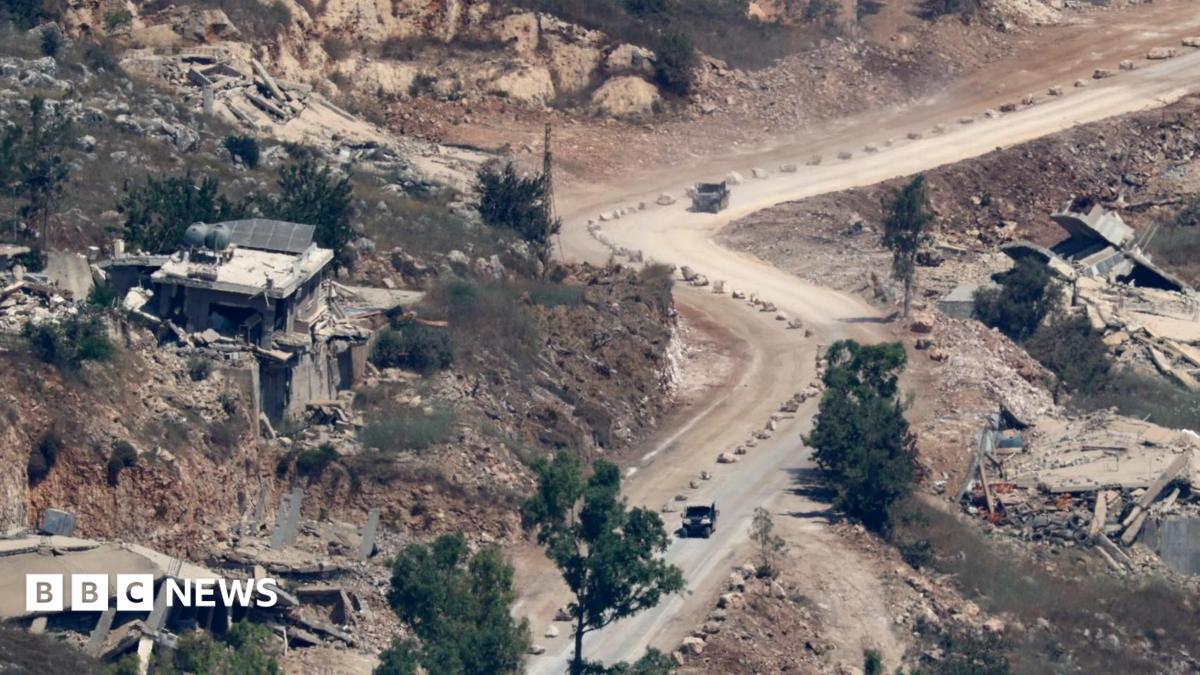
Israeli airstrikes hit targets in southern Lebanon on Wednesday, resulting in at least one fatality, according to reports from state-run media. The strikes occurred just one day after the formalization of a U.S.-brokered framework agreement aimed at halting hostilities between Israel and the militant group Hezbollah. As the region navigates the fragile transition toward a ceasefire, the incident underscores the significant operational challenges facing the implementation of the new, multi-stage cessation of hostilities.
Lebanon’s National News Agency (NNA) reported that the strike targeted a vehicle in the southern region, leading to the death of one individual. The Israeli military has not immediately provided specific details regarding the strike, though the Israel Defense Forces (IDF) have maintained a policy of responding to perceived security threats along the northern border. This development follows the official signing of a ceasefire agreement, which is intended to end over a year of intensified cross-border violence that has displaced tens of thousands of civilians on both sides of the Blue Line, the de facto border demarcated by the United Nations.
The Terms of the Ceasefire Agreement
The framework agreement, which took effect early Wednesday morning, mandates a phased withdrawal of Israeli ground forces from southern Lebanon. Under the terms brokered by the United States and France, the Lebanese Armed Forces (LAF) are tasked with assuming control of the territory south of the Litani River. This area, historically a stronghold for Hezbollah, is to be cleared of heavy weaponry and militant infrastructure over a period of 60 days, according to the official statement released by the White House.
The U.S. government, which served as the primary mediator, has emphasized that the deal is designed to allow displaced residents in northern Israel and southern Lebanon to return to their homes safely. According to the United Nations Interim Force in Lebanon (UNIFIL), which will play a monitoring role alongside a U.S.-led oversight committee, the success of the agreement depends heavily on the ability of the Lebanese military to enforce the absence of armed groups in the designated buffer zone. UNIFIL’s mandate, as established under UN Security Council Resolution 1701, remains the primary legal instrument governing the cessation of hostilities.
Hezbollah’s Stance and Regional Tensions
While the Lebanese government has signaled support for the agreement, Hezbollah’s leadership has issued statements expressing skepticism regarding the long-term viability of the deal. Hezbollah officials have publicly criticized elements of the framework, particularly provisions that grant Israel the right to take action against future threats if the Lebanese military fails to prevent rearmament or movement by militant factions. The group has characterized these clauses as a violation of Lebanese sovereignty.

The strike on Wednesday serves as a reminder of the volatility inherent in the transition period. Analysts at the Carnegie Middle East Center note that the “monitoring committee” will face immediate pressure to define the rules of engagement for both sides. If the mechanism for verifying violations remains ambiguous, the risk of localized skirmishes escalating into a broader resumption of conflict remains high. The Lebanese government, currently grappling with a severe domestic economic crisis, faces the dual challenge of reasserting state authority in the south while managing the political fallout from the deal.
What Happens Next in Southern Lebanon
The immediate focus for international observers is the 60-day transition timeline. The Israeli military is expected to conduct a phased withdrawal, with the Lebanese Army preparing to deploy thousands of troops into the southern border regions. This deployment marks a significant test for the LAF, which has not maintained a permanent, robust presence in the area for nearly two decades.
Displaced civilians are beginning to assess the damage to their homes and agricultural lands, though the presence of unexploded ordnance and the potential for continued security incidents have kept many in temporary shelters. Humanitarian organizations, including the International Committee of the Red Cross (ICRC), are coordinating with local authorities to facilitate the safe return of families. The U.S. State Department has indicated that it will continue to monitor the situation closely to ensure that the terms of the ceasefire are upheld by all parties involved.

The next major checkpoint for the agreement will be the first meeting of the international monitoring committee, which is expected to convene within the coming week to address reports of ceasefire violations. As the situation develops, further updates will be provided by official governmental channels in Beirut, Jerusalem, and Washington. For ongoing reporting on the humanitarian impact and the status of the troop withdrawals, follow the updates from the United Nations and the Lebanese Armed Forces.
As this is a developing story, we encourage readers to share their thoughts and stay tuned for further reporting as more information becomes available.
Worth a look