
Recent planetary science research suggests that the early solar system may have hosted two additional “super-Earth” planets that were eventually ejected into deep space. According to simulations published by researchers at the Lunar and Planetary Institute (LPI), the chaotic gravitational interactions during the formative years of our solar neighborhood likely forced these massive bodies out of their orbits, fundamentally altering the architecture of the planets we see today.
This study, which utilizes complex dynamical modeling to reconstruct the migration of planetary bodies, challenges the traditional view of a static solar system history. By analyzing the orbital patterns of the current inner planets—Mercury, Venus, Earth, and Mars—scientists have identified anomalies that suggest the influence of additional, significant gravitational masses in the distant past. The research indicates that these missing “super-Earths” were likely displaced as the giant planets, particularly Jupiter and Saturn, shifted their positions, creating a gravitational instability that cleared the inner solar system of excess debris and smaller protoplanets.
The Case for Missing Giant Planets
The hypothesis of “lost” planets stems from the persistent difficulty in explaining the current mass distribution of the inner solar system. As noted in reports by the National Aeronautics and Space Administration (NASA) regarding planetary migration models, the existing planets possess surprisingly low masses compared to systems observed orbiting other stars. The presence of two extra super-Earths—planets with masses larger than Earth but smaller than Neptune—would provide a sufficient gravitational mechanism to explain the clearing of these regions.
According to the LPI findings, these planets were not destroyed but were instead gravitationally “slingshotted” into the interstellar medium. This process is consistent with the “Grand Tack” hypothesis, which posits that Jupiter migrated inward toward the sun before being pulled back out by Saturn. This massive movement would have acted as a gravitational bulldozer, destabilizing any secondary orbits and ejecting smaller, unstable planetary embryos from the system entirely.
How Planetary Migration Reshapes Systems
Planetary migration is a well-documented phenomenon in modern astrophysics, supported by the observation of “hot Jupiters” and other displaced exoplanets in distant star systems. When a young planet interacts with the gaseous disk surrounding a proto-star, it loses angular momentum and moves inward. If the system contains multiple giant planets, their mutual gravitational resonance can become chaotic, leading to the ejection of smaller neighbors.
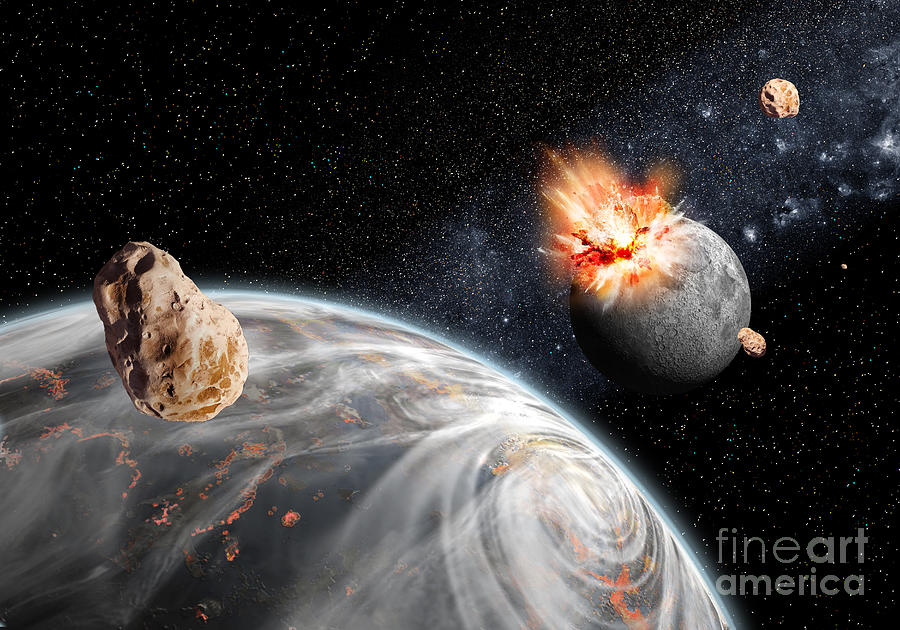
The research emphasizes that the current stability of our solar system is a relatively recent development. For millions of years, the inner solar system was a volatile environment where the survival of a planet depended on its orbital resonance with the outer giants. The loss of these two super-Earths likely occurred during a period of intense dynamical restructuring, often referred to by planetary scientists as the “Late Heavy Bombardment” era, though the timing remains a subject of ongoing refinement in peer-reviewed journals such as Nature Astronomy.
Implications for Earth’s Development
The removal of these two massive bodies may have been a prerequisite for the emergence of life on Earth. The presence of two additional super-Earths would have likely induced extreme tidal forces and orbital fluctuations that would have rendered Earth’s climate unstable. By removing these objects, the solar system achieved the “Goldilocks” configuration that allowed for a stable, near-circular orbit for our planet.

Furthermore, the ejection of these planets likely scattered the remaining protoplanetary material, some of which may have been delivered to Earth in the form of water-rich asteroids. This mechanism, supported by isotopic analysis of lunar and terrestrial rocks, suggests that the “loss” of these planets was not an isolated event but a critical component of the chemical and physical maturation of the inner solar system. Scientists continue to refine these models by comparing our solar system’s evolution with data collected by the European Space Agency (ESA) missions, which map the distribution of debris and planetary compositions across the galaxy.
What Happens Next in Planetary Research
The search for evidence of these ejected planets continues through both computational modeling and observational astronomy. While direct detection of an ejected planet in the interstellar void is currently beyond our technological reach, astronomers are using large-scale surveys to identify “rogue planets”—worlds that drift through the galaxy without a parent star. If these rogue planets share chemical signatures with our solar system’s materials, it could provide indirect evidence of their origin.
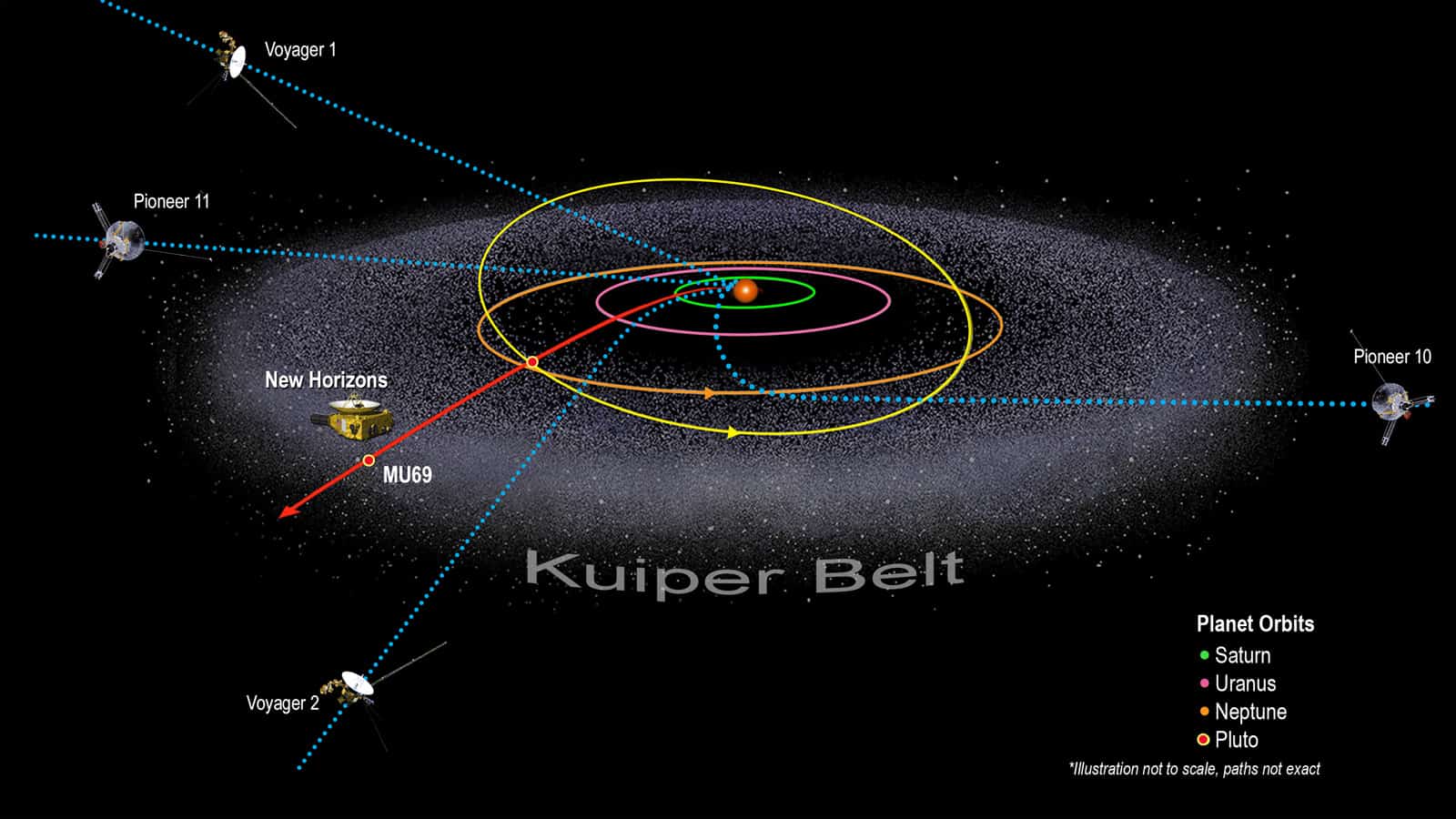
Researchers are also anticipating new data from the next generation of space telescopes, which are designed to detect minute gravitational perturbations in the orbits of Kuiper Belt objects. These orbits may retain “memory” of the early solar system’s instability, potentially confirming the influence of the two missing super-Earths. For updates on how these models are evolving, space science enthusiasts can monitor official bulletins from the International Astronomical Union (IAU), which serves as the global authority on planetary nomenclature and classification.
As our understanding of the solar system’s history becomes more granular, the narrative of a static, orderly birthplace is being replaced by one of profound transformation. We invite readers to share their thoughts on these findings in the comments section below and to follow our coverage for future updates on planetary migration studies.
Keep reading
- Are Fitness Trackers Protecting Your Health Data? Privacy Risks of Wearables
- Chinese Astronomers Discover Rare Pulsar Emitting Three Types of Radiation
- Longest Solar Eclipse of 21st Century Set for August 2027 (archyworldys.com)
- Microsoft Unveils Agent-Based Cybersecurity Model and AI Update System (world-today-news.com)