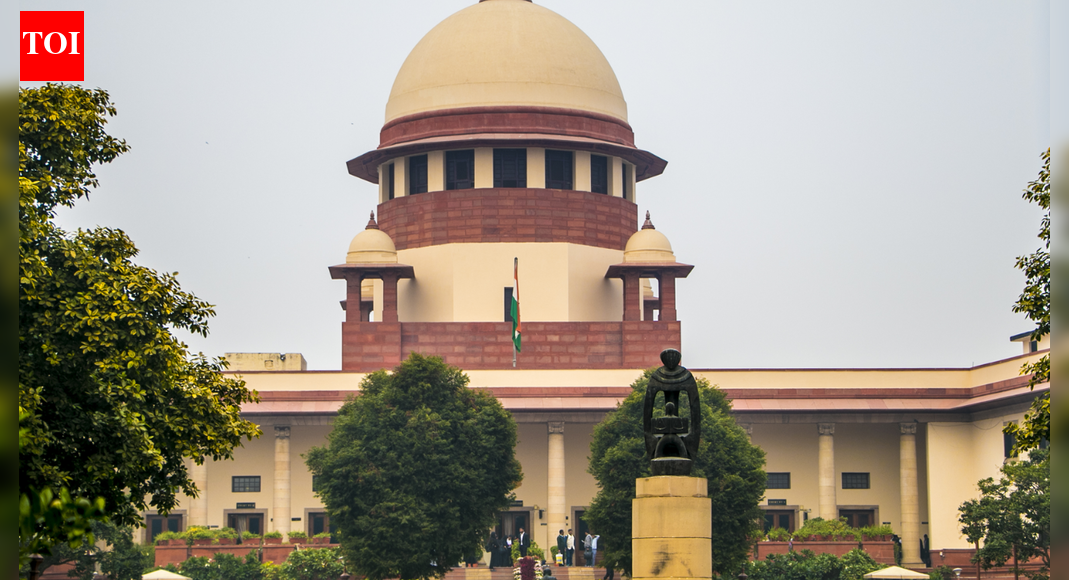
Supreme Court Affirms: Reserved Category Candidates Eligible for General Category Posts based on Merit
do you believe in a truly meritocratic system? The recent Supreme Court ruling clarifies a long-debated issue regarding reservations and open category positions in Indian government jobs, perhaps reshaping the landscape of public sector recruitment. this landmark decision reinforces the principle that qualified candidates from reserved categories – Scheduled Castes (SC), Scheduled Tribes (ST), Other Backward Classes (OBC), and economically Weaker Sections (EWS) – should be considered for general category posts if they surpass the stipulated cutoff marks.Let’s delve into the details of this ruling, its past context, practical implications, and what it means for aspiring civil servants and the future of equitable portrayal.
The Landmark Ruling: Merit Over Category
On January 4, 2024, a bench comprising Justices Dipankar Datta and Augustine G Masih delivered a meaningful verdict, upholding the principle that merit should supersede category when it comes to filling government vacancies. The court dismissed a petition filed by the Rajasthan High Court, which had previously restricted reserved category candidates from being considered for general category posts, even if they achieved scores exceeding the general category cutoff.
This ruling stems from the foundational principles established in the 1992 Indra Sawhney case, a pivotal judgment that upheld the 27% reservation for Other Backward Classes (OBCs) in government jobs. However, the Sawhney case didn’t explicitly address the scenario of reserved category candidates outperforming general category cutoffs. This recent Supreme Court decision effectively clarifies that ambiguity.
The core of the judgment lies in the interpretation of the term “open” in relation to vacant posts. Justice Datta, writing the judgment, stated unequivocally, “We hold that the word ‘open’ connotes nothing but ‘open’, meaning thereby that vacant posts which are sought to be filled by earmarking it as ‘open’ do not fall in any category.” This interpretation dismantles the argument that considering reserved category candidates for general category posts amounts to “double benefit.”
Understanding the Implications: A Step-by-Step Approach
The practical implications of this ruling are considerable. Here’s a breakdown of how the process will likely unfold in future recruitment drives:
- Initial Cutoff: Recruitment processes, typically involving a written examination followed by an interview, will continue to establish separate cutoff marks for each category (General, SC, ST, OBC, EWS).
- Merit-Based Consideration: If a candidate belonging to a reserved category achieves a score higher than the general category cutoff, they will be considered for the general category pool for the interview stage.
- Cumulative Assessment: The final selection will be based on the candidate’s cumulative score – the marks obtained in the written exam plus the interview. If this combined score falls below the general category cutoff,the candidate will then be considered under their respective reserved category.
- Openness & Fairness: this approach ensures that candidates are evaluated based on their overall merit, nonetheless of their category, promoting a fairer and more transparent recruitment process.
Recent Data & Trends: According to data released by the Department of Personnel and Training (dopt) in November 2023, over 10 lakh government vacancies are expected to be filled across various departments by mid-2024.https://dopt.gov.in/ This ruling will directly impact the selection process for these positions, potentially leading to increased representation of meritorious candidates from reserved categories in higher-level positions.
Addressing Common Concerns & Misconceptions
Several concerns have been raised regarding this ruling. Let’s address some of the most common ones:
* “Doesn’t this give reserved category candidates an unfair advantage?” The court explicitly refuted this argument, emphasizing that the ruling doesn’t grant any special priviledge. It simply ensures that a candidate who has demonstrably proven their merit – by exceeding the general category cutoff – isn’t unfairly excluded from consideration.
* “Will this reduce the number of vacancies available for general category candidates?” The ruling doesn’t alter the overall reservation policy. It only clarifies how vacant posts are filled. If a reserved category candidate qualifies for a general category post based on merit, the vacancy remains filled, and the reserved category quota remains unaffected.
* “How will this impact existing reservation policies?” The ruling doesn’t challenge the validity of existing reservation policies. It simply provides a framework for ensuring that merit is prioritized when a reserved category candidate surpasses the general category benchmark.
The Historical Context: Evolution of Reservation Policies in India
Understanding the
Related reading