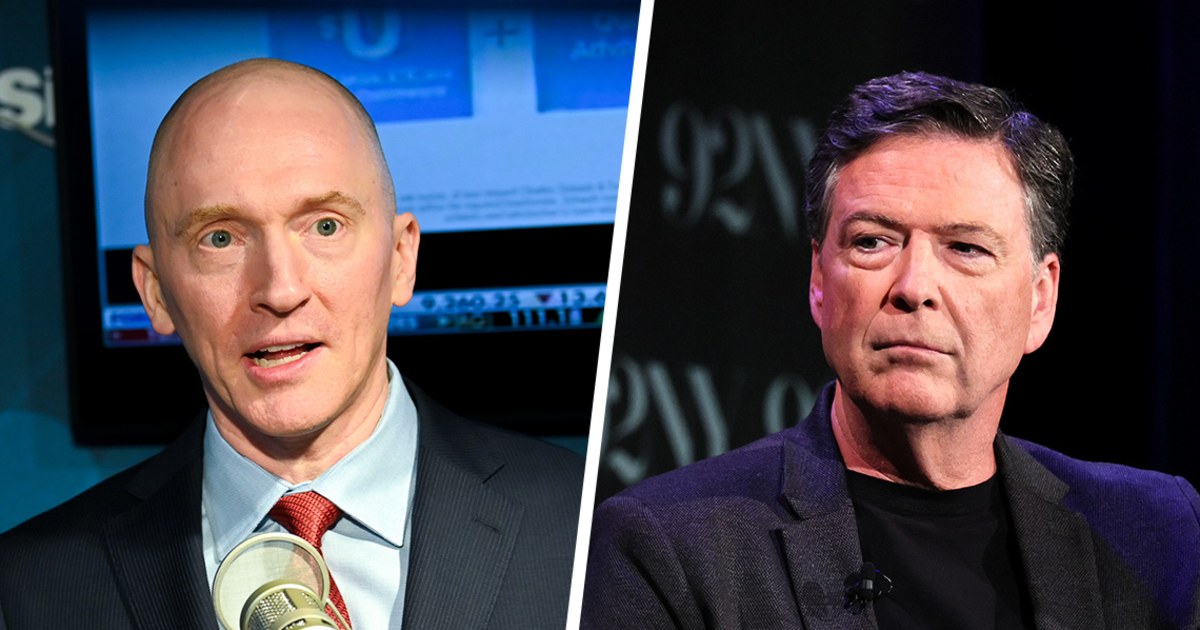
The Supreme Court Rejects Carter Page’s Bid to Revive James Comey Lawsuit—What It Means for Surveillance Cases
By Jonathan Reed, Editor, News | Updated June 24, 2024
The U.S. Supreme Court on Monday declined to revive former Trump campaign adviser Carter Page’s lawsuit against former FBI Director James Comey, ending his legal challenge over alleged surveillance abuses tied to the Russia investigation. The justices’ decision—issued without explanation—leaves unresolved the core constitutional questions about government surveillance practices that Page’s case raised. Legal experts say the ruling may limit future challenges to secret surveillance orders under the Foreign Intelligence Surveillance Act (FISA), while also setting a precedent that could influence other Trump-era cases involving intelligence-gathering controversies.
The Supreme Court’s action comes as part of a broader legal landscape reshaping how surveillance cases proceed in federal courts. Page, a central figure in the 2016 Trump campaign’s Russia ties, had sought to revive his lawsuit against Comey, arguing that the FBI’s surveillance of his communications violated his Fourth Amendment rights. The case hinged on whether Page could sue Comey personally for allegedly misleading the FISA court that approved the warrant targeting him.
According to NBC News, the Supreme Court’s refusal to hear Page’s appeal means his lawsuit will be dismissed without addressing the merits. The decision follows a split among lower courts on whether FISA surveillance victims can sue government officials for alleged misconduct. Some judges have ruled that such lawsuits are barred by the state-secrets privilege, while others have allowed them to proceed.
Page’s legal team had argued that Comey’s public statements—including his testimony before Congress—created a “special relationship” that could support a lawsuit. However, the Supreme Court’s silence suggests the justices found the case unworthy of their time, potentially signaling a reluctance to wade into politically charged surveillance disputes.
Photo: United States Supreme Court Building, Washington, D.C. | Wikimedia Commons
Why the Supreme Court’s Decision Matters for Surveillance Law
The Supreme Court’s refusal to hear Page’s case leaves intact a 2022 ruling by the U.S. Court of Appeals for the Second Circuit, which dismissed his lawsuit on the grounds that it would require reviewing classified FISA materials. The Second Circuit’s decision—available here—set a precedent that could make it harder for future plaintiffs to challenge FISA surveillance, even when they allege misconduct by government officials.
Legal scholars say the ruling may embolden intelligence agencies to pursue surveillance without fear of personal liability lawsuits. “This decision effectively immunizes government officials from lawsuits over FISA abuses,” said Julian Kuhn, a constitutional law professor at Georgetown University. “It sends a clear message that courts will not second-guess surveillance decisions unless there’s overwhelming evidence of wrongdoing.”
Critics argue the ruling undermines accountability in intelligence-gathering. The American Civil Liberties Union (ACLU) had filed an amicus brief in support of Page, warning that the case could set a dangerous precedent for unchecked government power. “Today’s decision allows the government to conduct surveillance in secret, without fear of judicial review,” said Jameel Jaffer, the ACLU’s deputy legal director. “This is a victory for opacity, not for justice.”
Who Was Carter Page, and What Was His Legal Case?
Carter Page, a former Trump campaign foreign policy adviser, became a focal point in the Russia investigation after the FBI obtained a FISA warrant to surveil his communications in 2016. Page has long denied any wrongdoing, calling the surveillance “politically motivated.” His lawsuit against Comey—filed in 2018—accused the former FBI director of misleading the FISA court by omitting key exculpatory information, a claim Comey has denied.
Page’s legal team argued that Comey’s public statements about the Russia investigation created a “special relationship” that could support a lawsuit under the Fourth Amendment. However, lower courts rejected this argument, ruling that the state-secrets privilege barred such lawsuits. The Supreme Court’s refusal to intervene means Page’s case is now effectively dead.
Page’s legal battles have spanned years, including a 2019 guilty plea for lying to investigators about his Russia contacts—though he later argued the plea was coerced. His case remains one of the most high-profile legal battles stemming from the Russia investigation, which concluded without charges against Trump.
What Happens Next for Surveillance Cases?
The Supreme Court’s decision may have broader implications for other Trump-era cases involving intelligence-gathering. For example:
Michael Flynn: The former national security adviser is appealing his conviction for lying to the FBI, arguing that his surveillance was unlawful. Legal experts say the Supreme Court’s ruling could make it harder for Flynn to challenge his surveillance on constitutional grounds.
Roger Stone: The Trump ally is also appealing his conviction, with his legal team citing surveillance abuses as part of their defense. The Supreme Court’s decision may limit their ability to argue that Stone’s communications were improperly monitored.
Future FISA Cases: The ruling could embolden intelligence agencies to pursue surveillance without fear of personal liability lawsuits, potentially making it harder for future plaintiffs to challenge such actions.
Legal analysts say the decision may also influence how Congress addresses surveillance reform. The FISA Amendments Reauthorization Act, which expired in 2020, has been a point of contention between privacy advocates and intelligence agencies. The Supreme Court’s ruling may push lawmakers to reconsider whether current FISA laws provide sufficient checks on government surveillance.
A Timeline: Key Events in Carter Page’s Legal Battle
Carter Page: We’re taking this case to the Supreme Court
Date
Event
Source
October 2016
FBI obtains FISA warrant to surveil Carter Page’s communications.
Supreme Court declines to hear Page’s appeal, ending the case.
Supreme Court Order
What This Ruling Means for Trump-Era Cases
The Supreme Court’s decision may have ripple effects across several ongoing legal battles tied to the Trump administration and the Russia investigation. Here’s how:
For Michael Flynn: Flynn’s legal team has argued that his surveillance was unlawful and that his conviction should be overturned on those grounds. The Supreme Court’s ruling may make it harder for Flynn to pursue this argument, as it suggests courts are unlikely to second-guess FISA surveillance decisions.
For Roger Stone: Stone’s appeal also hinges on whether his surveillance was improper. Legal experts say the Supreme Court’s decision could weaken Stone’s case, as it signals that such challenges are unlikely to succeed.
For Future Surveillance Cases: The ruling may embolden intelligence agencies to pursue surveillance without fear of personal liability lawsuits. This could lead to fewer legal challenges to FISA warrants, even when plaintiffs allege misconduct.
Political analysts also note that the decision could influence how future administrations approach surveillance. “This ruling sends a message that the judiciary will not interfere with intelligence-gathering, even when there are allegations of abuse,” said Steven Hill, a former DOJ official. “It’s a win for national security hawks and a loss for privacy advocates.”
Where to Find Official Updates on This Case
For readers seeking further details, here are key resources:
With the Supreme Court’s decision final, Carter Page’s lawsuit against James Comey is now closed. However, the broader legal and political debates over surveillance and accountability continue. The next major checkpoint will likely be: