
The United States Supreme Court recently declined to hear an appeal in a high-profile case involving Monsanto’s Roundup, effectively leaving in place a lower court ruling that favors the manufacturer. The decision centers on a narrow legal question: whether federal law preempts state-level “failure-to-warn” claims when the Environmental Protection Agency (EPA) has not mandated a cancer warning on a product’s label. While the litigation has frequently been framed in public discourse as a definitive scientific judgment on the carcinogenicity of glyphosate, the court’s action was strictly a matter of statutory interpretation rather than a scientific determination.
As a physician and health journalist, I often observe this friction between the courtroom and the laboratory. When the public hears “Supreme Court” and “Roundup,” there is a natural expectation of a final verdict on health risks. However, the legal system is designed to resolve questions of liability and regulation, while the scientific community relies on long-term epidemiological data and peer-reviewed toxicology studies to assess potential hazards. These two processes operate on entirely different timelines and criteria.
Understanding Federal Preemption in Pesticide Litigation
The core of the recent legal dispute rests on the Federal Insecticide, Fungicide, and Rodenticide Act (FIFRA). Under FIFRA, the EPA is responsible for the registration and labeling of pesticides. The central issue for the courts has been whether state laws can impose stricter labeling requirements—such as a cancer warning—than those approved at the federal level. According to the Environmental Protection Agency, glyphosate has undergone numerous safety assessments, and the agency has consistently maintained that there are no risks of concern to human health when the product is used in accordance with its label.
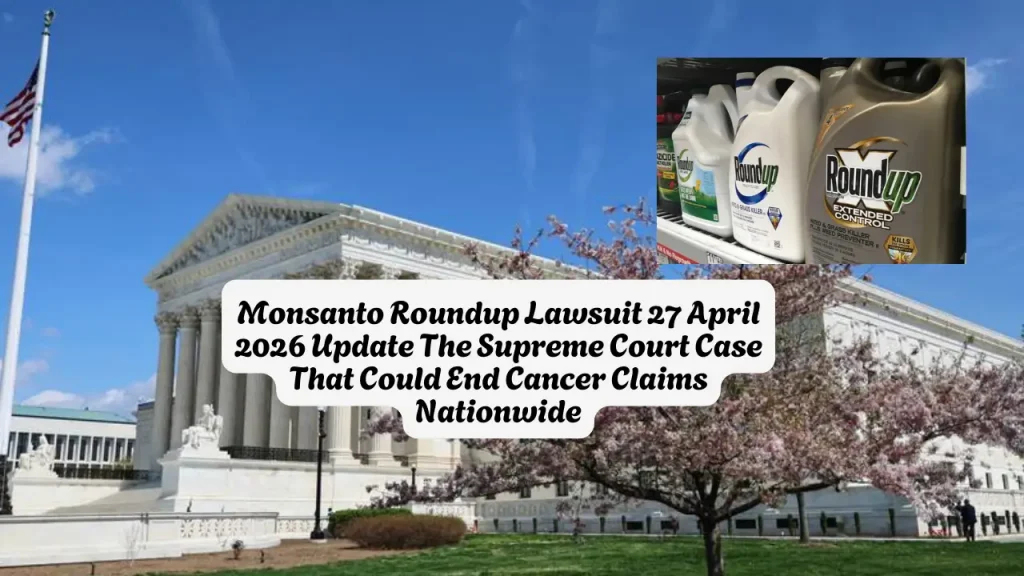
Legal experts note that the doctrine of federal preemption prevents states from requiring labels that conflict with or differ from EPA requirements. In cases like Monsanto Co. v. Hardeman, and subsequent litigation, the question has been whether a jury can find a company liable for failing to include a warning that federal regulators deemed unnecessary. By declining to intervene in recent appeals, the Supreme Court has allowed the status quo to persist: manufacturers are generally protected from state-level lawsuits that hinge on labeling requirements not supported by federal standards.
The Gap Between Legal Liability and Scientific Consensus
The divide between the legal system and the scientific community is significant. In the courtroom, a verdict is often reached based on the evidence presented to a jury, which may include expert testimony that varies in weight and methodology. In the scientific arena, agencies like the World Health Organization’s International Agency for Research on Cancer (IARC) have classified glyphosate as “probably carcinogenic to humans,” a designation that has fueled much of the litigation. This classification is based on specific criteria regarding hazard identification, which differs from the risk assessment approach used by the EPA and other international bodies, such as the European Food Safety Authority (EFSA).
This discrepancy creates confusion for the public. When a court rules in favor of a manufacturer, it does not necessarily mean that the scientific debate is settled. Conversely, a jury award to a plaintiff does not equate to a scientific confirmation of causation. As a medical professional, I emphasize that clinical risk is determined by exposure levels, duration, and biological plausibility—factors that are often subsumed by the technicalities of tort law during a trial.
What This Means for Public Health and Policy
For patients and consumers concerned about environmental health, the Supreme Court’s reluctance to take up these cases signifies that the path to changing product warnings lies primarily with federal regulatory agencies rather than state courts. The Office of the Solicitor General has previously filed briefs in these matters, emphasizing the importance of uniform federal labeling to ensure that consumers receive consistent information regarding pesticide use.
Moving forward, the conversation remains focused on the EPA’s ongoing review processes. The agency periodically re-evaluates pesticide registrations based on new data. For individuals looking for the most current safety information, the EPA’s official docket for pesticide registration review remains the primary source for regulatory updates and scientific findings.

The legal battles over Roundup will likely continue in various jurisdictions, but the distinction between a court’s procedural ruling and a scientific finding is critical. Science is an iterative process that evolves with new evidence, while the law is bound by statutes and the limitations of jurisdiction. Understanding this distinction is essential for anyone following the future of chemical regulation and public health policy.
The next major developments in this area will likely arise from further appellate court rulings on the scope of FIFRA preemption or potential shifts in EPA policy during the next scheduled registration review cycle. Readers are encouraged to monitor updates from the EPA official website for the most accurate information regarding pesticide safety and labeling mandates. Please share your thoughts or questions in the comments below.