Texas Redistricting Battle Heads to Supreme Court: A Deep Dive into Racial Gerrymandering and Election Law
The redrawing of electoral maps is a routine,yet often contentious,process following each decennial census. However, Texas has ignited a legal firestorm by undertaking a mid-decade redistricting effort, sparking accusations of racial gerrymandering and prompting a direct appeal to the Supreme Court. This case isn’t simply about political advantage; it strikes at the heart of voting rights and the constitutional principles underpinning fair representation. This article provides a comprehensive analysis of the situation, exploring the legal arguments, the key players, and the potential implications for the 2026 elections and beyond.
The Spark: A Special Session and DOJ Concerns
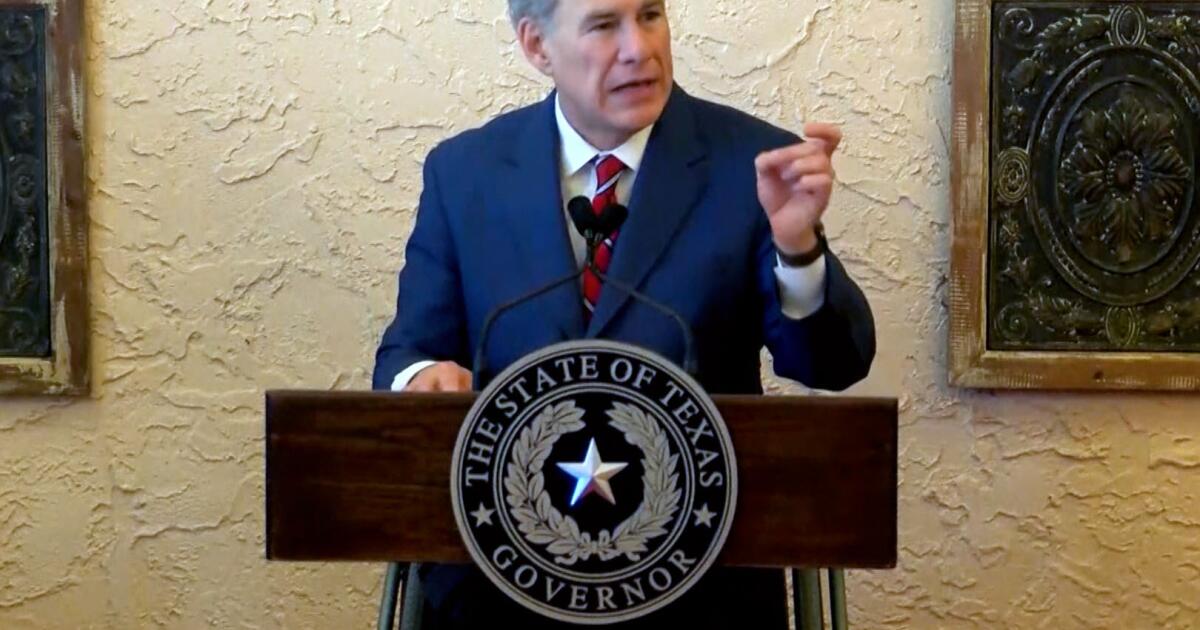
In August 2023, Texas Governor Greg Abbott convened a special session of the state legislature with the explicit goal of redrawing the state’s congressional map. This unusual move, occurring well outside the standard decennial redistricting cycle, was reportedly prompted by concerns raised by the U.S. Department of Justice regarding the constitutionality of existing “coalition districts.” These districts, strategically designed to maximize minority representation, had proven effective in electing diverse candidates.
Voting rights advocates instantly raised alarms. Chad Dunn, legal director of UCLA’s Voting Rights Project, explained the core issue: “They said their aim was to get rid of the coalition districts. And to do so,they had to draw new districts along racial lines.” The implication was clear – the state was attempting to dismantle districts that empowered minority voters, perhaps violating the Voting Rights Act.
Lower Court ruling: A Rebuke of the State’s Justification
A three-judge panel – comprised of Judges David Brown (a Trump appointee), Jerry Smith (a Reagan appointee), and another district judge – swiftly intervened. Judge Brown,writing for the majority,directly challenged the legal basis for the redistricting. He deemed the advice provided by Dhillon Law Group, which asserted the unconstitutionality of the existing districts, as “clearly wrong.” Crucially, he criticized the state for relying on this flawed counsel as justification for its actions.
The panel issued a preliminary injunction, halting the implementation of the new map and requiring Texas to revert to the 2021 map previously drawn by the same Republican-controlled legislature. This decision was a important blow to the state’s efforts.
A Sharp Dissent and Accusations of Judicial Activism
The ruling wasn’t unanimous. Judge Jerry Smith delivered a scathing 104-page dissent, launching a broadside against Judge Brown and liberal figures like George Soros and Gavin Newsom. He accused the majority of “the most blatant exercise of judicial activism” he had witnessed in 37 years on the bench, arguing that the decision favored partisan interests over the will of the Texas people.
Smith argued the primary motivation behind the 2025 redistricting was “partisan gain,” and that Judge Brown erred in suggesting the legislature was motivated by bigotry rather than political strategy. This dissent highlights the deep ideological divisions at play in the case.
Unique Election Law Procedure: Direct Path to the Supreme Court
Unlike most federal cases, election-related disputes follow a distinct procedural path. A three-judge panel issues an initial ruling,which is then appealed directly to the Supreme Court,bypassing the usual appeals court process.This expedited route underscores the urgency and high stakes involved in redistricting cases.
Texas Appeals to the Supreme Court: A Focus on “Candidate and Voter Confusion”
Texas attorneys immediately filed an emergency appeal with the Supreme Court, seeking to overturn the lower court’s injunction. Their 40-page brief argued that the last-minute disruption to election procedures would create “candidate and voter confusion.” Notably, the appeal also pointed to California’s own efforts to redraw its congressional map to benefit Democrats, suggesting that partisan mapmaking is a common practice.
Expert Pushback: “A Problem of Texas’ Own making”
Election law experts have largely dismissed the state’s claims of impending chaos. Justin Levitt, a professor at Loyola Law School in Los Angeles, succinctly stated, “This is a problem of Texas’ own making.” He emphasized that the state voluntarily initiated a fast-track, mid-decade redistricting process at the behest of former President Trump, creating the vrey instability it now cites.
The Core Argument: Racial Gerrymandering and the Voting Rights Act
The heart of the dispute lies in the allegation that Texas intentionally dismantled districts designed to empower minority voters.Dunn, the voting rights attorney, reiterated this point in his response to the state’s
Keep reading