Supreme Court Hears Arguments on Trump Administration’s Attempt to End Protections for Haitian and Syrian Migrants
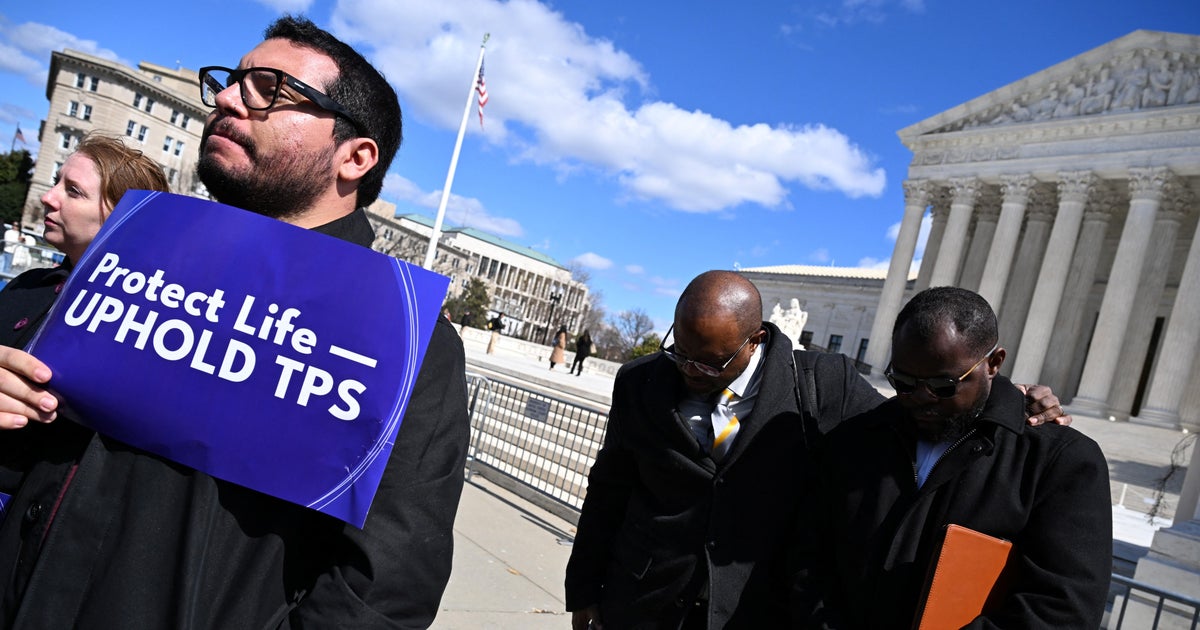
Washington D.C. – The U.S. Supreme Court convened on Wednesday to hear arguments regarding the legality of the Trump administration’s decision to revoke Temporary Protected Status (TPS) for hundreds of thousands of individuals from Haiti and Syria. The case carries significant implications, potentially impacting the future of TPS for approximately 1.3 million immigrants from 17 designated countries, and raising questions about the scope of presidential authority over immigration policy. The hearing took place amidst concerns from immigrant communities and advocacy groups who fear widespread deportations if the administration’s actions are upheld. This case represents a key component of the former president’s broader agenda of mass deportations.
At the heart of the dispute is the Trump administration’s claim that conditions in Haiti and Syria had sufficiently improved to warrant the termination of TPS, a program that allows foreign nationals from countries experiencing armed conflict, natural disasters, or other extraordinary circumstances to remain in the United States. The administration, under then-Homeland Security Secretary Kristi Noem, argued that the original designations for TPS were no longer justified. But, challengers contend that the administration failed to adequately assess the ongoing instability and unsafe conditions in both nations before making its decision. The legal battle centers on whether the administration’s review process was legitimate and whether the decision to revoke TPS was arbitrary and capricious.
The case before the Supreme Court specifically addresses the TPS designations for Haiti and Syria, but the ruling could have far-reaching consequences. A decision in favor of the administration could pave the way for the termination of TPS for citizens of other countries currently benefiting from the program, including El Salvador, Honduras, Nepal, and Afghanistan. Litigation involving Somalia, Myanmar, and Ethiopia could also be affected. The court previously allowed the revocation of TPS for Venezuelans in two separate decisions last year, and the Trump administration argued that those rulings should apply to the Haitian and Syrian cases as well. NBC News reported that the government maintains the decisions made by Secretary Noem are not subject to judicial review.
The History of Temporary Protected Status and the Trump Administration’s Actions
Temporary Protected Status (TPS) has been utilized by successive U.S. Administrations to provide temporary refuge to individuals unable to safely return to their home countries. The program is not a path to permanent residency, but it allows beneficiaries to live and work legally in the United States. The Trump administration significantly targeted TPS, initiating reviews of designations for multiple countries and ultimately announcing terminations for several, including Haiti, Syria, El Salvador, Nicaragua, and Honduras. These decisions sparked widespread legal challenges from individuals, advocacy groups, and some state governments.
The situation for Haitian migrants is particularly sensitive, given the country’s history of political instability, natural disasters, and economic hardship. The 2010 earthquake devastated Haiti, and the nation continues to grapple with the aftermath, including ongoing political turmoil and a recent surge in gang violence. Similarly, Syria has been embroiled in a brutal civil war for over a decade, creating a humanitarian crisis and rendering large portions of the country uninhabitable. The administration’s decision to terminate TPS for these countries drew criticism from those who argued that the conditions on the ground did not support a finding of safety.
Arguments Presented Before the Supreme Court
During Wednesday’s arguments, lawyers representing the Haitian and Syrian migrants challenged the administration’s assessment of conditions in their respective countries. They argued that the administration’s review was flawed and failed to adequately consider the ongoing dangers faced by TPS holders if they were forced to return. They also alleged that the decision regarding Haiti was motivated by discriminatory reasons. According to NBC News, the plaintiffs are questioning whether Secretary Noem conducted the necessary consultations with the State Department to accurately determine conditions in both countries.
The government’s legal team defended the administration’s actions, asserting that Secretary Noem had the authority to terminate TPS designations based on her assessment of country conditions. They argued that the administration followed proper procedures and that the courts should defer to the executive branch’s judgment on matters of immigration policy. The government also pointed to the previous Supreme Court rulings regarding Venezuelan TPS holders as precedent supporting their position.
Impact on Individuals and Communities
The potential revocation of TPS for Haitian and Syrian migrants has created immense anxiety and uncertainty within affected communities. Many TPS holders have lived in the United States for decades, built families, and contributed to the economy. Dahlia Doe, a Syrian national currently protected under TPS, shared her fears with CBS News, expressing concerns about being forced to return to a country she has never lived in and where she has no family ties. She works as a research director and cares for her father, who has Parkinson’s disease, highlighting the significant personal and familial consequences of potential deportation.
The Haitian Bridge Alliance, a leading advocacy group for Haitian immigrants, has been actively involved in the legal fight to protect TPS. Guerline Jozef, the organization’s co-founder and executive director, spoke in front of the Supreme Court in March, emphasizing the devastating impact that the termination of TPS would have on Haitian families and communities. The potential loss of TPS holders would not only disrupt individual lives but also have broader economic consequences, as these individuals contribute to the U.S. Workforce and pay taxes.
Justice Barrett’s Recusal Question
The case has also drawn attention due to Justice Amy Coney Barrett’s past legal work. The Recent York Times reported that Justice Barrett previously represented the Catholic Legal Immigration Network, Inc. (CLINIC), which filed an amicus brief in a related case concerning TPS for Haitian nationals. While Justice Barrett did not directly participate in the drafting of the brief, her prior association with CLINIC raised questions about potential conflicts of interest. However, she did not recuse herself from the case.

The Broader Context of Immigration Policy
This Supreme Court case is unfolding against a backdrop of ongoing debate over U.S. Immigration policy. The Trump administration pursued a series of restrictive measures aimed at reducing both legal and illegal immigration, including the construction of a wall along the U.S.-Mexico border, the implementation of the “Remain in Mexico” policy, and increased enforcement efforts. The Biden administration has taken steps to reverse some of these policies, but the legal challenges initiated by the Trump administration continue to shape the landscape of immigration law. The outcome of this case will likely have a significant impact on the future of TPS and the broader debate over immigration reform.
Key Takeaways
- The Supreme Court is considering the legality of the Trump administration’s decision to revoke Temporary Protected Status for Haitian and Syrian migrants.
- The case could affect the future of TPS for approximately 1.3 million immigrants from 17 countries.
- Challengers argue the administration did not adequately assess conditions in Haiti and Syria before terminating TPS.
- The ruling will likely have significant implications for immigration policy and the lives of thousands of individuals and families.
- Justice Amy Coney Barrett’s past legal work with CLINIC raised questions about potential conflicts of interest, but she did not recuse herself.
The Supreme Court is expected to issue a ruling in the coming months. The decision will undoubtedly be closely watched by immigrant communities, advocacy groups, and policymakers alike. Further updates on the case will be provided as they become available. We encourage readers to share their thoughts and perspectives on this important issue in the comments section below.
Worth a look