
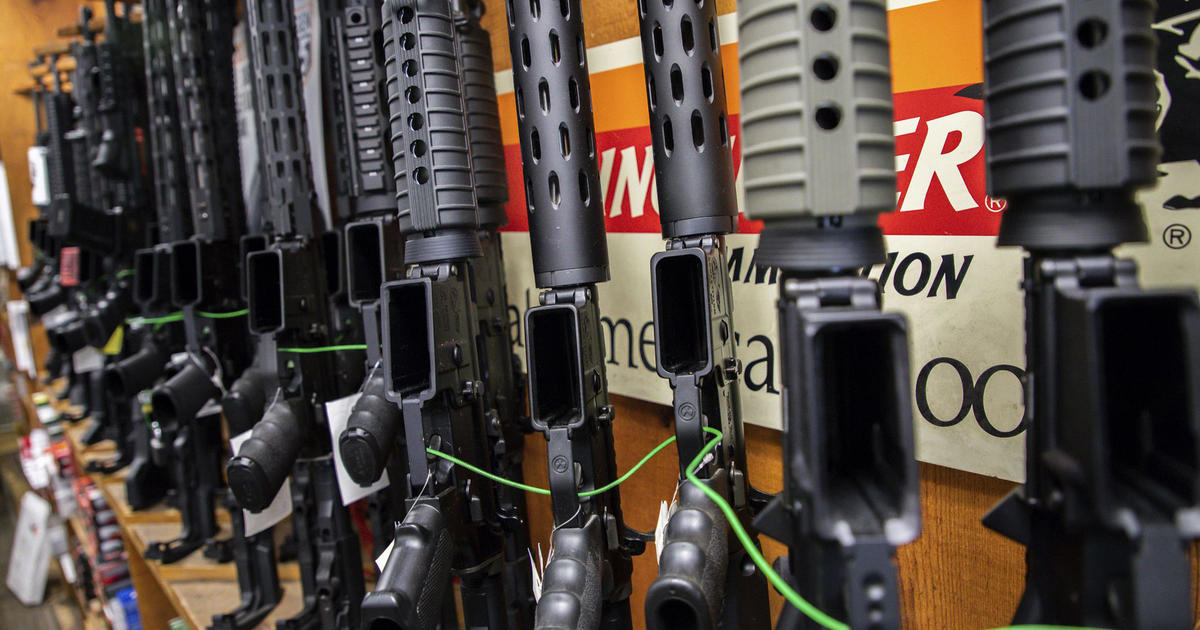
The United States Supreme Court has agreed to review the constitutionality of state-level bans on AR-15 style semi-automatic rifles. The court announced its decision to hear the case, Garland v. VanDerStok, which centers on whether federal regulations regarding firearm components—specifically “ghost gun” kits—and broader restrictions on semi-automatic rifles align with the Second Amendment as interpreted under the court’s 2022 ruling in New York State Rifle & Pistol Association, Inc. v. Bruen. This development signals a significant shift toward clarifying the scope of gun control laws that have faced mounting legal challenges across the country.
According to the official docket from the Supreme Court of the United States, the justices will examine whether specific semi-automatic rifles can be categorized as prohibited “assault weapons” under state statutes while remaining protected under the Second Amendment. The case originated from a challenge to an Illinois law, the Protect Illinois Communities Act, which prohibits the sale and possession of various semi-automatic rifles and high-capacity magazines. The court’s intervention follows a split among federal appellate courts regarding how to apply the “history and tradition” test established in the Bruen decision.
The Legal Framework: From Bruen to the Present
The central question before the court is how the Second Amendment applies to modern firearms that were not in existence at the time of the nation’s founding. In the 2022 Bruen decision, the Supreme Court ruled that gun regulations must be consistent with the nation’s historical tradition of firearm regulation. Since that ruling, lower courts have struggled to reach a consensus on whether the AR-15—the most popular rifle in the United States—falls under the “common use” protection, a standard set in the 2008 District of Columbia v. Heller decision.
The Bureau of Alcohol, Tobacco, Firearms and Explosives (ATF) has been at the center of related litigation regarding the definition of “frame or receiver,” a move the Biden administration argues is necessary to curb the proliferation of untraceable, privately made firearms. As noted in recent filings, the government maintains that these regulations are essential for public safety, while plaintiffs argue that such rules infringe upon the rights of law-abiding citizens to possess commonly owned firearms for self-defense.
What Is at Stake for State Regulations
The outcome of this review will have immediate implications for several states that have enacted bans on semi-automatic rifles, including Illinois, California, and New York. If the Supreme Court determines that these weapons are protected under the Second Amendment, existing state-level bans could be rendered unconstitutional. Conversely, a ruling upholding the bans would provide states with a clearer legal roadmap for regulating high-capacity firearms.

The legal debate largely rests on whether the AR-15 is considered “in common use” for lawful purposes. Proponents of the bans argue that these rifles are disproportionately used in mass casualty events, necessitating stricter regulation. Opponents, including gun rights advocacy groups, contend that the sheer number of these rifles in circulation—estimated to be in the millions—automatically qualifies them for constitutional protection under the Second Amendment of the U.S. Constitution.
Understanding the Judicial Process
The Supreme Court’s decision to grant certiorari in these cases indicates that the justices are prepared to provide definitive guidance on the limits of the Second Amendment. Historically, the court has been cautious about taking on gun rights cases, but the current composition of the bench has shown an increased willingness to revisit long-standing precedents.
The court is expected to hear oral arguments in the coming term. The justices will review whether the lower courts correctly applied the Bruen standard or if they ignored the historical evidence presented by the states seeking to uphold their bans. For observers, the focus remains on the “history and tradition” analysis, which will likely serve as the primary vehicle for the court’s majority opinion.
Looking Ahead
The next major milestone in this process will be the scheduling of oral arguments, which will likely take place in early 2025. Following the arguments, the court will deliberate and issue a written opinion, which will serve as the binding interpretation of the Second Amendment for all lower federal and state courts. Interested parties can monitor the Supreme Court’s official docket for updates on briefing schedules and hearing dates.

As this legal battle continues to unfold, the impact on state-level gun legislation will remain a primary focus for both policymakers and constitutional scholars. Please feel free to share your thoughts or questions in the comments section below as we continue to track this developing story.